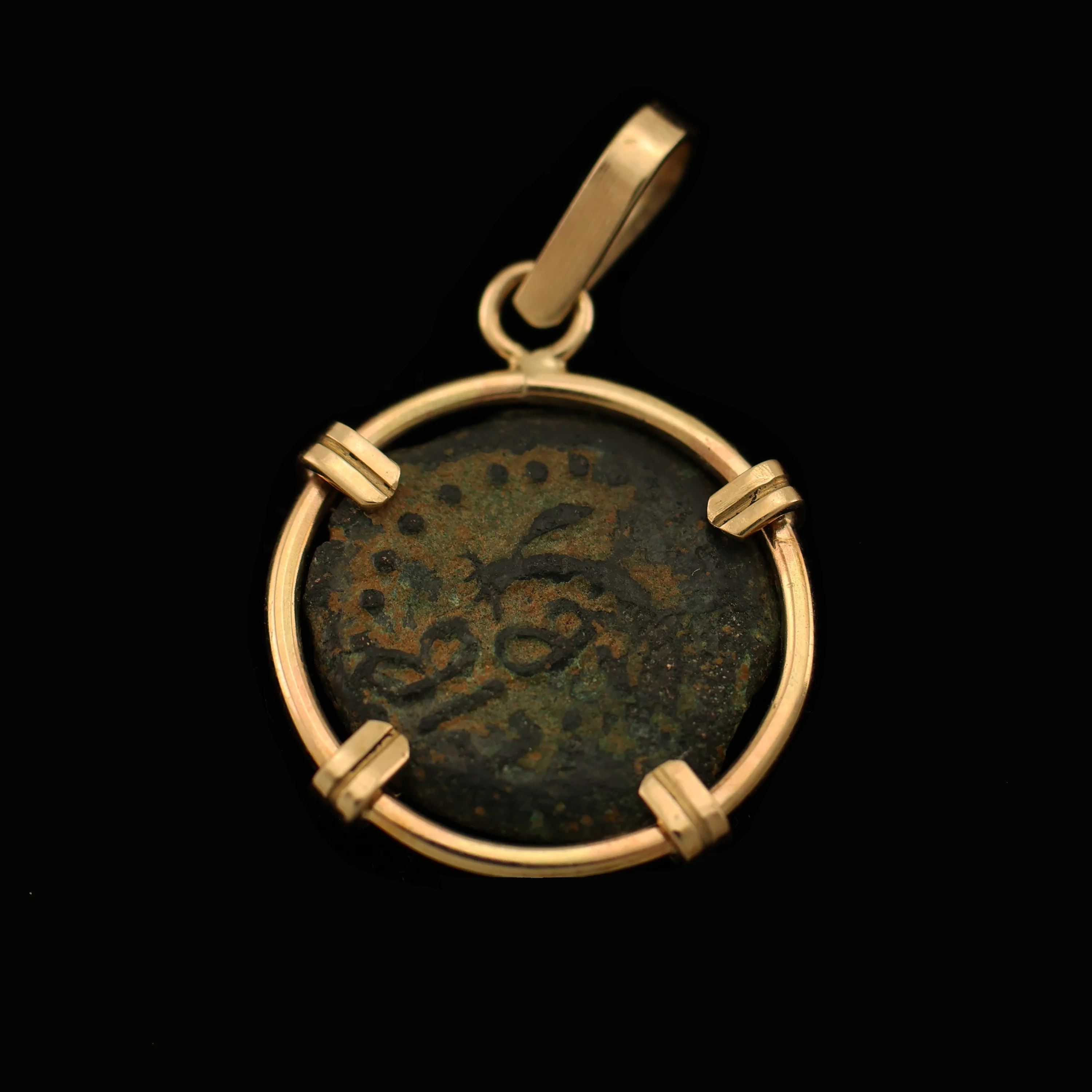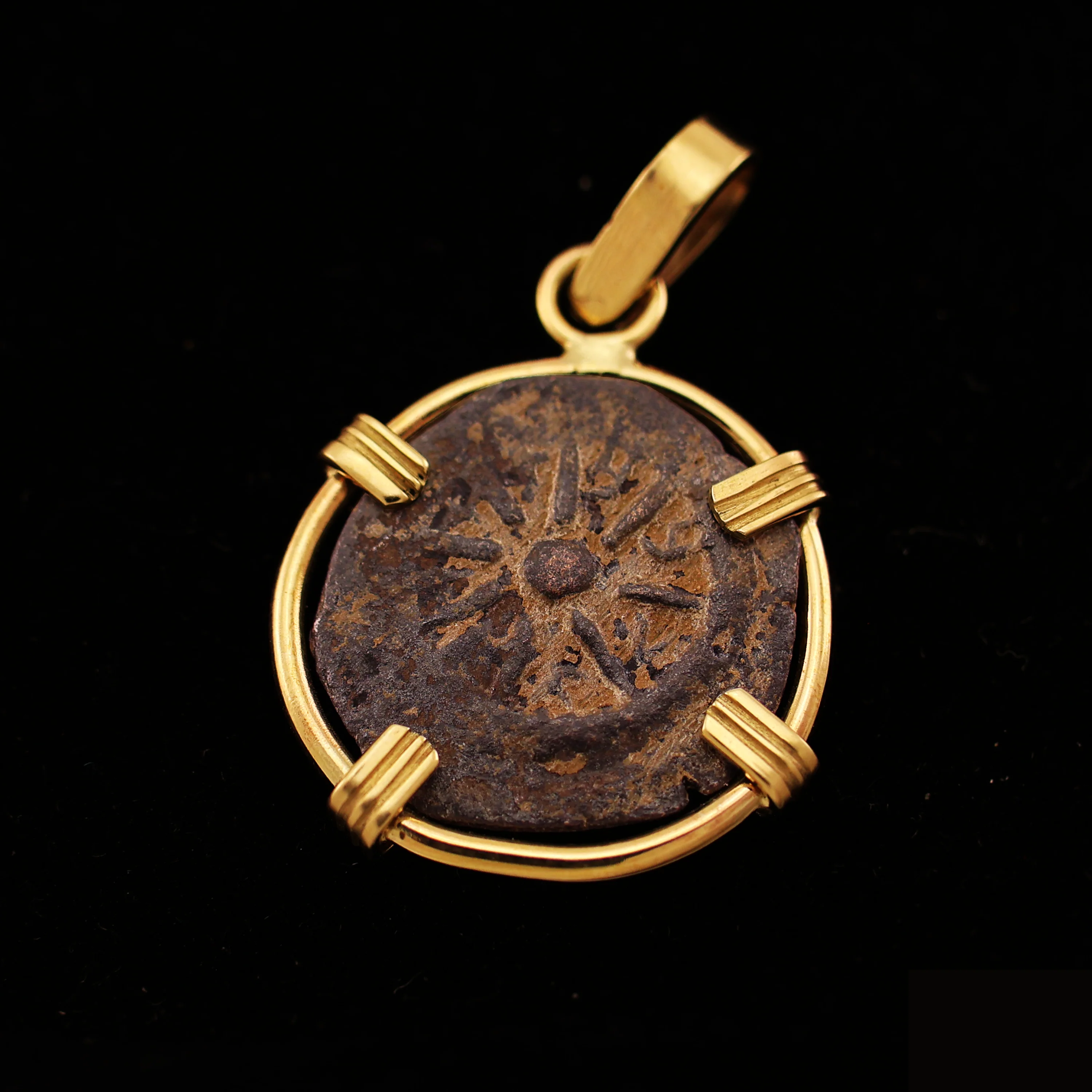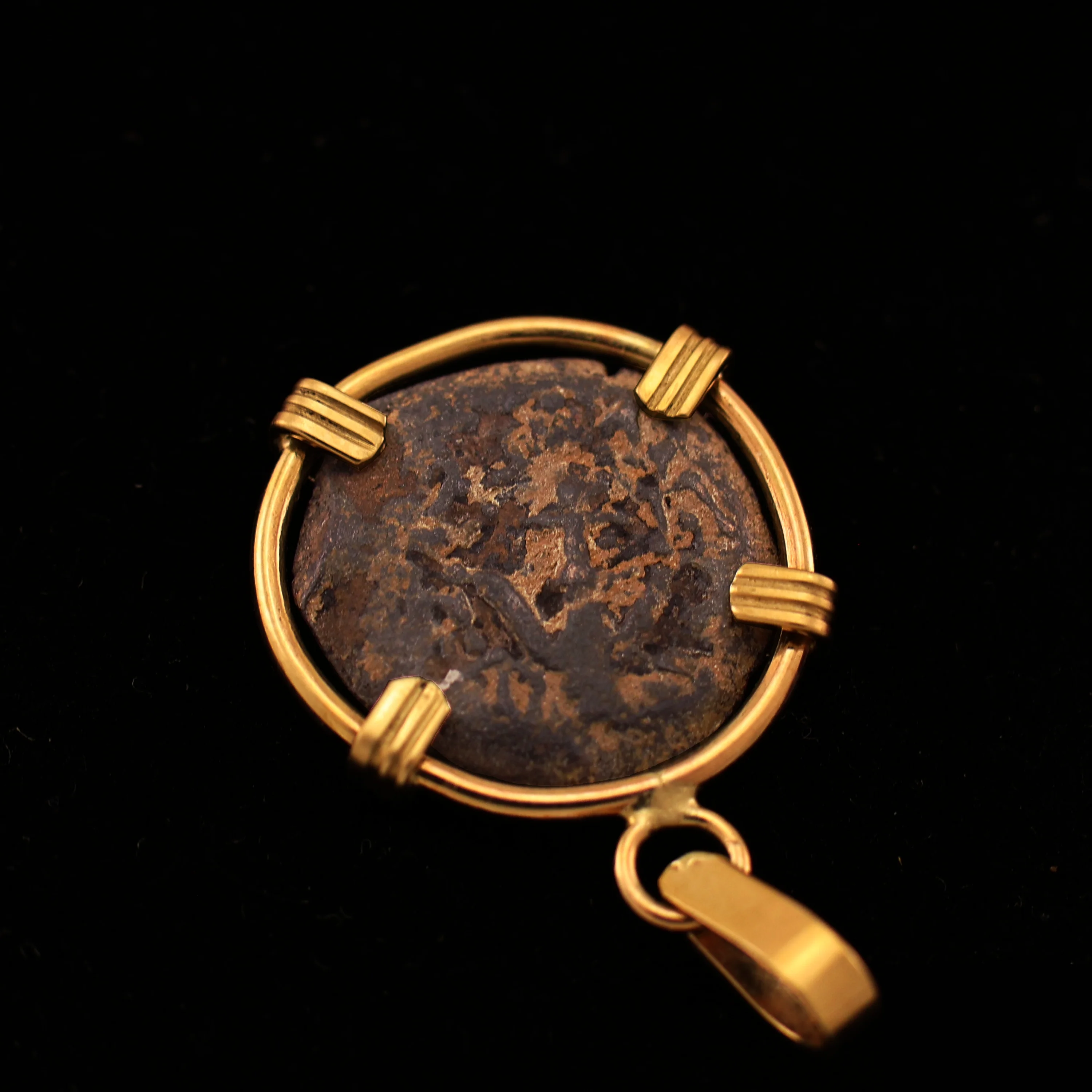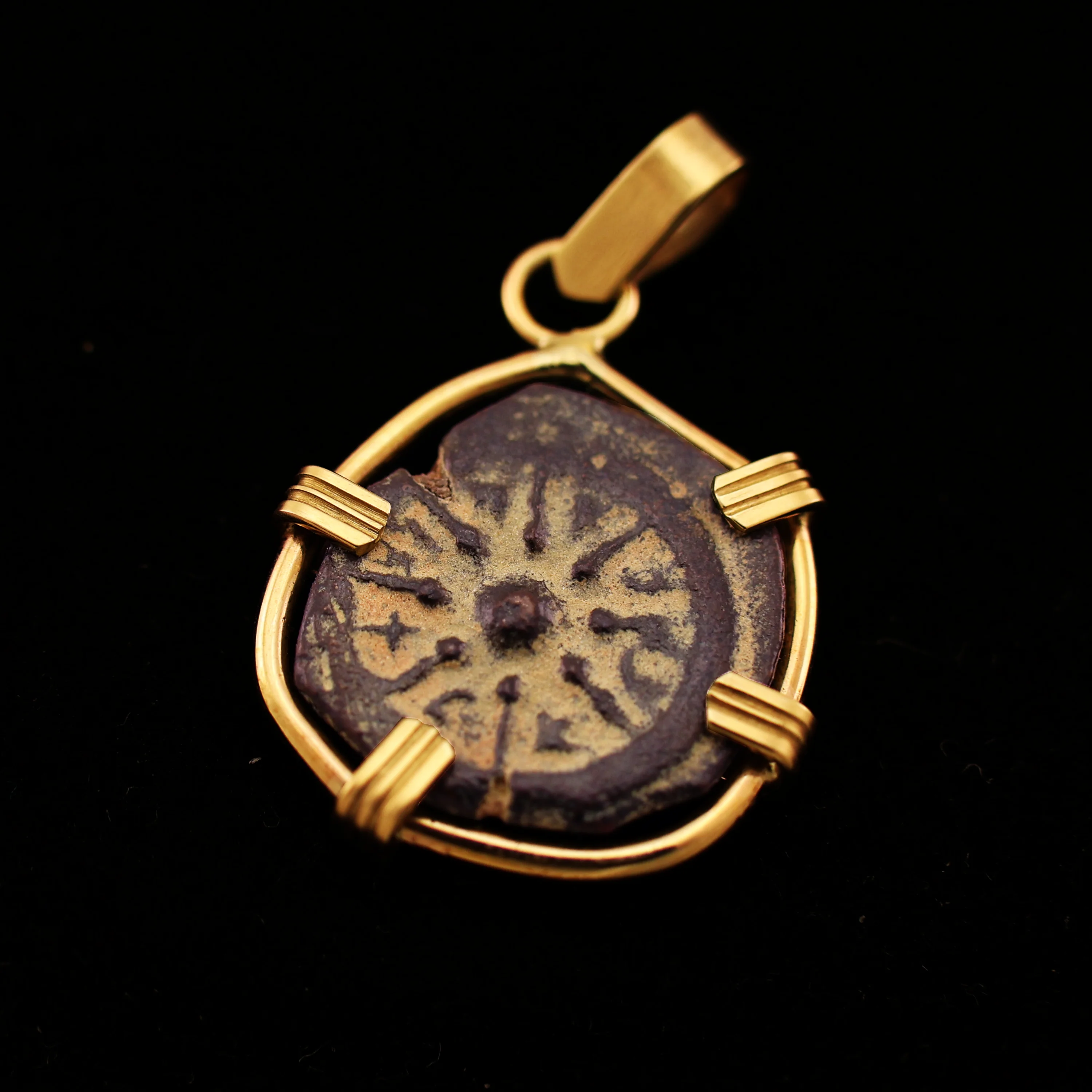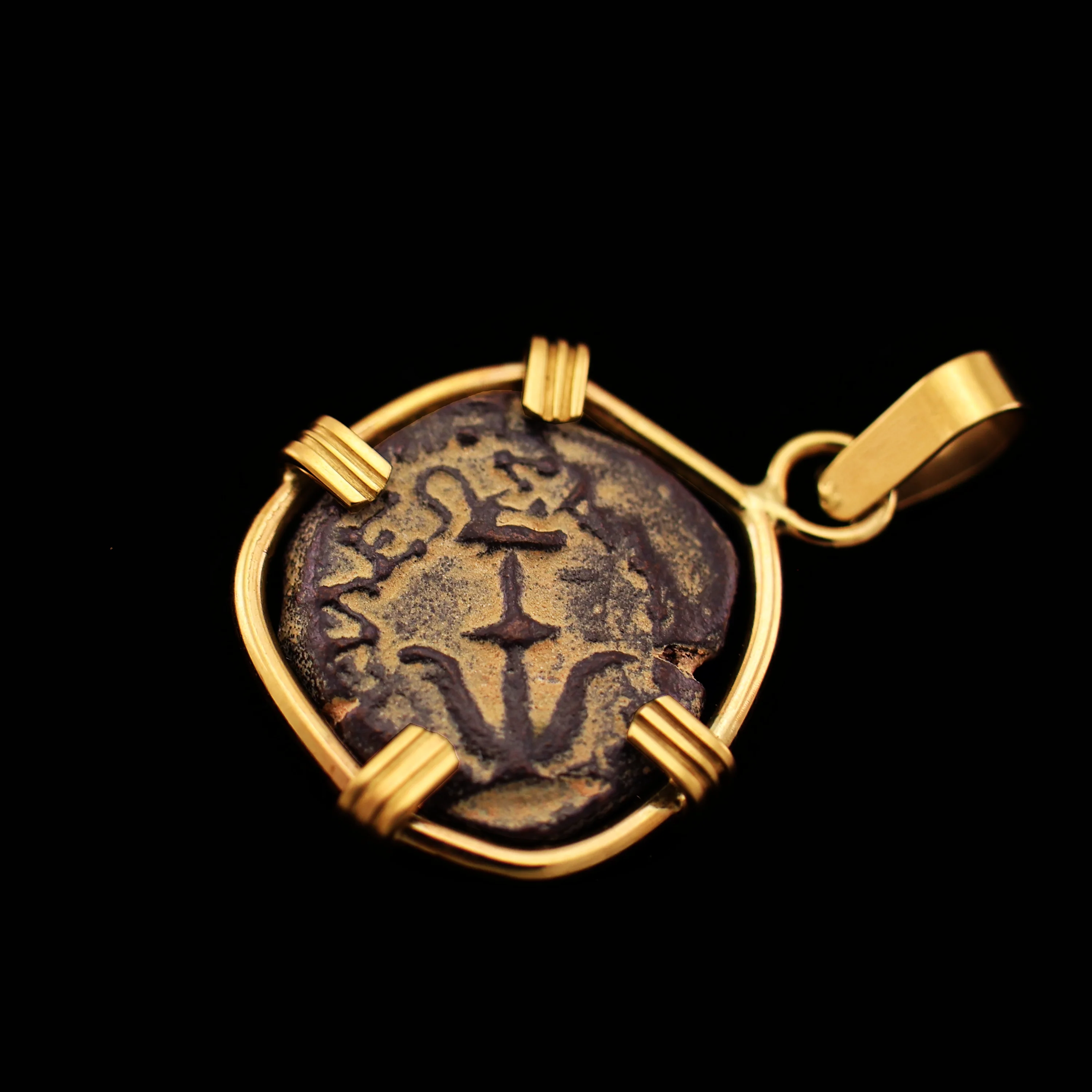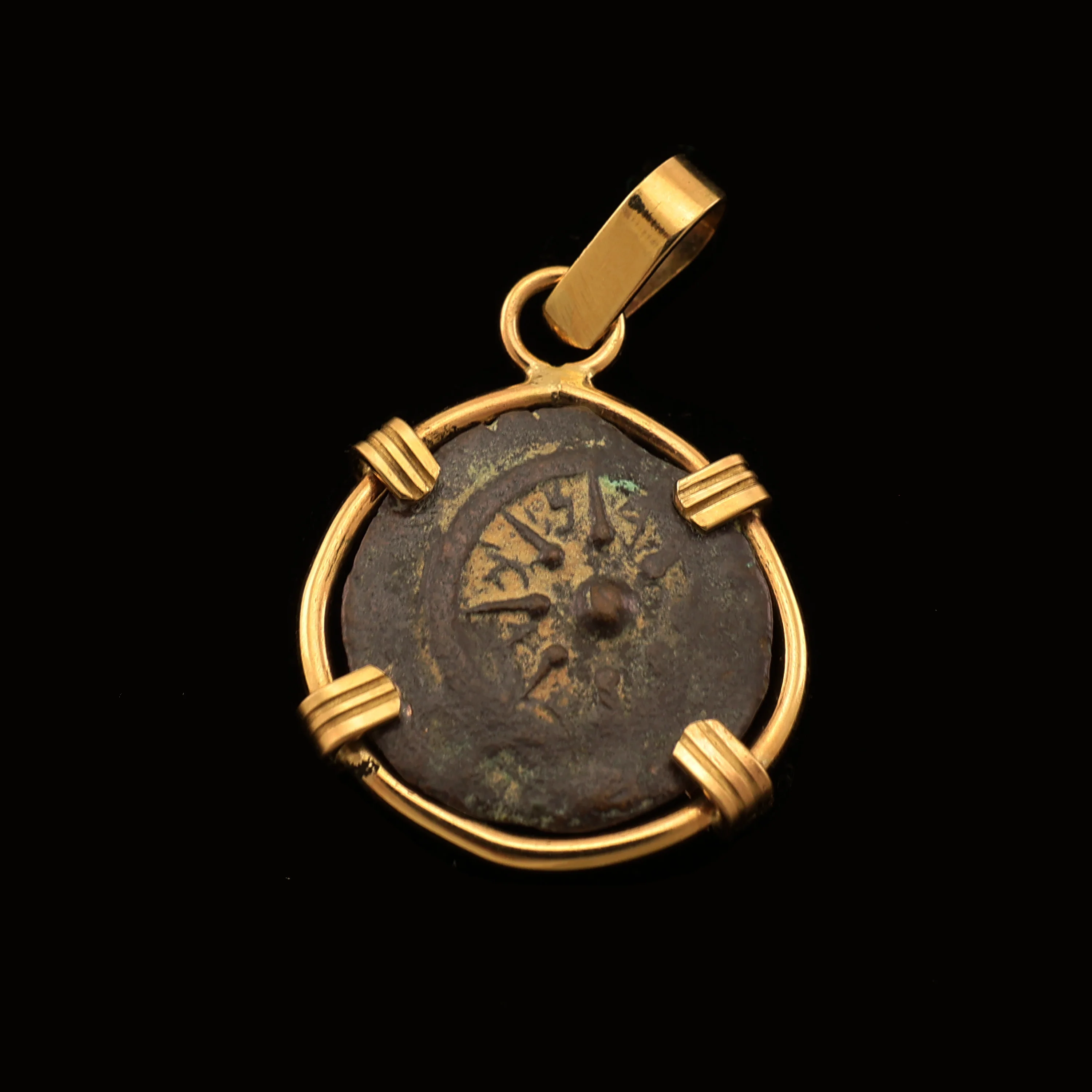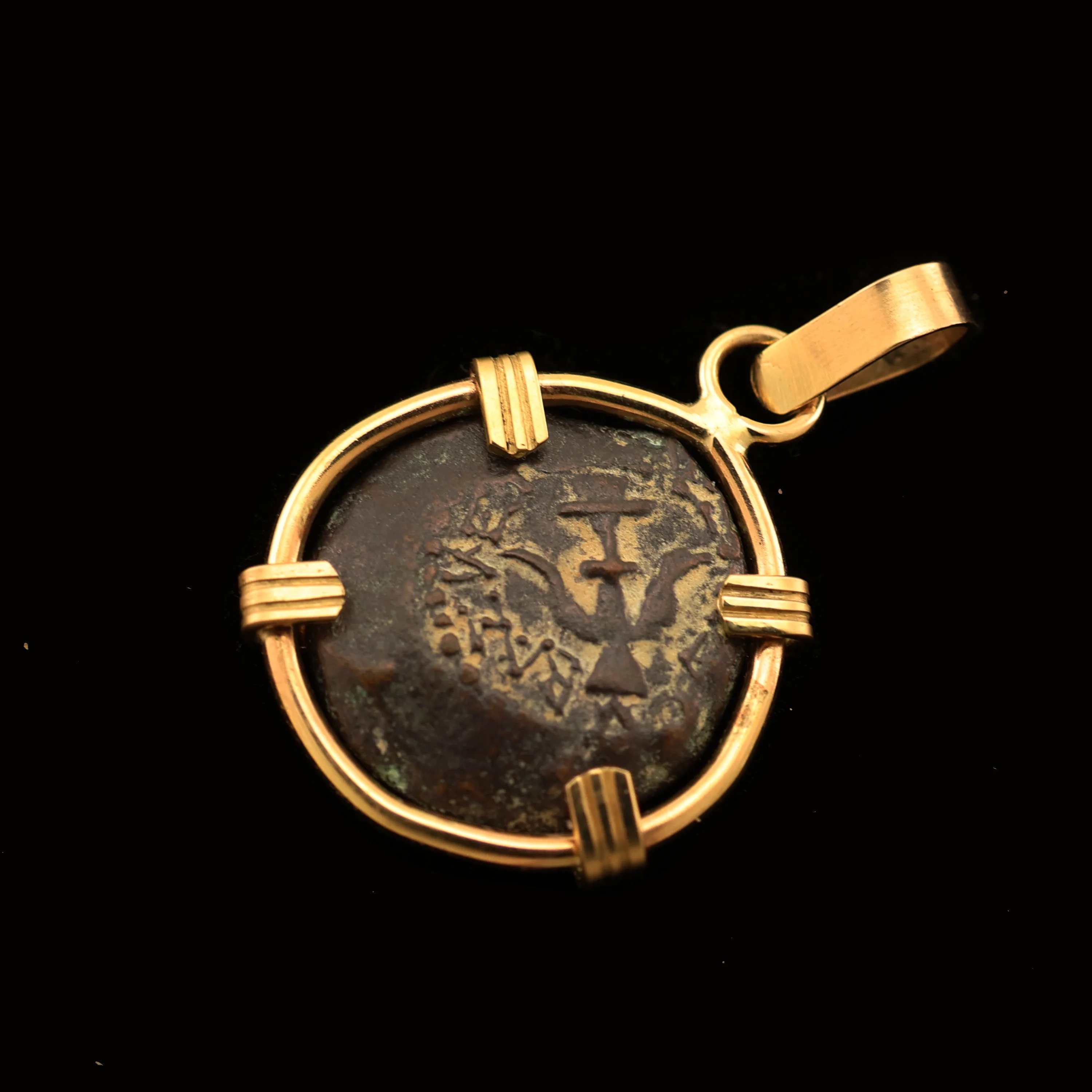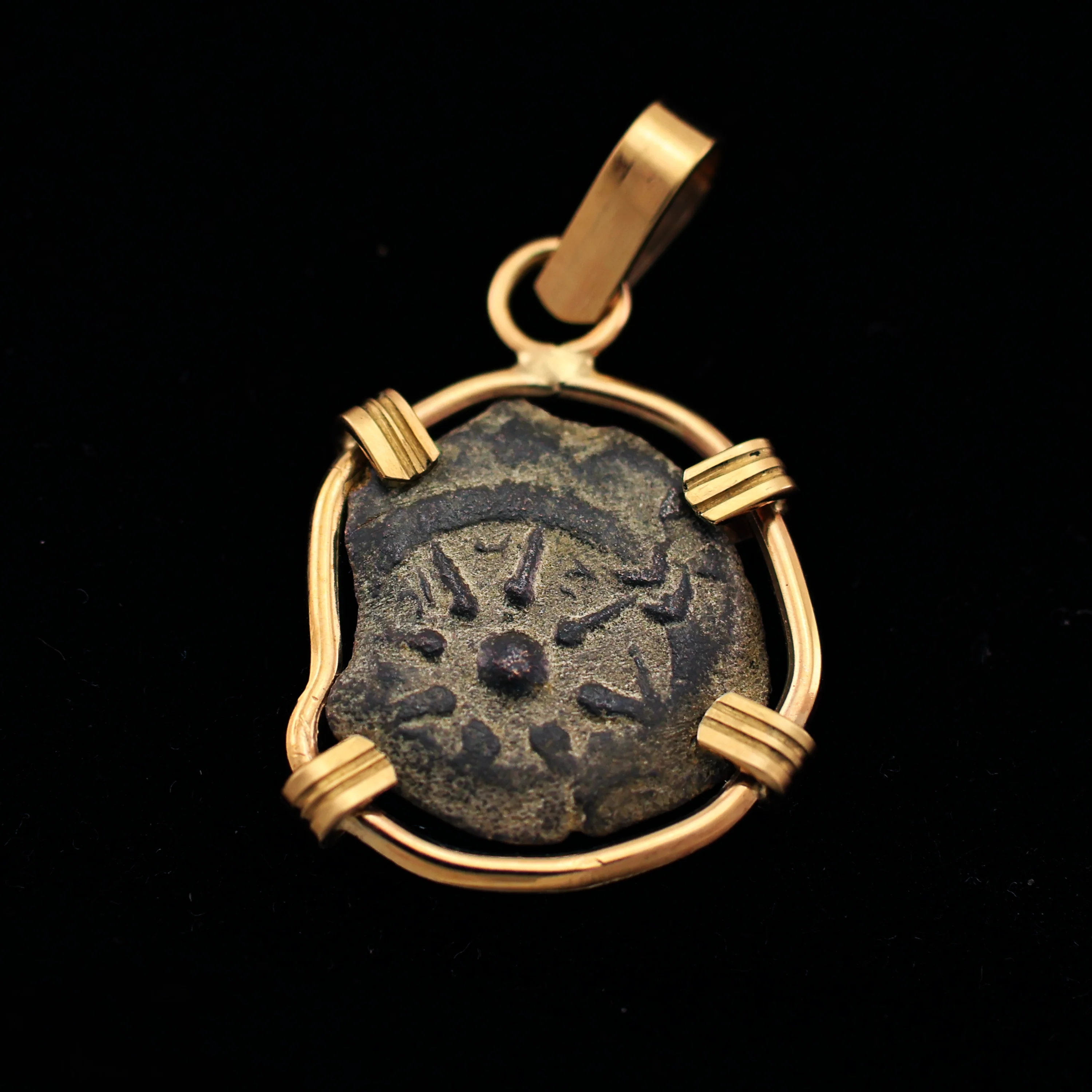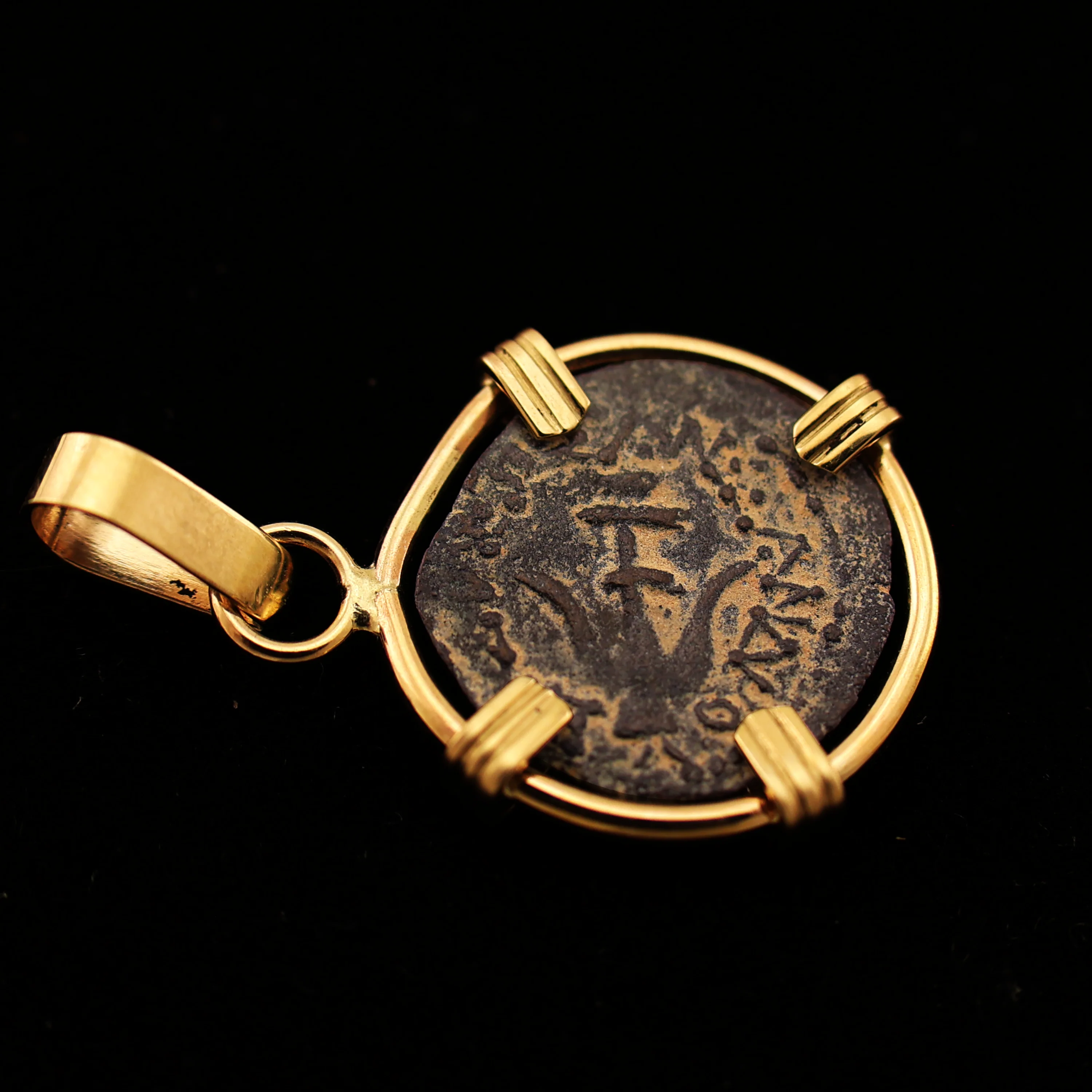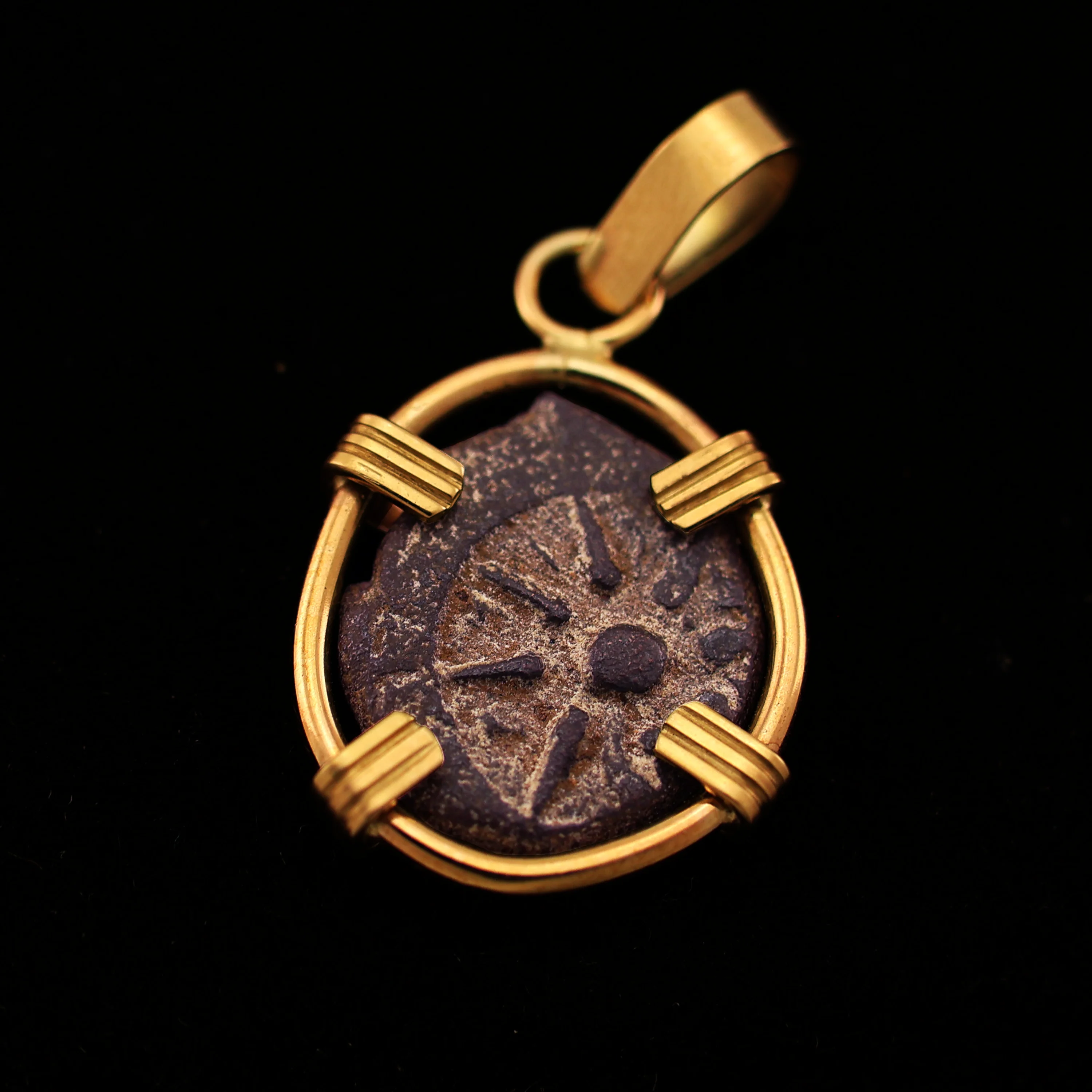
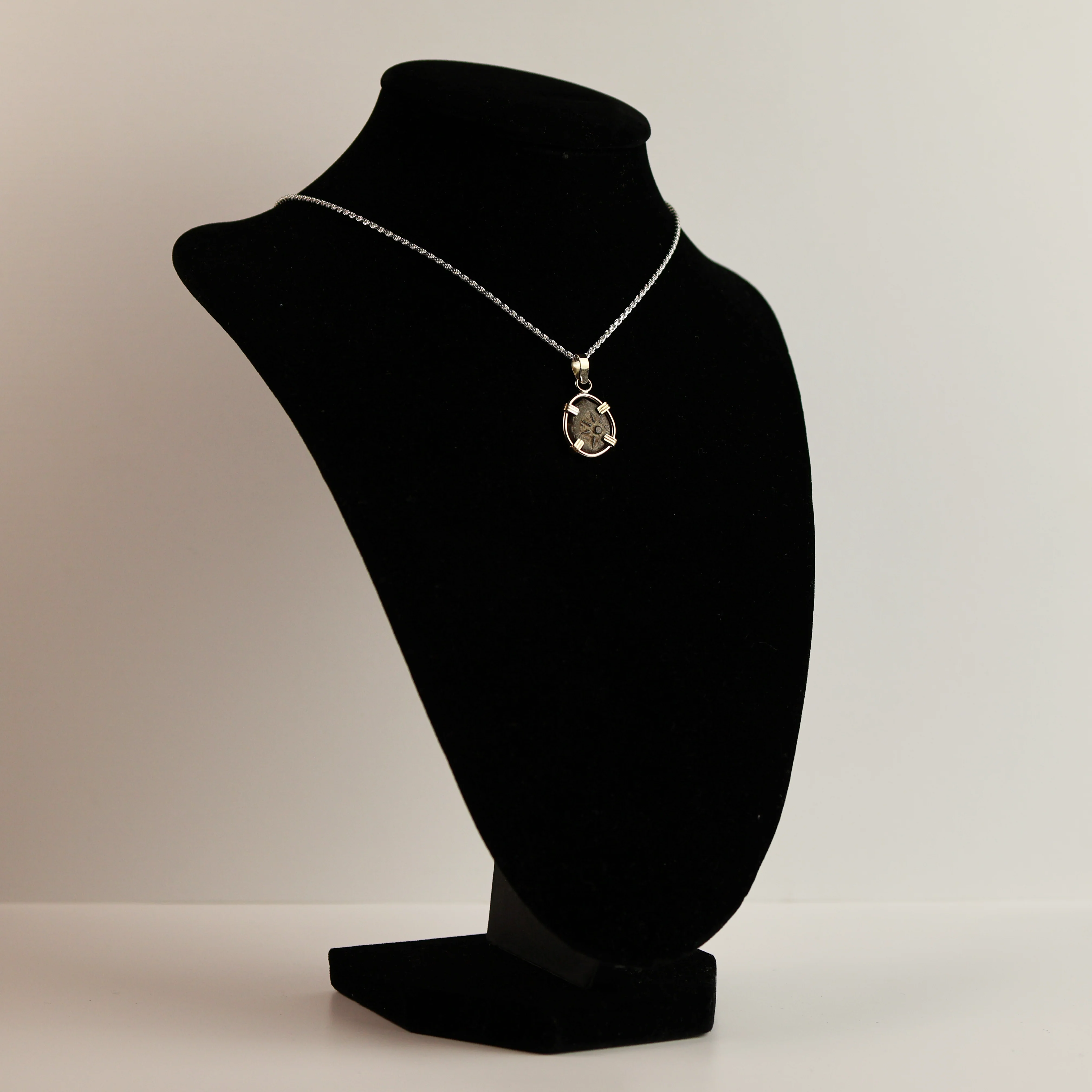
Biblical Widow's Mite Coin Pendant
Coin: Bronze Prutah
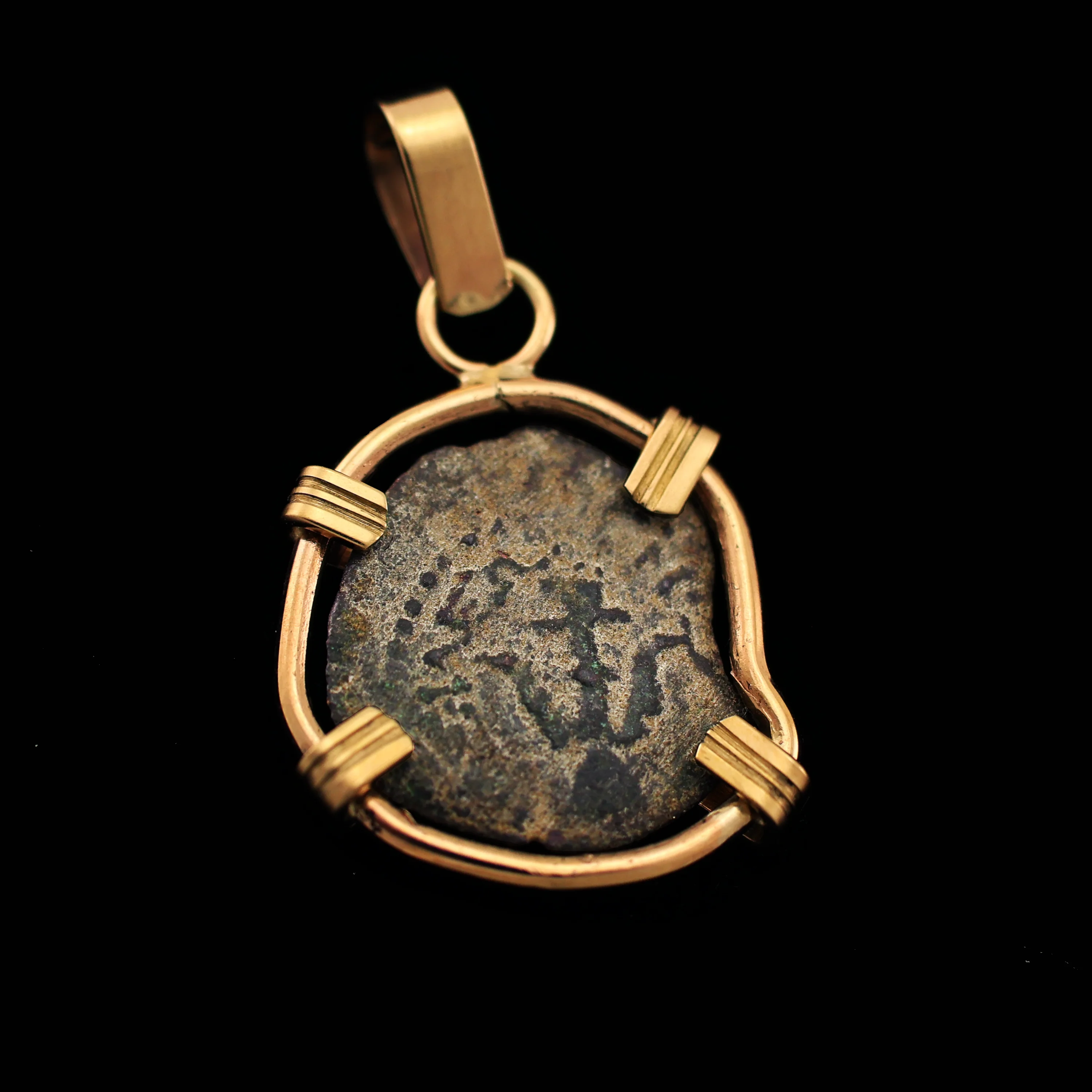
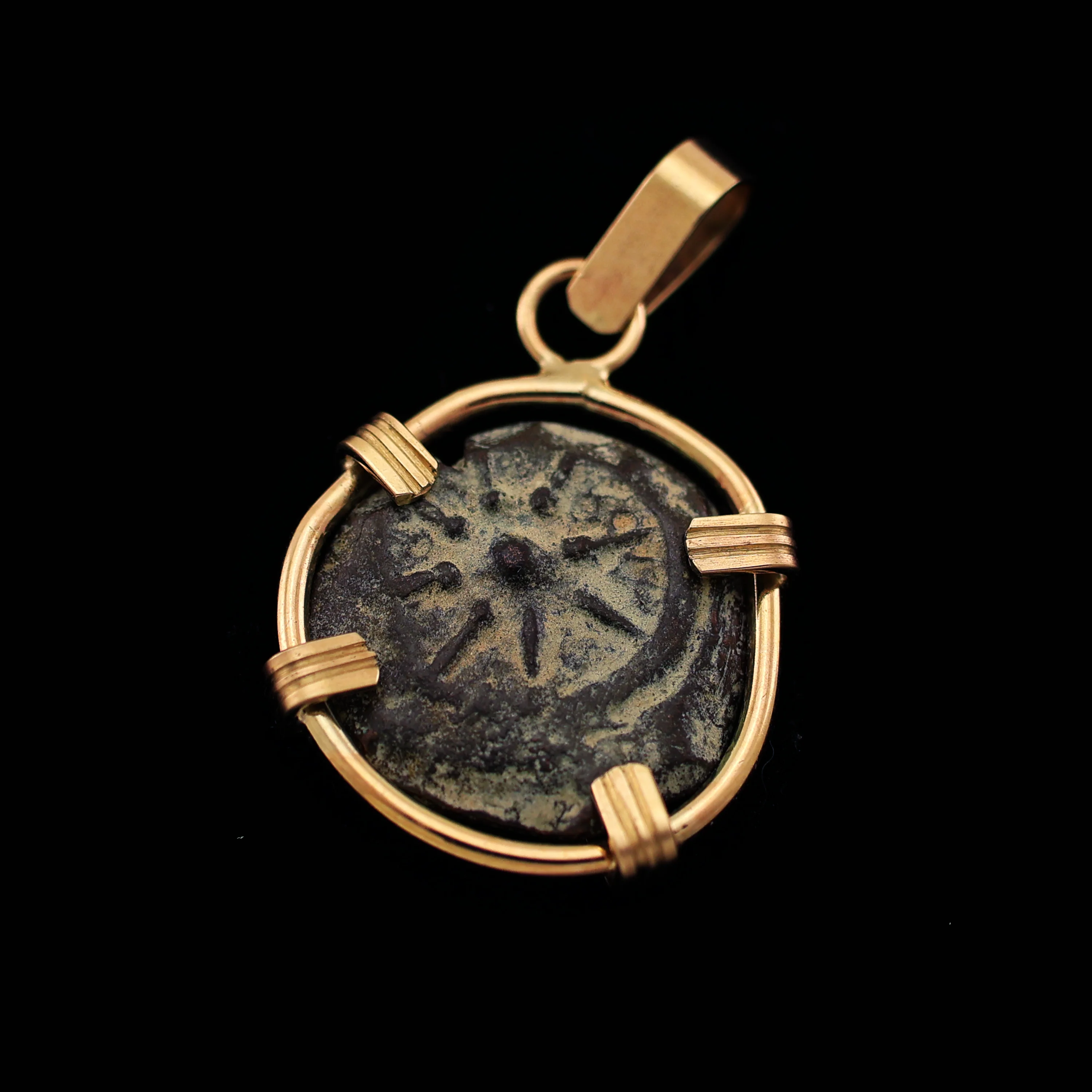
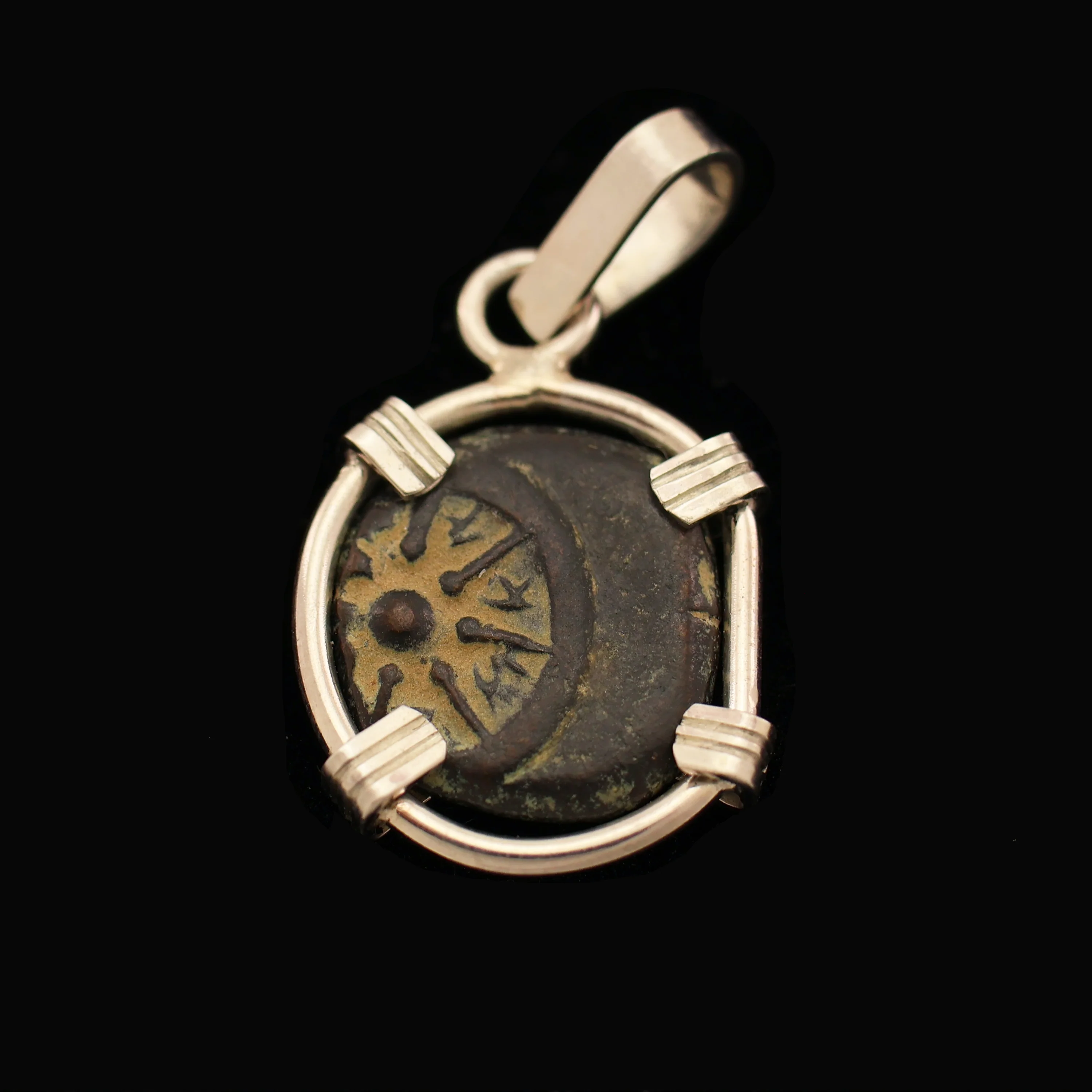
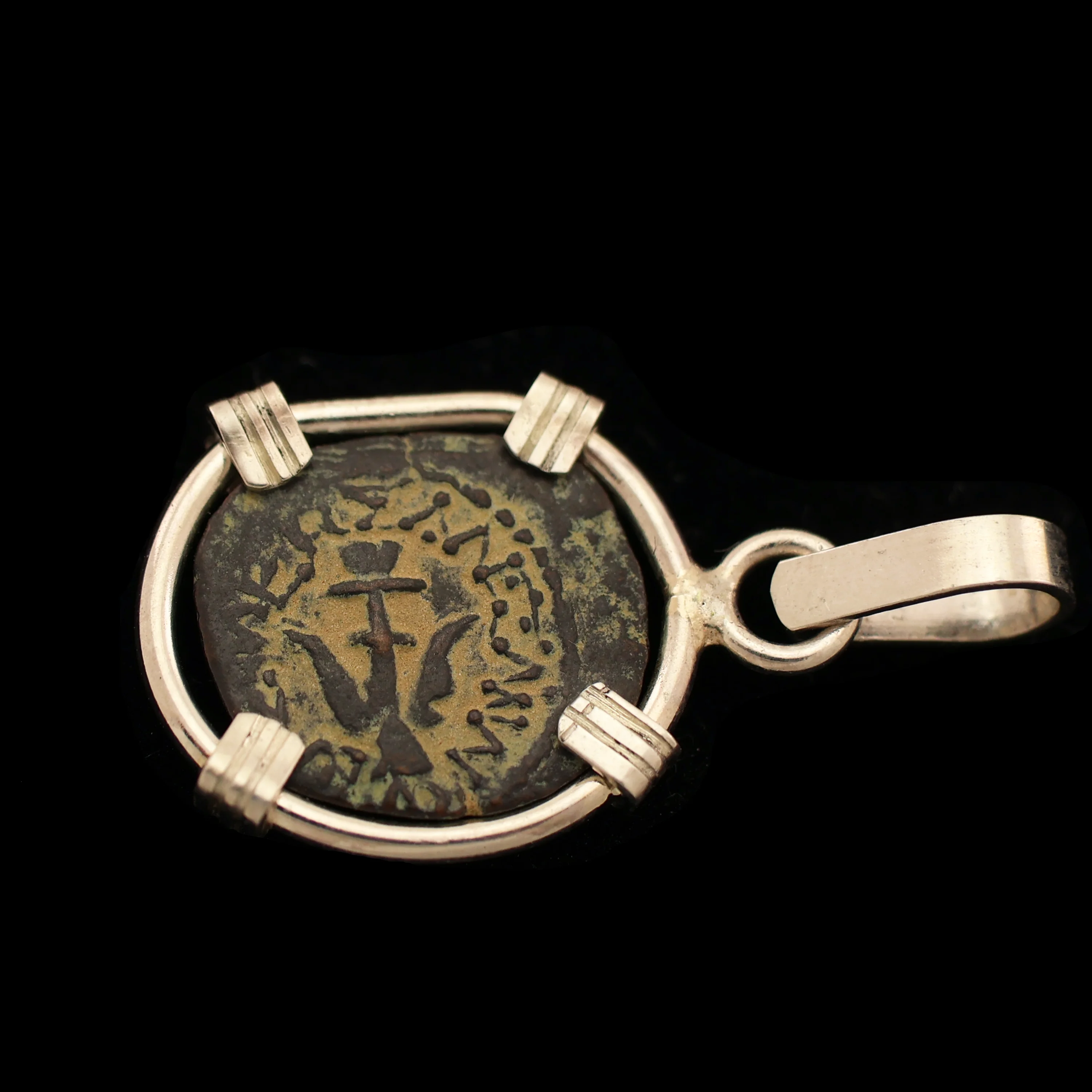
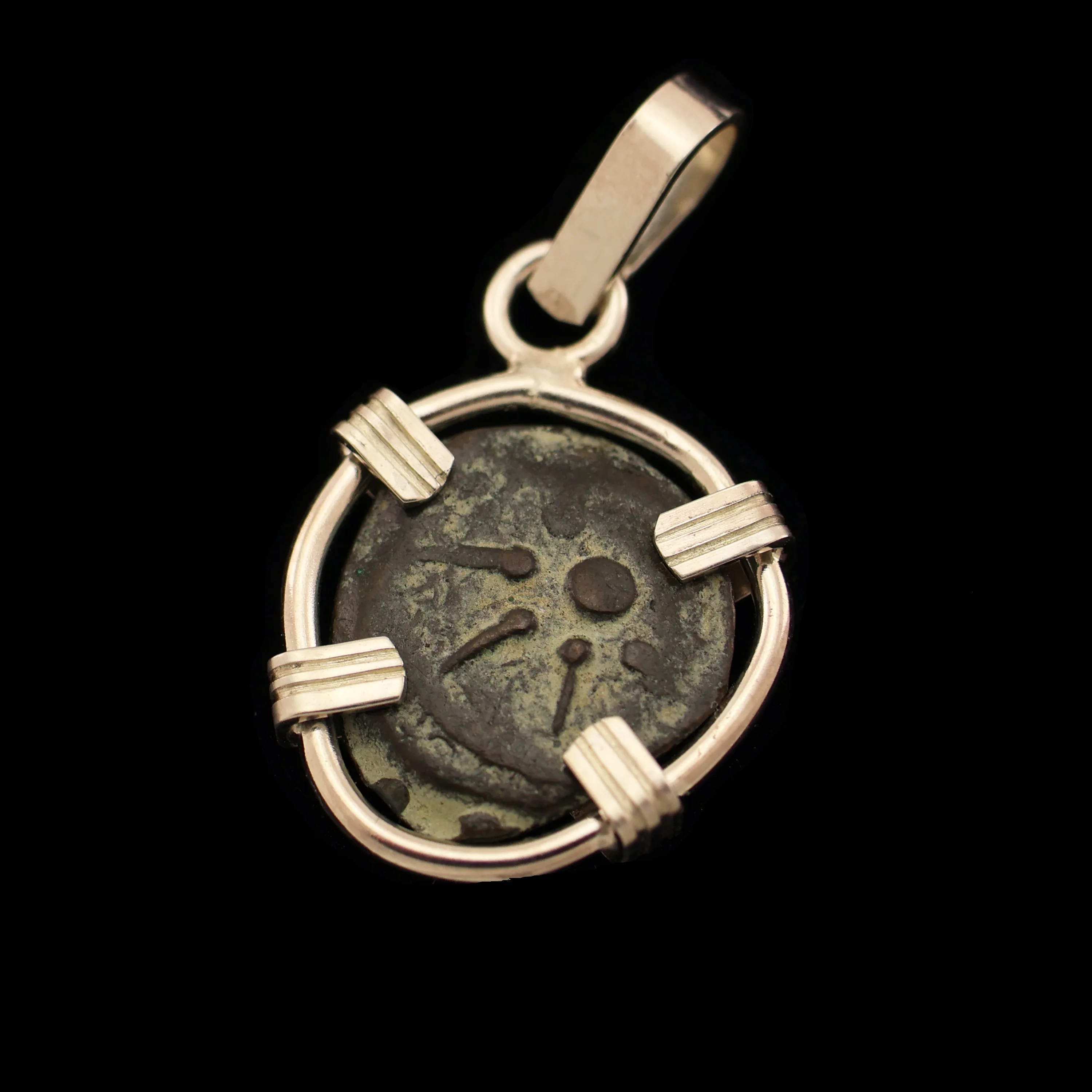
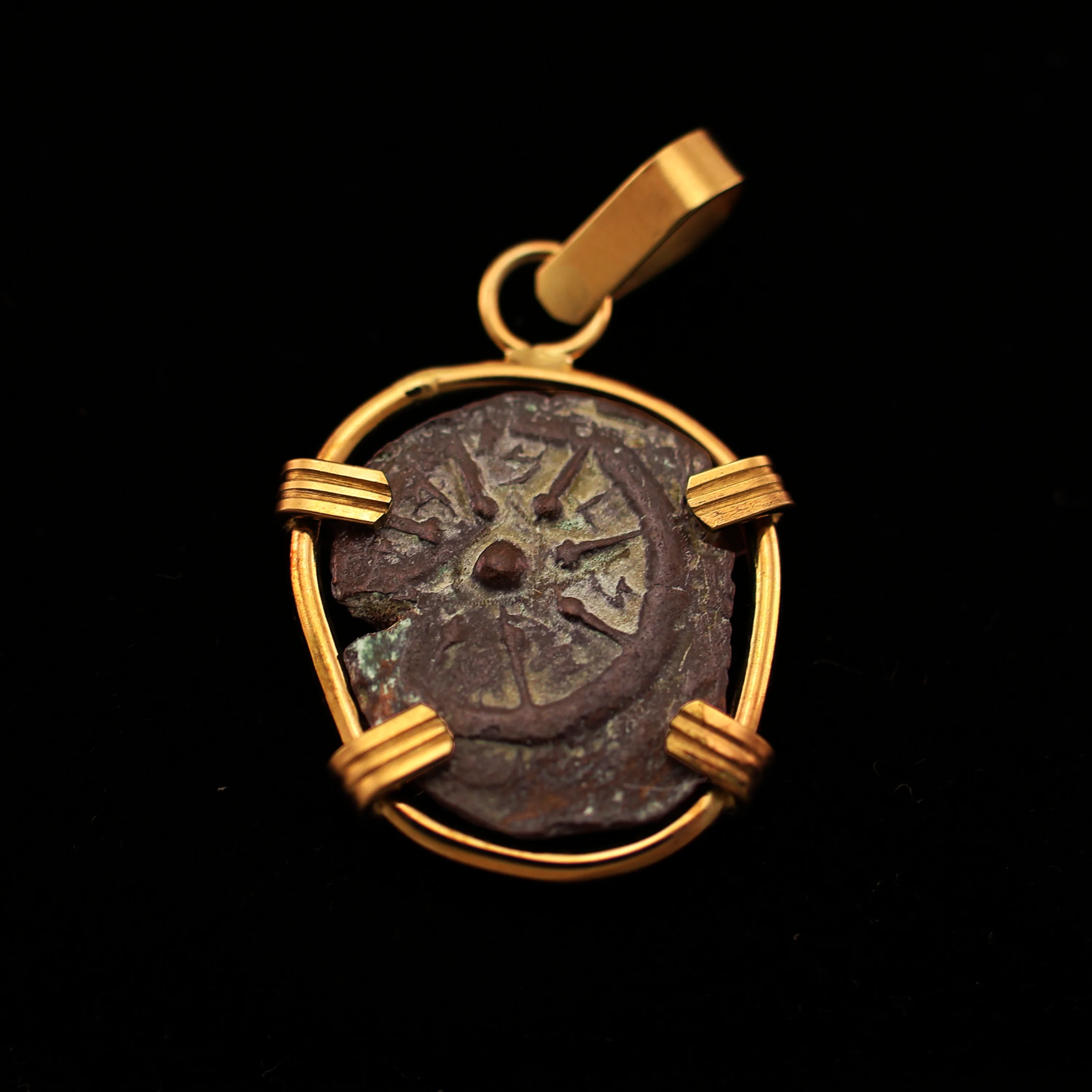
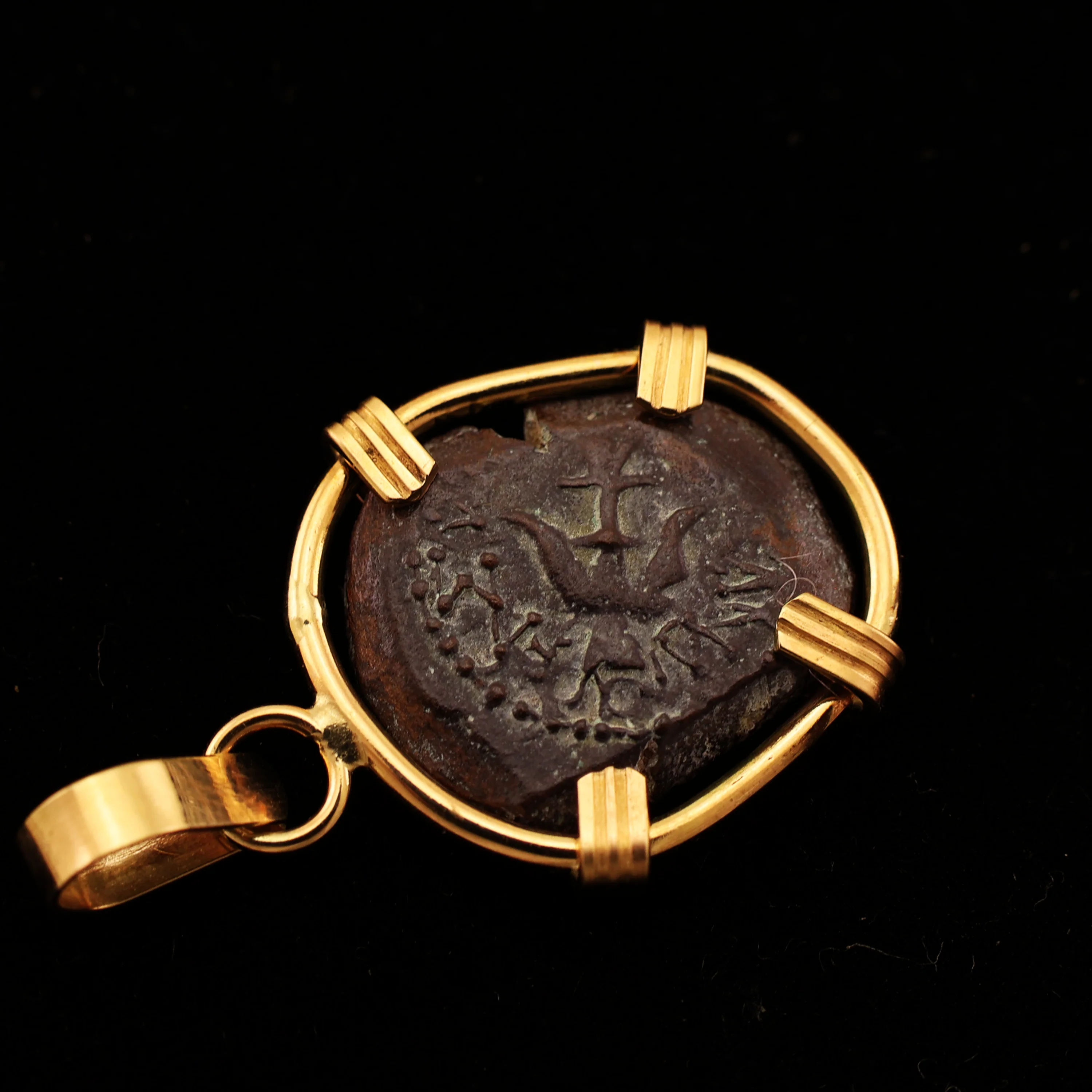
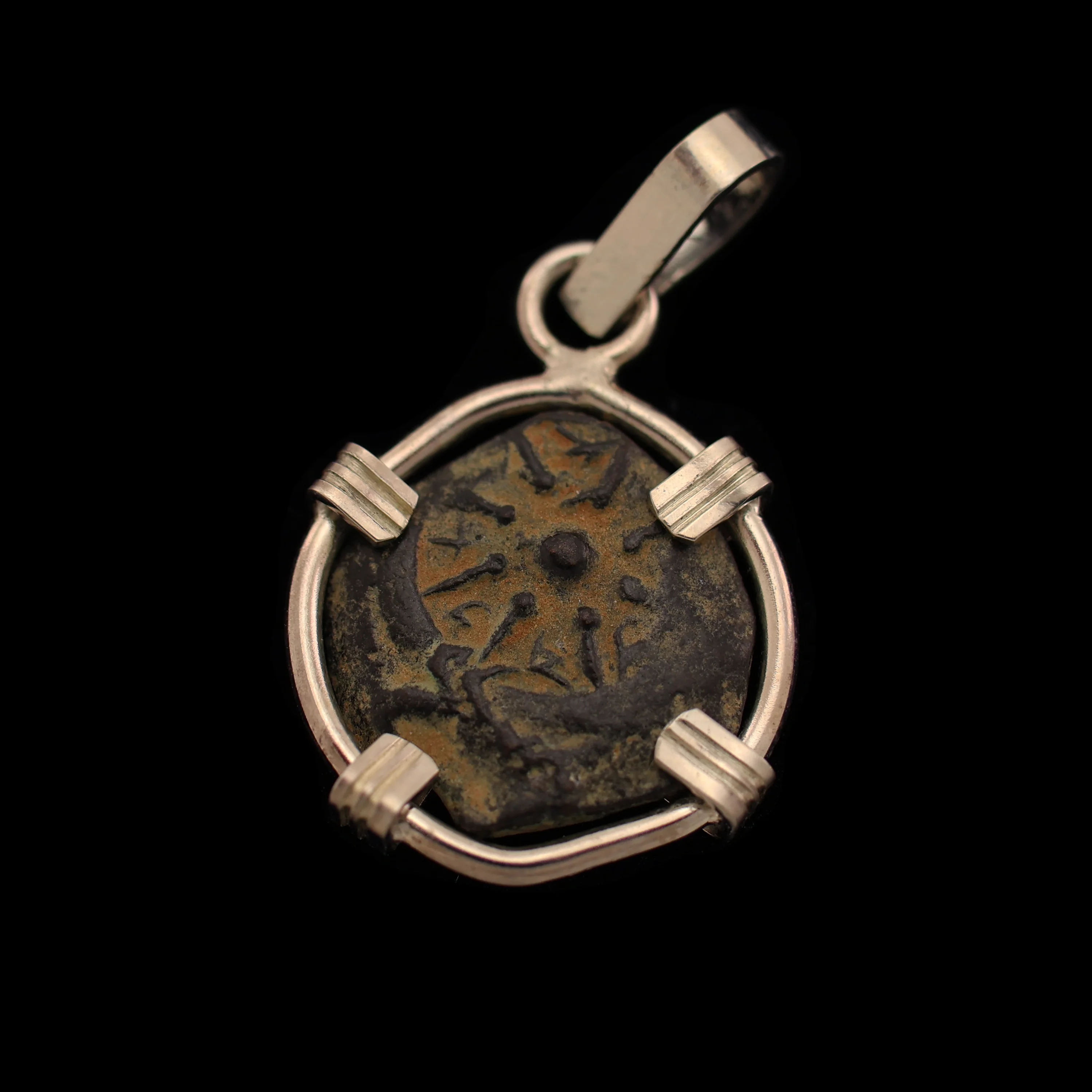
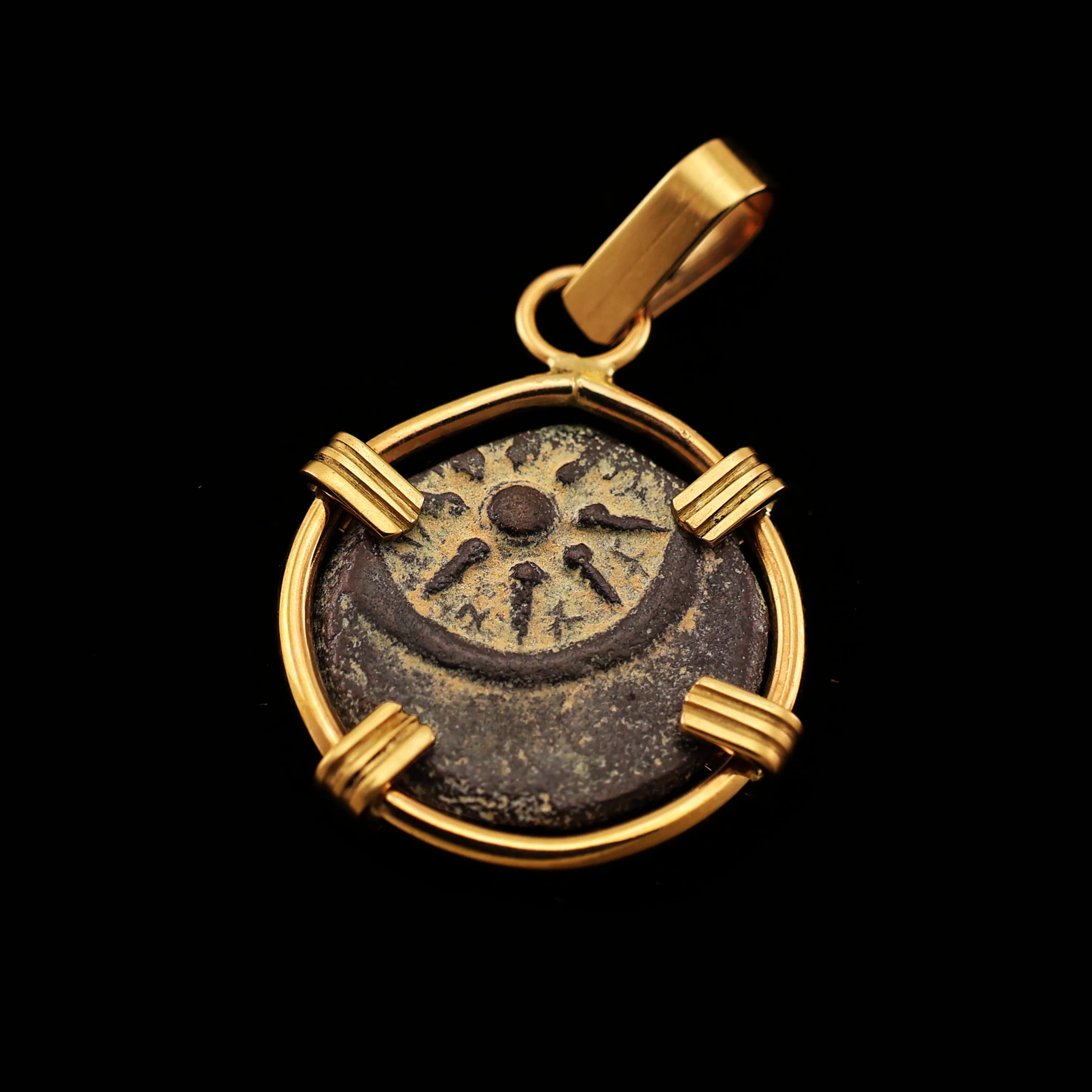
Obverse: Star
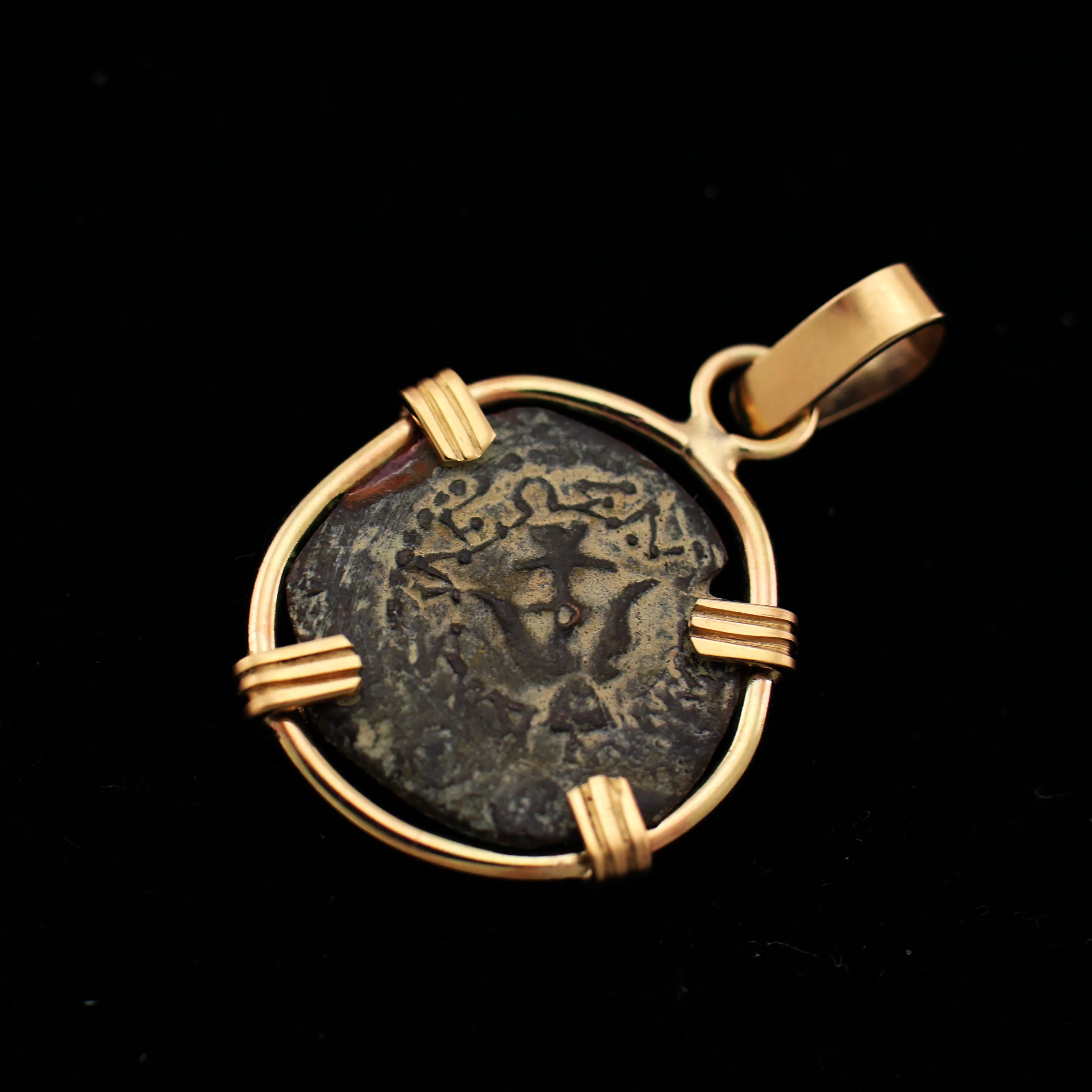
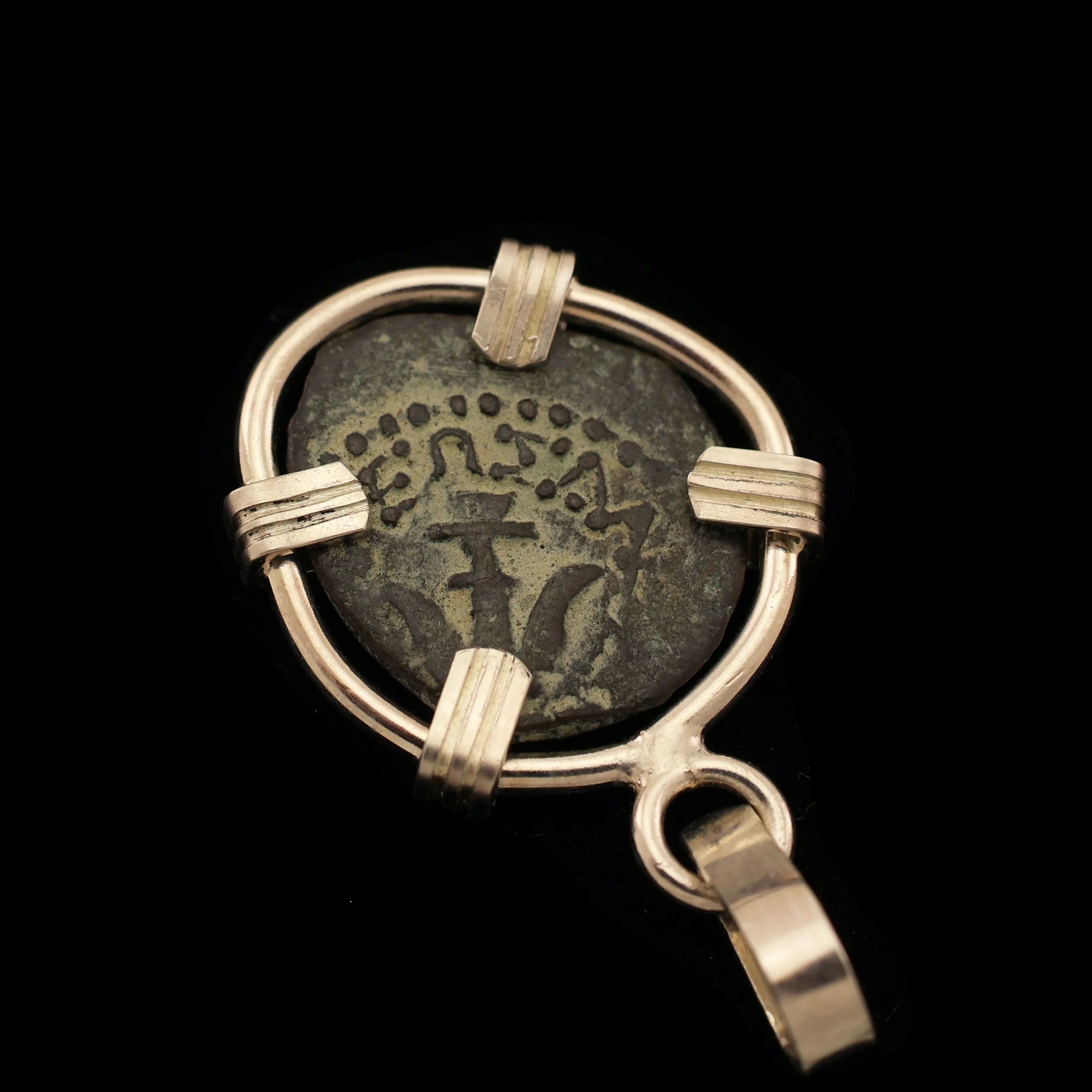
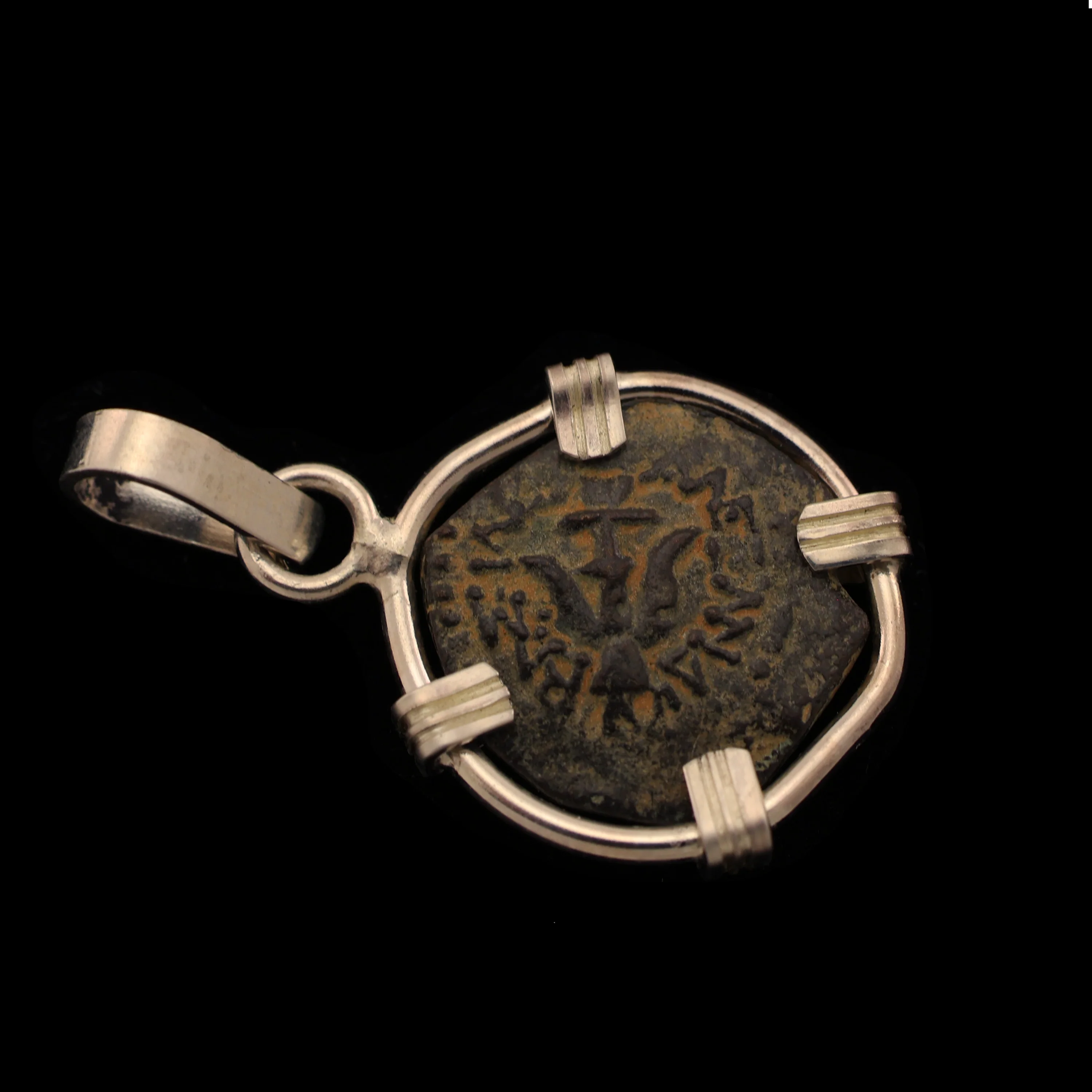
Reverse: Anchor
Date: Minted 103-76 B.C.
Bezel: Sterling Silver
Description
This item is an authentic coin of Ancient Judea, minted in the time of Christ, placed in a handmade bezel of Sterling Silver. There is only 1 of this item; you will receive the exact pendant shown in the photos.
Chain necklaces can be purchased separately through this link.
History of the Artifact
The coin commonly referred to today as the "Widow’s Mite" was originally a small bronze denomination known as a prutah, minted during the reign of Alexander Jannaeus, a Hasmonean king and high priest who ruled Judea from 103 to 76 BCE. These coins were produced in enormous quantities and circulated widely throughout Judea during a period of political consolidation and expansion. Alexander Jannaeus was a member of the Hasmonean dynasty, a priestly line that rose to power following the successful revolt of the Maccabees against Seleucid rule in the second century BCE. Under his reign, Judea expanded its borders and sought to assert greater independence, although this was often accompanied by brutal internal strife, especially between rival Jewish sects such as the Pharisees and Sadducees.
The prutot minted by Jannaeus featured symbols that were acceptable under Jewish religious constraints, which prohibited graven human or animal images. On these coins, the obverse typically depicted a star—usually an eight-rayed symbol within a diadem or circle—while the reverse bore an anchor, a motif borrowed from Hellenistic coinage. The star may have held religious connotations, perhaps referencing divine guidance or the priestly authority of the Hasmonean rulers, while the anchor symbolized strength, stability, and maritime power, likely reflecting the dynasty’s aspirations to regional influence and international trade, particularly through Mediterranean coastal ports.
Authenticity
Ancient Artifacts guarantees the Authenticity of items sold through a three layer system of protection:
- Ancient Artifacts exclusively sources artifacts from trusted and reputable antique distributors, many of whom have been selling Artifacts for decades.
- Next, the Artifact is inspected by an expert team member, who is professionally trained in counterfeit detection After the artifact passes inspection, the Certificate of Authenticity is signed and the Artifact is packaged.
- Finally, Ancient Artifacts gives an additional layer of protection by promising a full refund with no questions asked, in the extremely unlikely event that a counterfeit slips through our vetting process.
Your order will include:
- Roman Judea Prutah Coin Pendant shown in photos
- Certificate of Authenticity
Ancient Artifacts relics are guaranteed authentic and have a 100% money back policy. Read more about our Mission and Promise for authenticity.
Original: $640.00
-70%$640.00
$192.00More Images
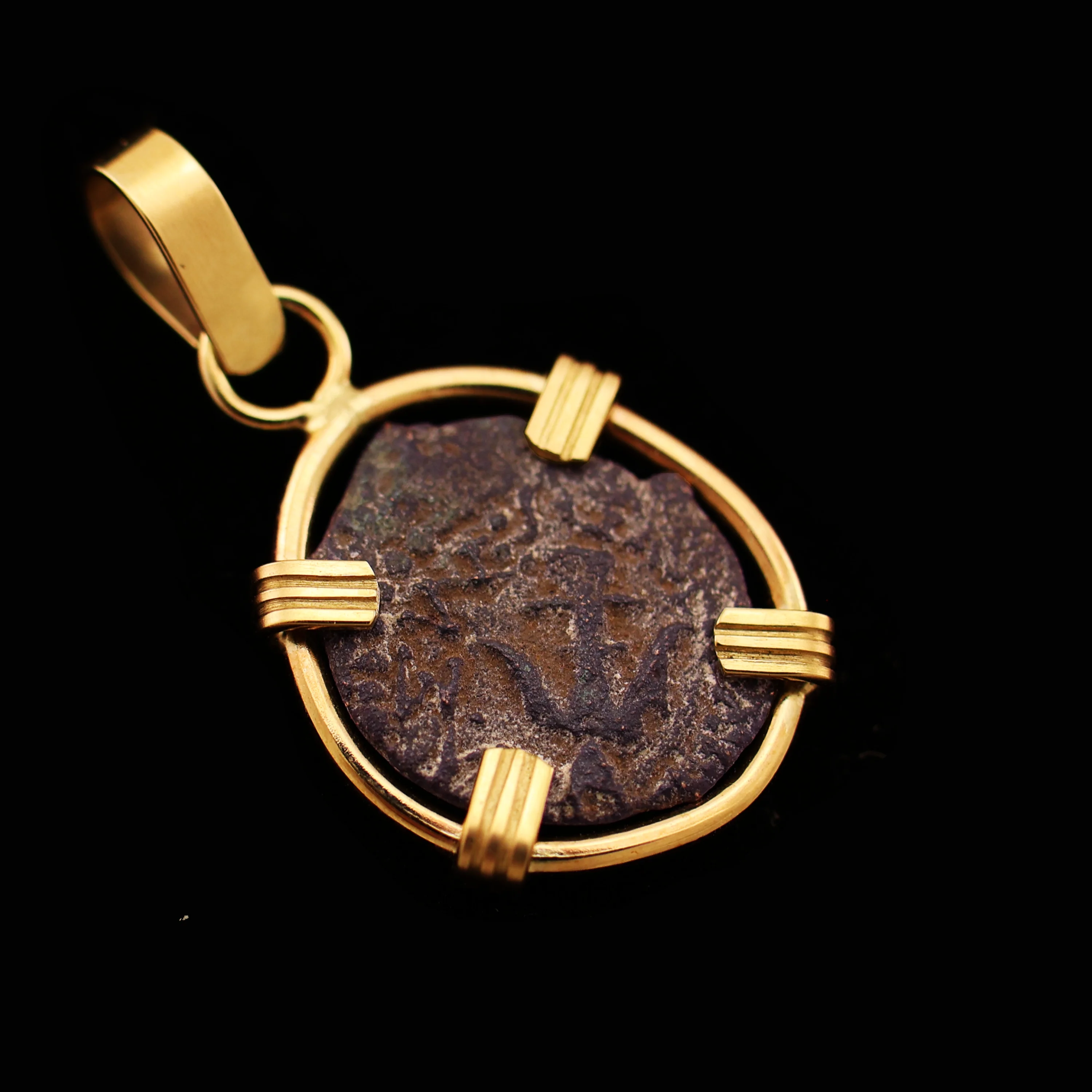
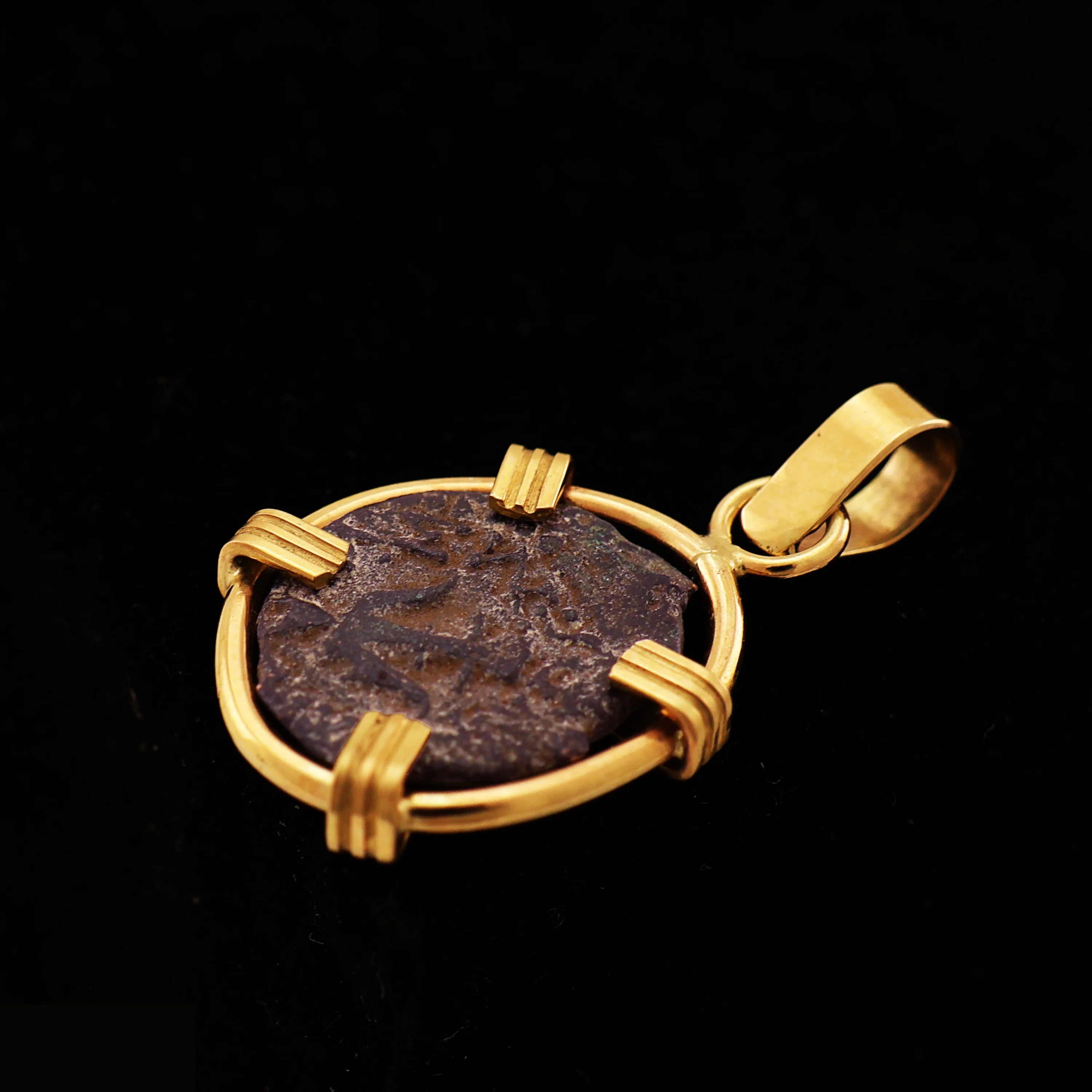
Biblical Widow's Mite Coin Pendant
Coin: Bronze Prutah
Obverse: Star
Reverse: Anchor
Date: Minted 103-76 B.C.
Bezel: Sterling Silver
Description
This item is an authentic coin of Ancient Judea, minted in the time of Christ, placed in a handmade bezel of Sterling Silver. There is only 1 of this item; you will receive the exact pendant shown in the photos.
Chain necklaces can be purchased separately through this link.
History of the Artifact
The coin commonly referred to today as the "Widow’s Mite" was originally a small bronze denomination known as a prutah, minted during the reign of Alexander Jannaeus, a Hasmonean king and high priest who ruled Judea from 103 to 76 BCE. These coins were produced in enormous quantities and circulated widely throughout Judea during a period of political consolidation and expansion. Alexander Jannaeus was a member of the Hasmonean dynasty, a priestly line that rose to power following the successful revolt of the Maccabees against Seleucid rule in the second century BCE. Under his reign, Judea expanded its borders and sought to assert greater independence, although this was often accompanied by brutal internal strife, especially between rival Jewish sects such as the Pharisees and Sadducees.
The prutot minted by Jannaeus featured symbols that were acceptable under Jewish religious constraints, which prohibited graven human or animal images. On these coins, the obverse typically depicted a star—usually an eight-rayed symbol within a diadem or circle—while the reverse bore an anchor, a motif borrowed from Hellenistic coinage. The star may have held religious connotations, perhaps referencing divine guidance or the priestly authority of the Hasmonean rulers, while the anchor symbolized strength, stability, and maritime power, likely reflecting the dynasty’s aspirations to regional influence and international trade, particularly through Mediterranean coastal ports.
Authenticity
Ancient Artifacts guarantees the Authenticity of items sold through a three layer system of protection:
- Ancient Artifacts exclusively sources artifacts from trusted and reputable antique distributors, many of whom have been selling Artifacts for decades.
- Next, the Artifact is inspected by an expert team member, who is professionally trained in counterfeit detection After the artifact passes inspection, the Certificate of Authenticity is signed and the Artifact is packaged.
- Finally, Ancient Artifacts gives an additional layer of protection by promising a full refund with no questions asked, in the extremely unlikely event that a counterfeit slips through our vetting process.
Your order will include:
- Roman Judea Prutah Coin Pendant shown in photos
- Certificate of Authenticity
Ancient Artifacts relics are guaranteed authentic and have a 100% money back policy. Read more about our Mission and Promise for authenticity.
Product Information
Product Information
Shipping & Returns
Shipping & Returns
Description
Coin: Bronze Prutah
Obverse: Star
Reverse: Anchor
Date: Minted 103-76 B.C.
Bezel: Sterling Silver
Description
This item is an authentic coin of Ancient Judea, minted in the time of Christ, placed in a handmade bezel of Sterling Silver. There is only 1 of this item; you will receive the exact pendant shown in the photos.
Chain necklaces can be purchased separately through this link.
History of the Artifact
The coin commonly referred to today as the "Widow’s Mite" was originally a small bronze denomination known as a prutah, minted during the reign of Alexander Jannaeus, a Hasmonean king and high priest who ruled Judea from 103 to 76 BCE. These coins were produced in enormous quantities and circulated widely throughout Judea during a period of political consolidation and expansion. Alexander Jannaeus was a member of the Hasmonean dynasty, a priestly line that rose to power following the successful revolt of the Maccabees against Seleucid rule in the second century BCE. Under his reign, Judea expanded its borders and sought to assert greater independence, although this was often accompanied by brutal internal strife, especially between rival Jewish sects such as the Pharisees and Sadducees.
The prutot minted by Jannaeus featured symbols that were acceptable under Jewish religious constraints, which prohibited graven human or animal images. On these coins, the obverse typically depicted a star—usually an eight-rayed symbol within a diadem or circle—while the reverse bore an anchor, a motif borrowed from Hellenistic coinage. The star may have held religious connotations, perhaps referencing divine guidance or the priestly authority of the Hasmonean rulers, while the anchor symbolized strength, stability, and maritime power, likely reflecting the dynasty’s aspirations to regional influence and international trade, particularly through Mediterranean coastal ports.
Authenticity
Ancient Artifacts guarantees the Authenticity of items sold through a three layer system of protection:
- Ancient Artifacts exclusively sources artifacts from trusted and reputable antique distributors, many of whom have been selling Artifacts for decades.
- Next, the Artifact is inspected by an expert team member, who is professionally trained in counterfeit detection After the artifact passes inspection, the Certificate of Authenticity is signed and the Artifact is packaged.
- Finally, Ancient Artifacts gives an additional layer of protection by promising a full refund with no questions asked, in the extremely unlikely event that a counterfeit slips through our vetting process.
Your order will include:
- Roman Judea Prutah Coin Pendant shown in photos
- Certificate of Authenticity
Ancient Artifacts relics are guaranteed authentic and have a 100% money back policy. Read more about our Mission and Promise for authenticity.