Greek Coin | Perseus Design
History of the Artifact
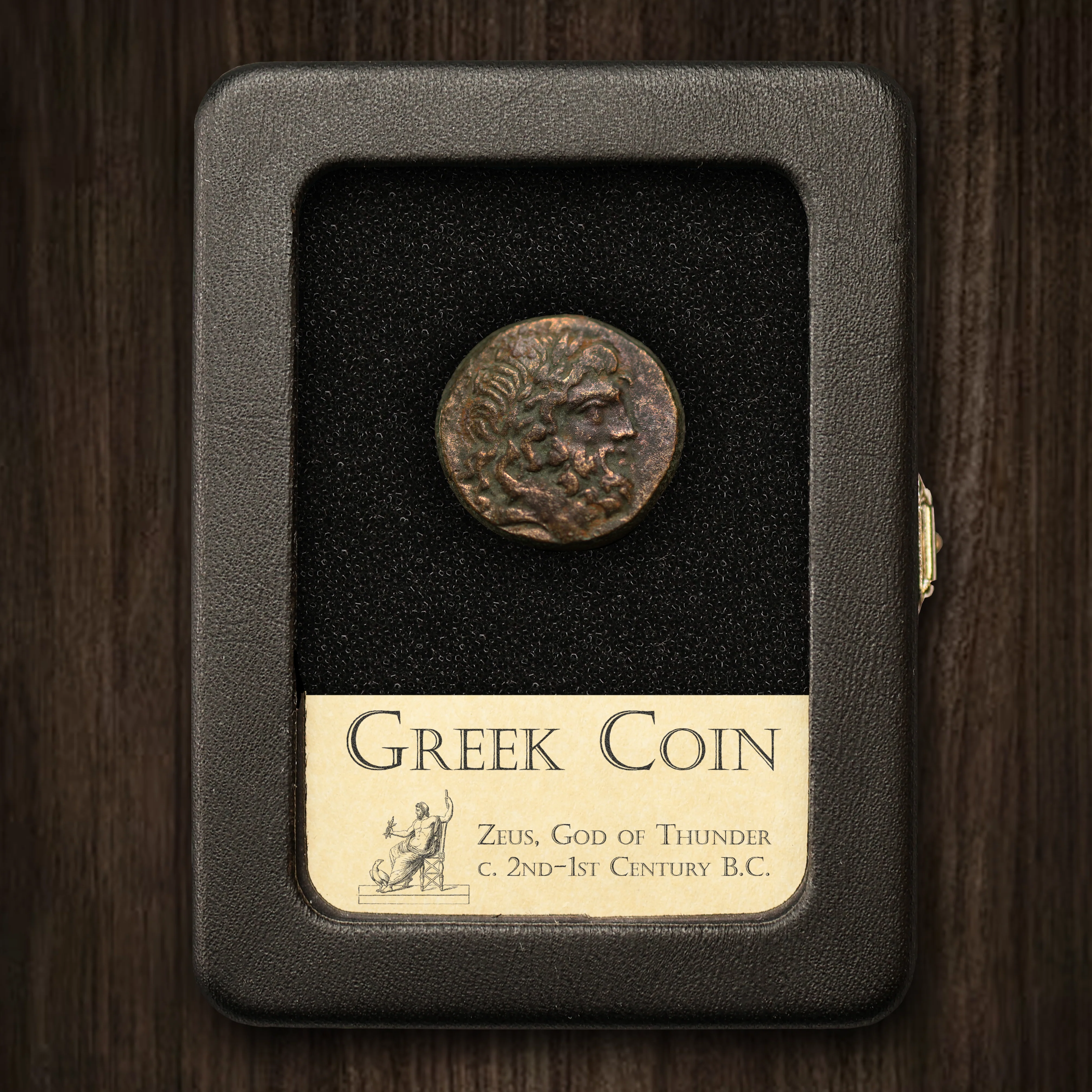
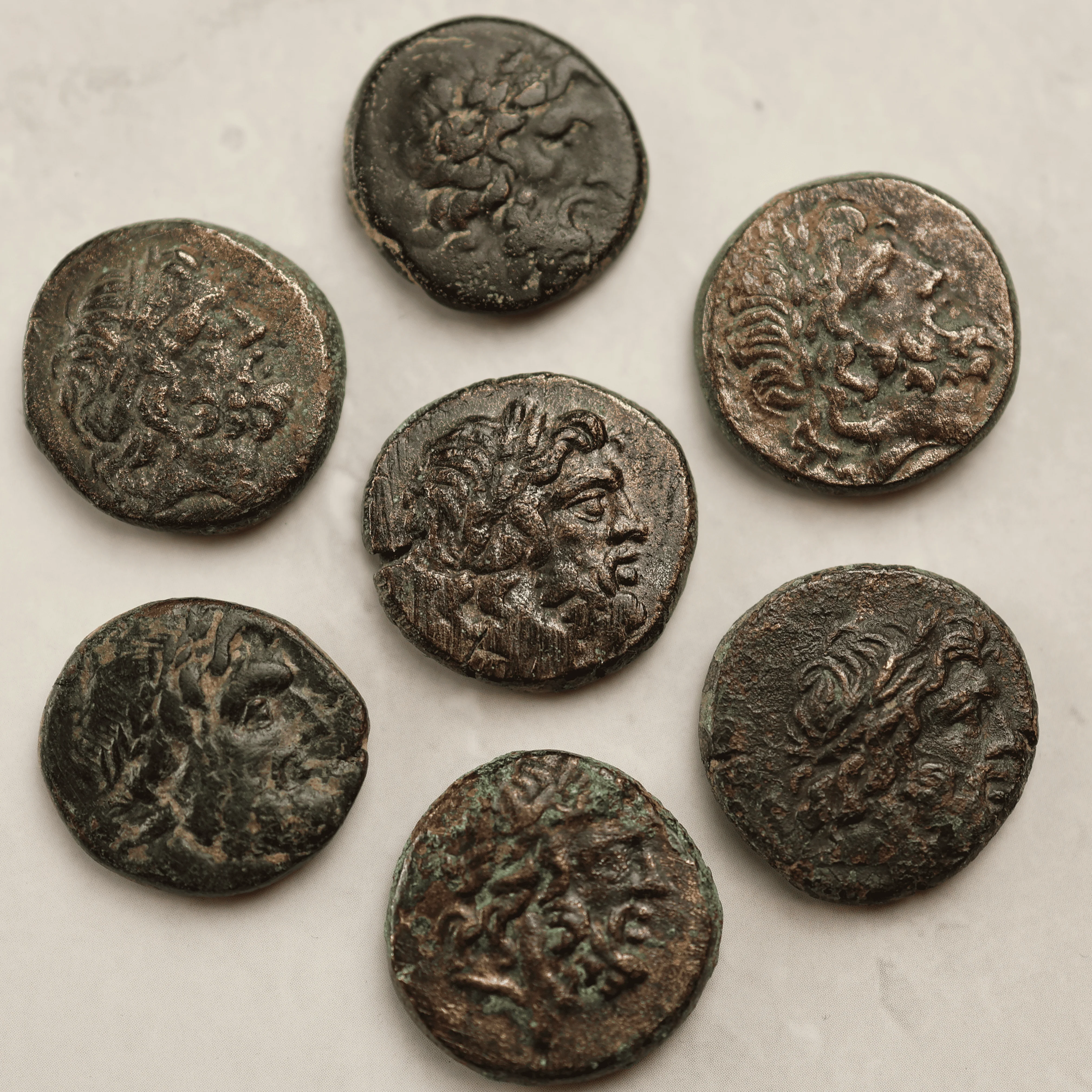
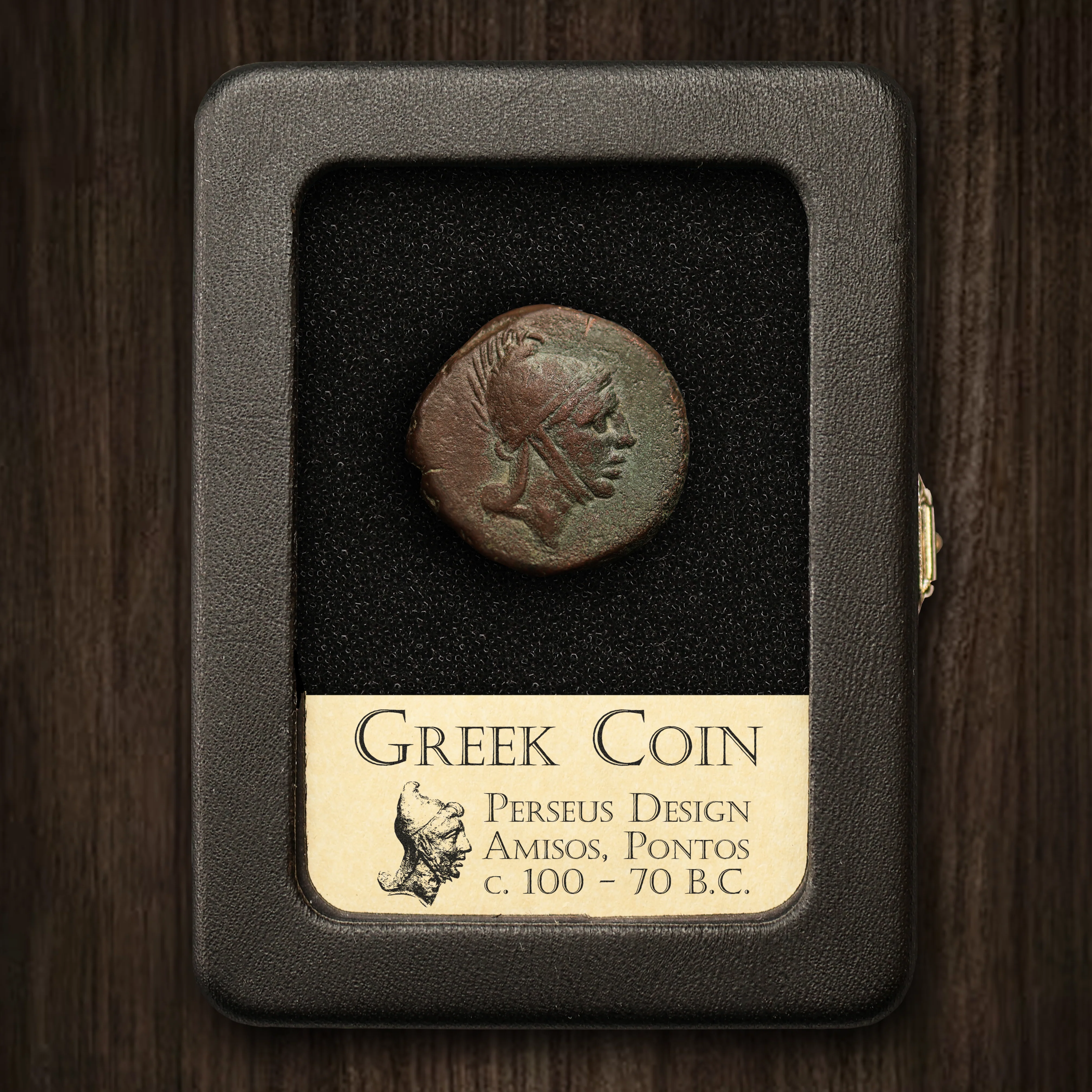
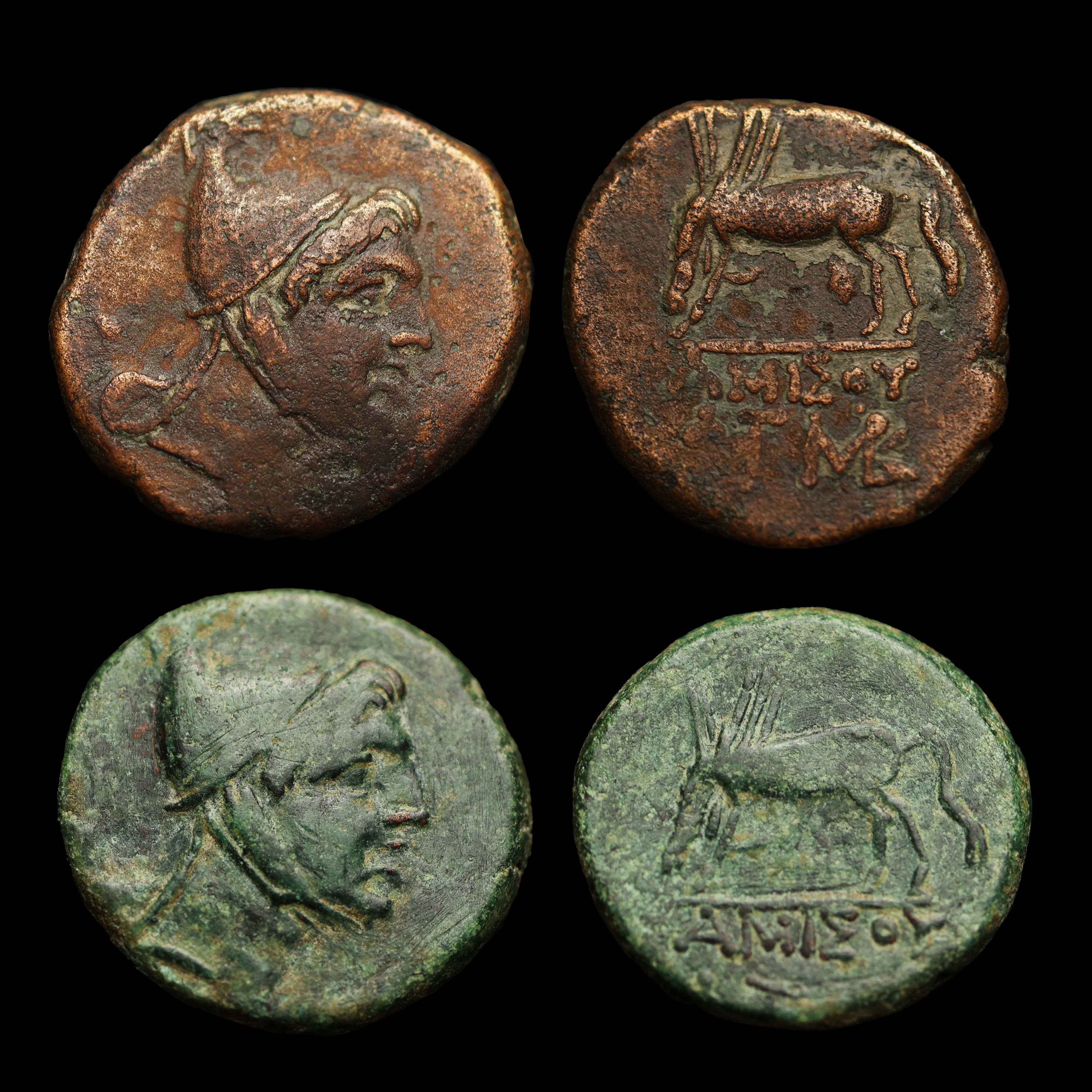
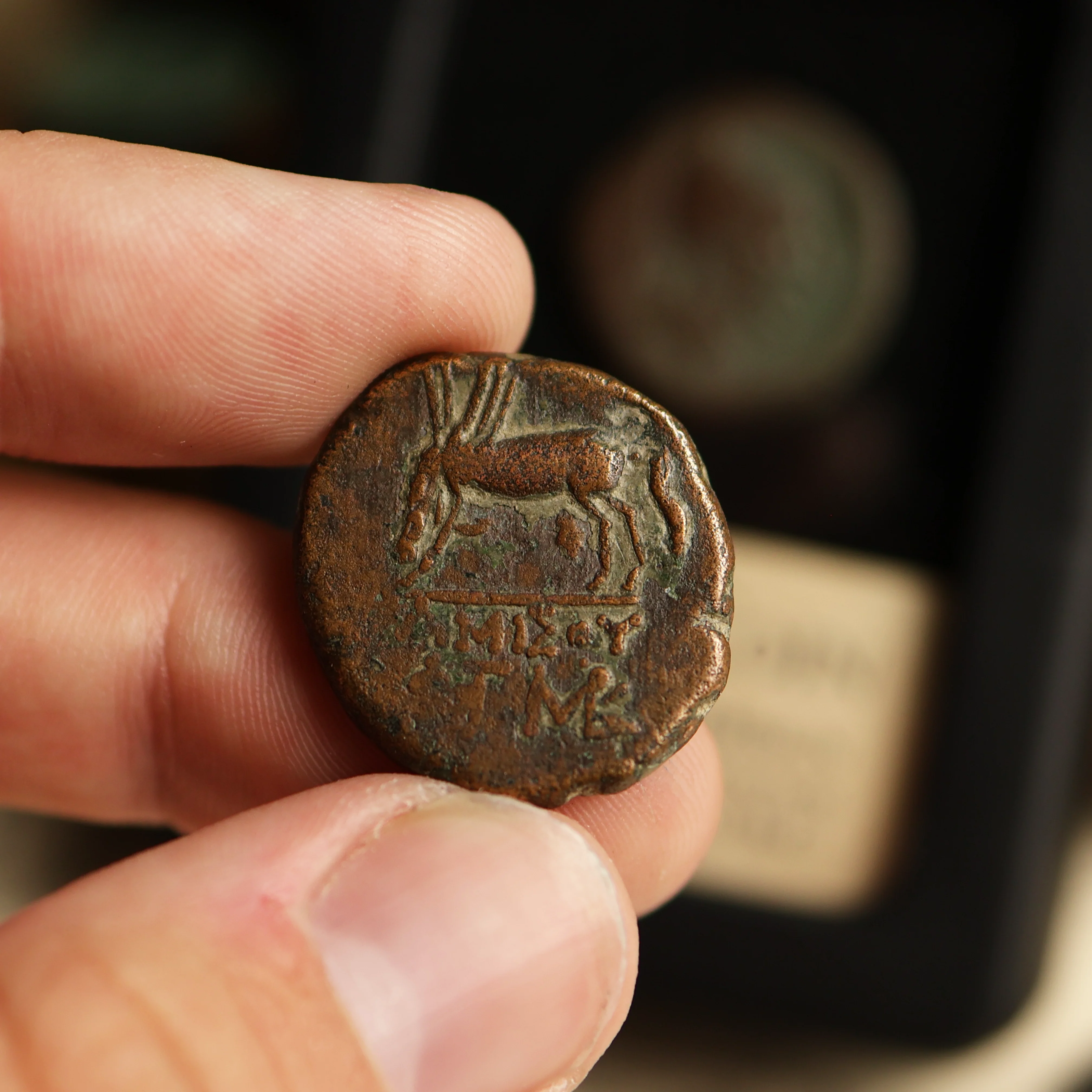
In the first century B.C., the city of Amisos in Pontos issued bronze coins featuring Perseus, the mythological hero best known for slaying the Gorgon Medusa. His profile appears prominently on the obverse, wearing a helmet adorned with a griffin crest. The reverse shows Pegasus, the winged horse with which Perseus escaped after decapitating Medusa, grazing above the inscription “AMIΣOY” — the ancient Greek name for Amisos.
The choice of Perseus was deliberate. The royal house of Pontos, especially under Mithridates VI Eupator, claimed descent from the hero, making his image a powerful emblem of dynastic legitimacy and pride. By circulating these coins, local authorities not only facilitated commerce but also reinforced the region’s cultural identity, linking daily transactions to a broader narrative of heroic ancestry and divine sanction.
These bronzes were not large denominations; rather, they functioned as the small change of daily commerce, handled by merchants, farmers, and travellers across the Black Sea region. Yet even in their modest form, they carried a layered message. The imagery connected ordinary people to the heroic myth of Perseus, while also serving as subtle propaganda for Mithridatic rule during a period of tension with Rome. In this way, these coins stand as artifacts of both economic life and political symbolism, encapsulating how local mints in Pontos used myth to assert Hellenic cultural independence in a world increasingly dominated by Roman power.
How do I know these are original Greek coins?
Ancient Artifacts guarantees the Authenticity of items sold through a three layer system of protection:
- Ancient Artifacts exclusively sources artifacts from trusted and reputable antique distributors, many of whom have been selling Artifacts for decades.
- Next, the Artifact is inspected by an expert team member, who is professionally trained in counterfeit detection After the artifact passes inspection, the Certificate of Authenticity is signed and the Artifact is packaged.
- Finally, Ancient Artifacts gives an additional layer of protection by promising a full refund with no questions asked, in the extremely unlikely event that a counterfeit slips through our vetting process.
What will my artifact look like?
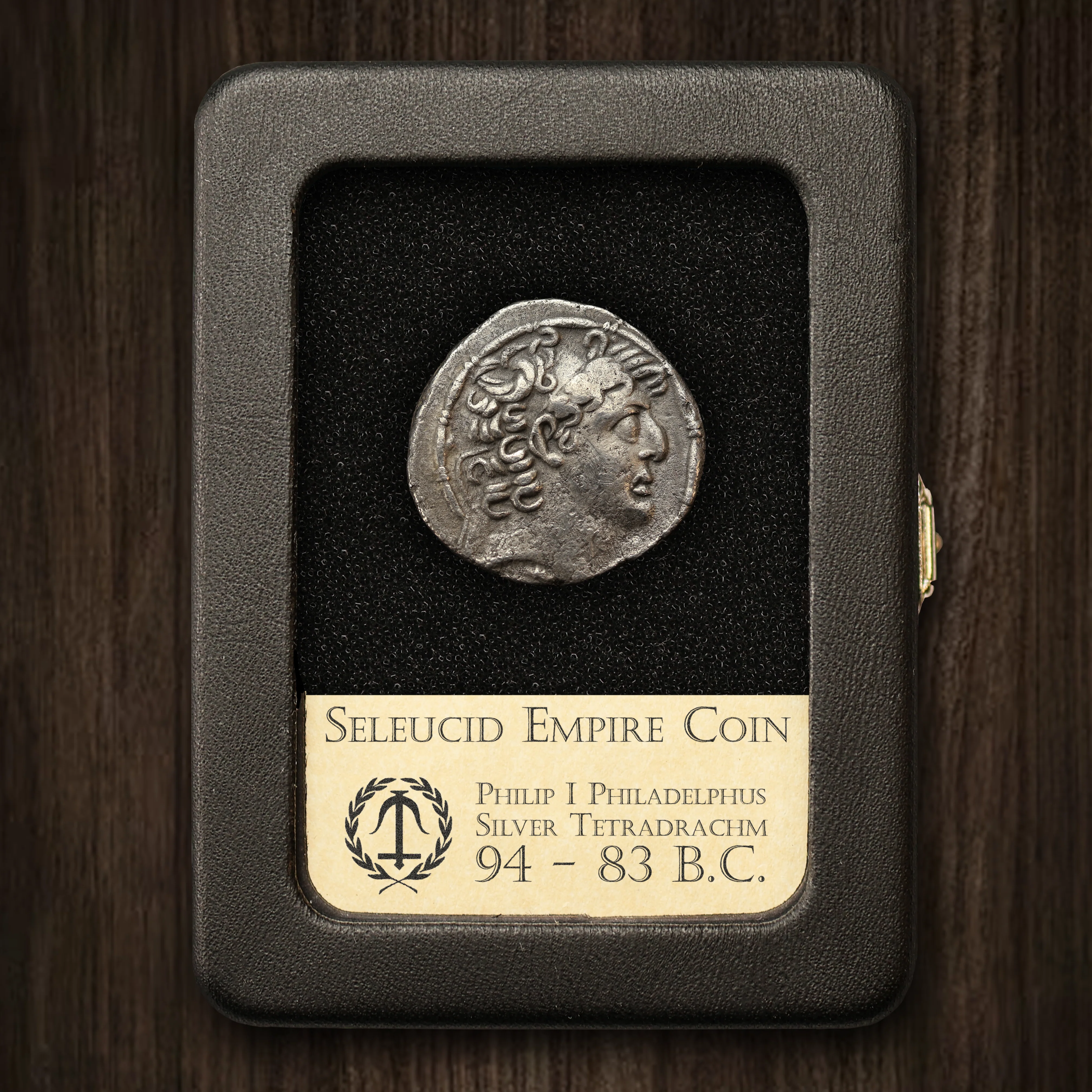
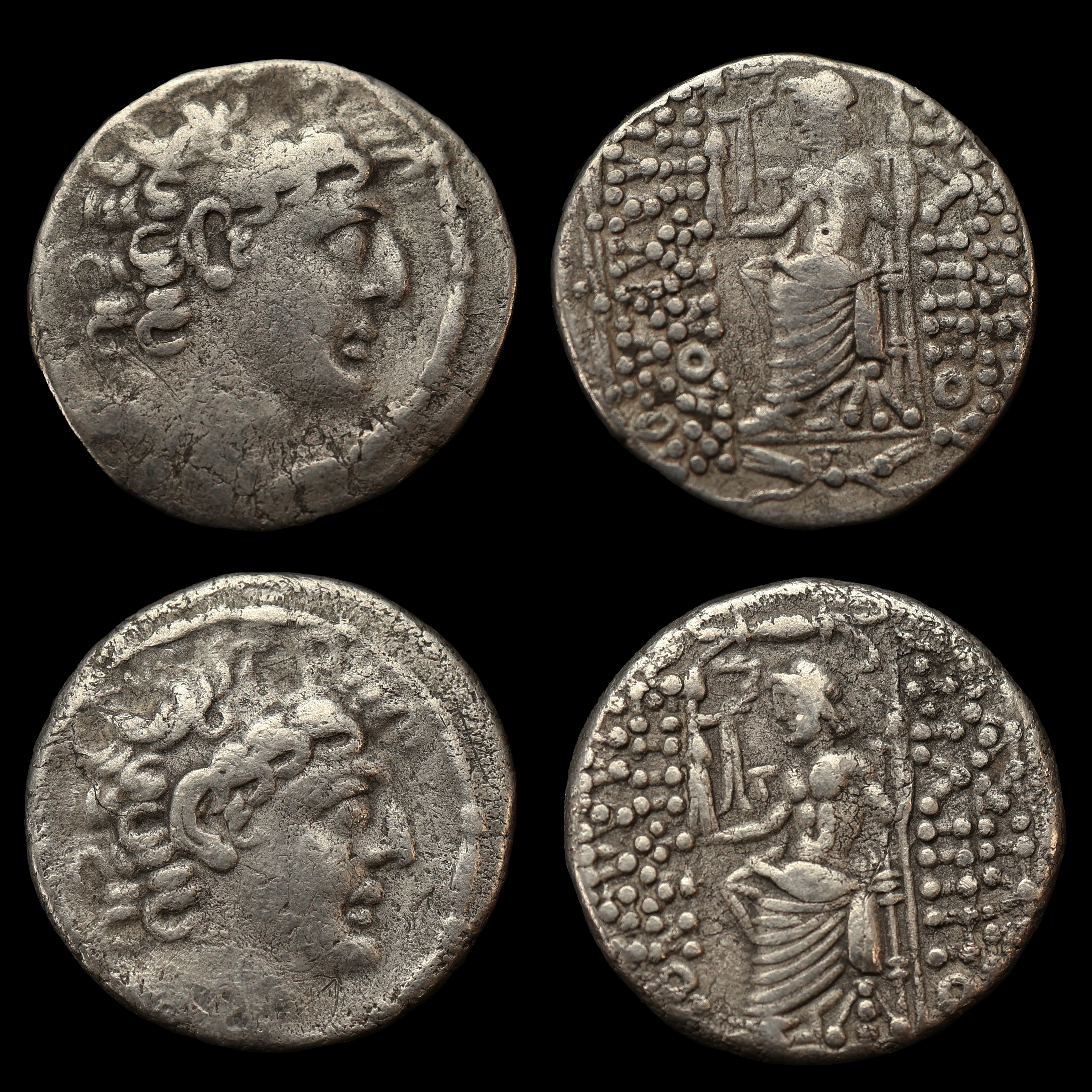
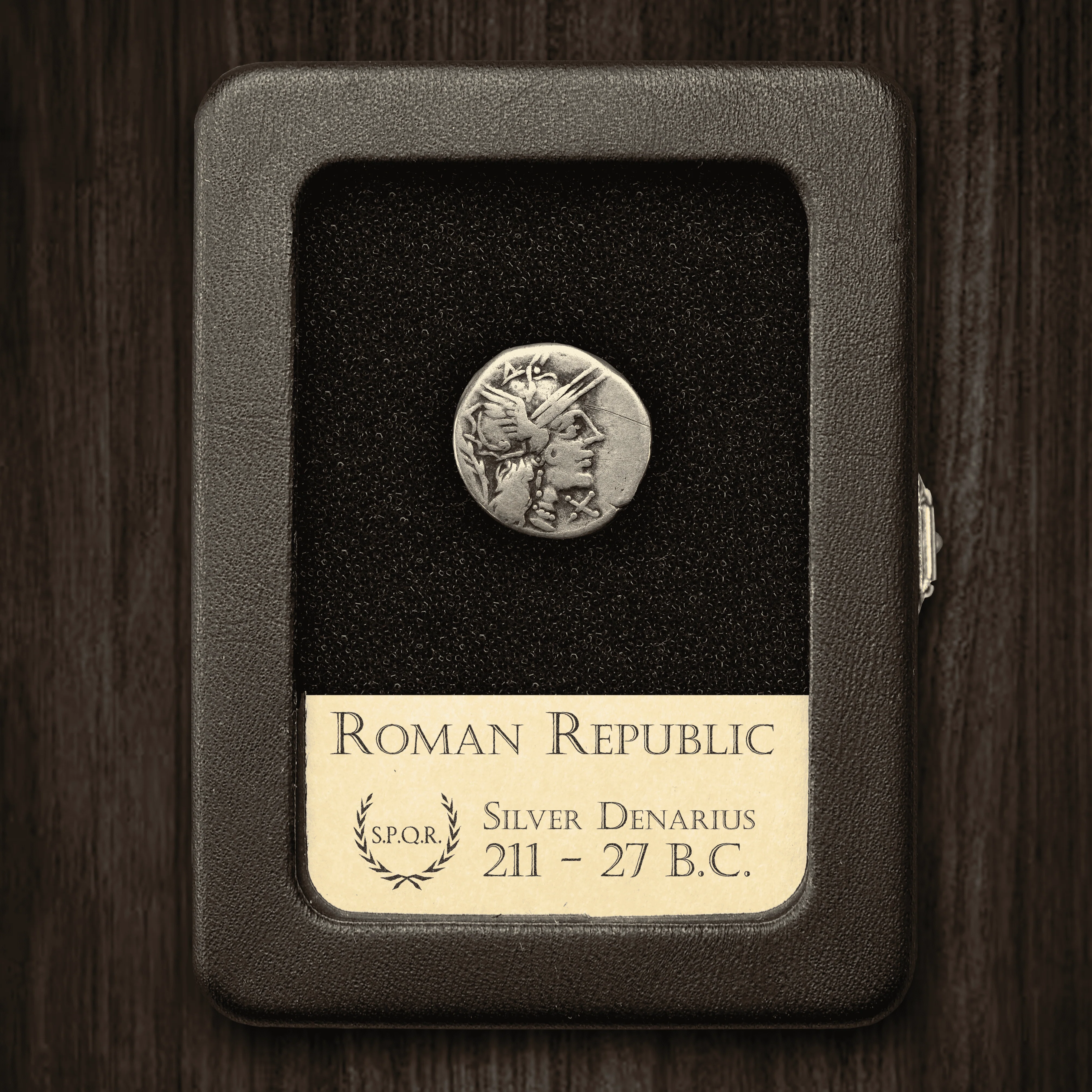
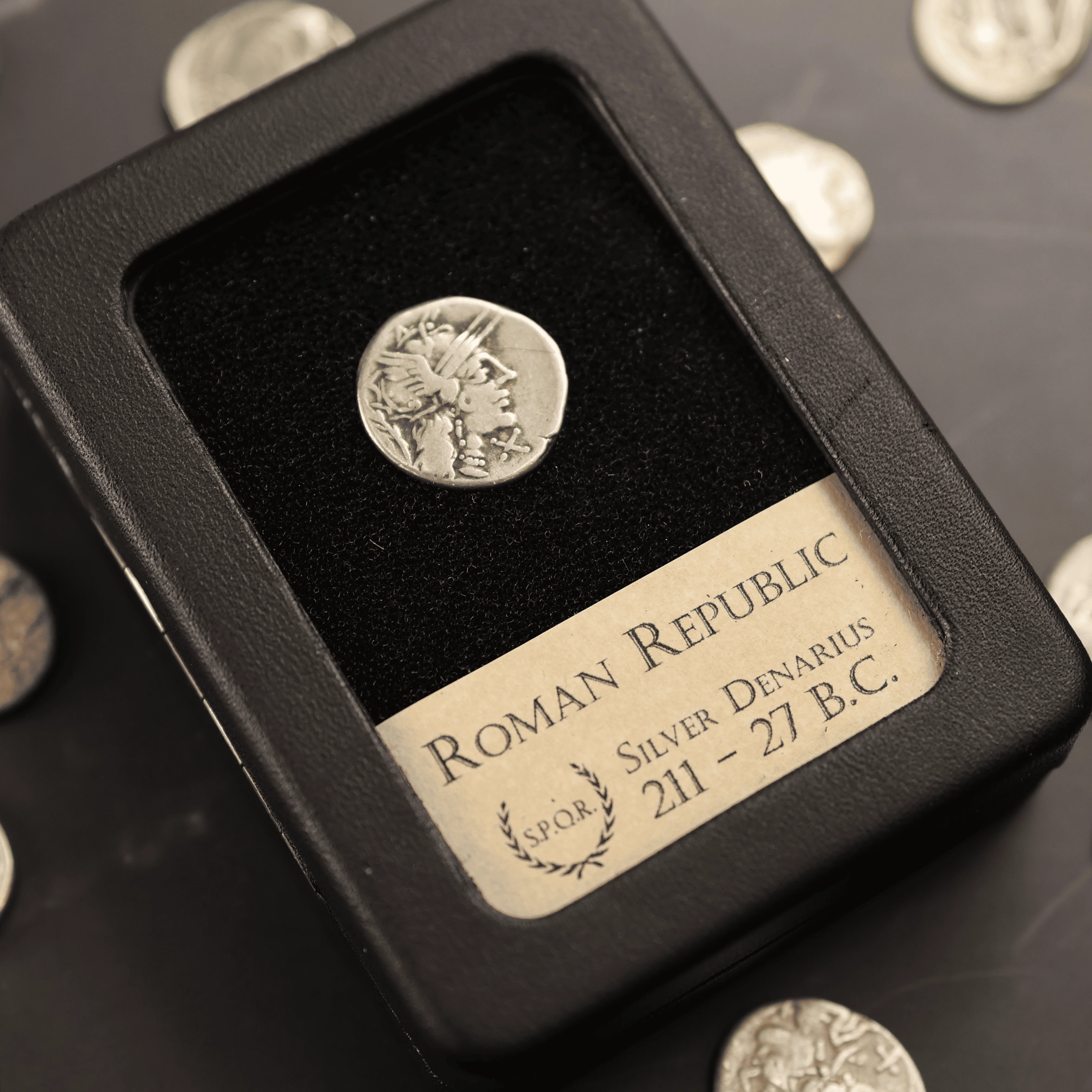
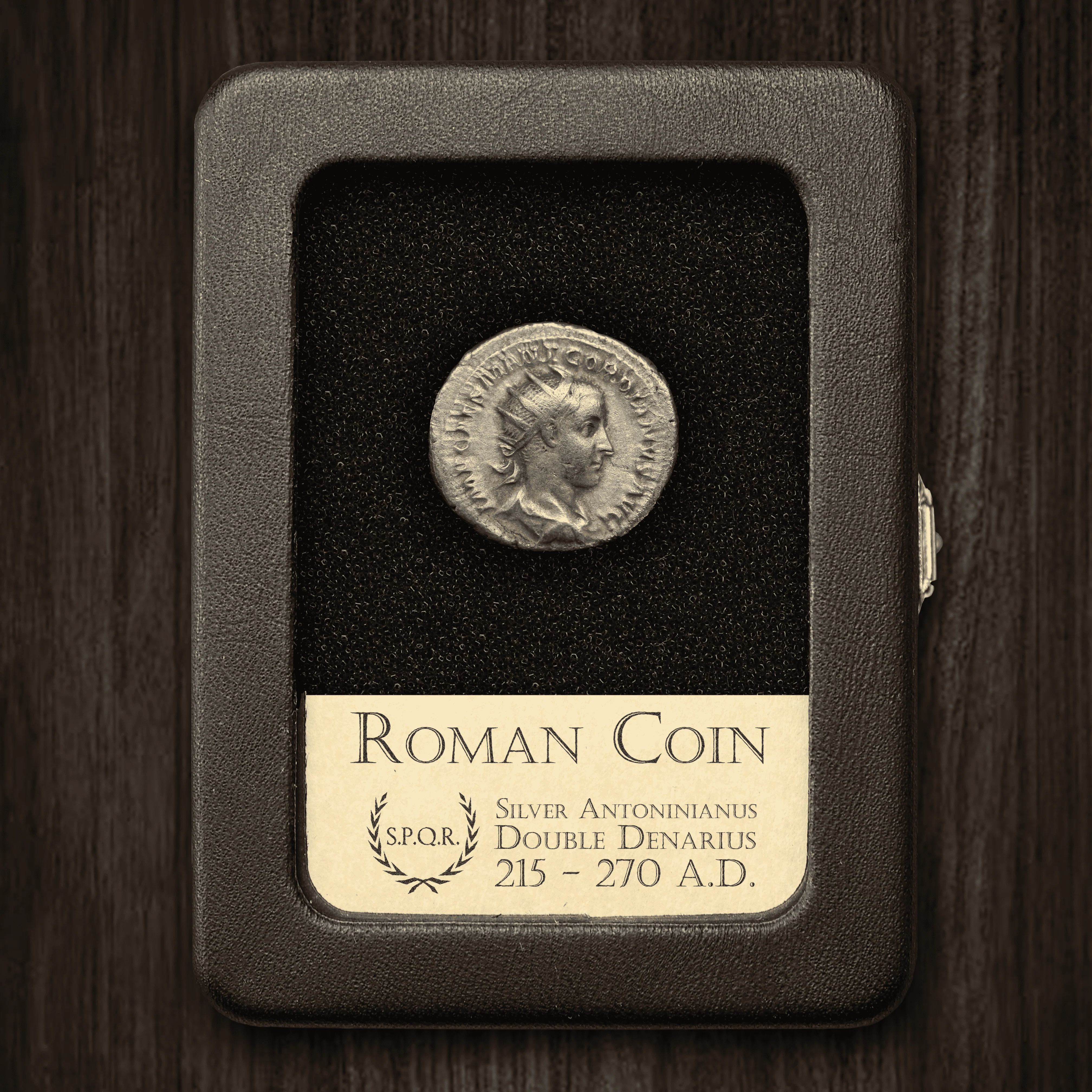
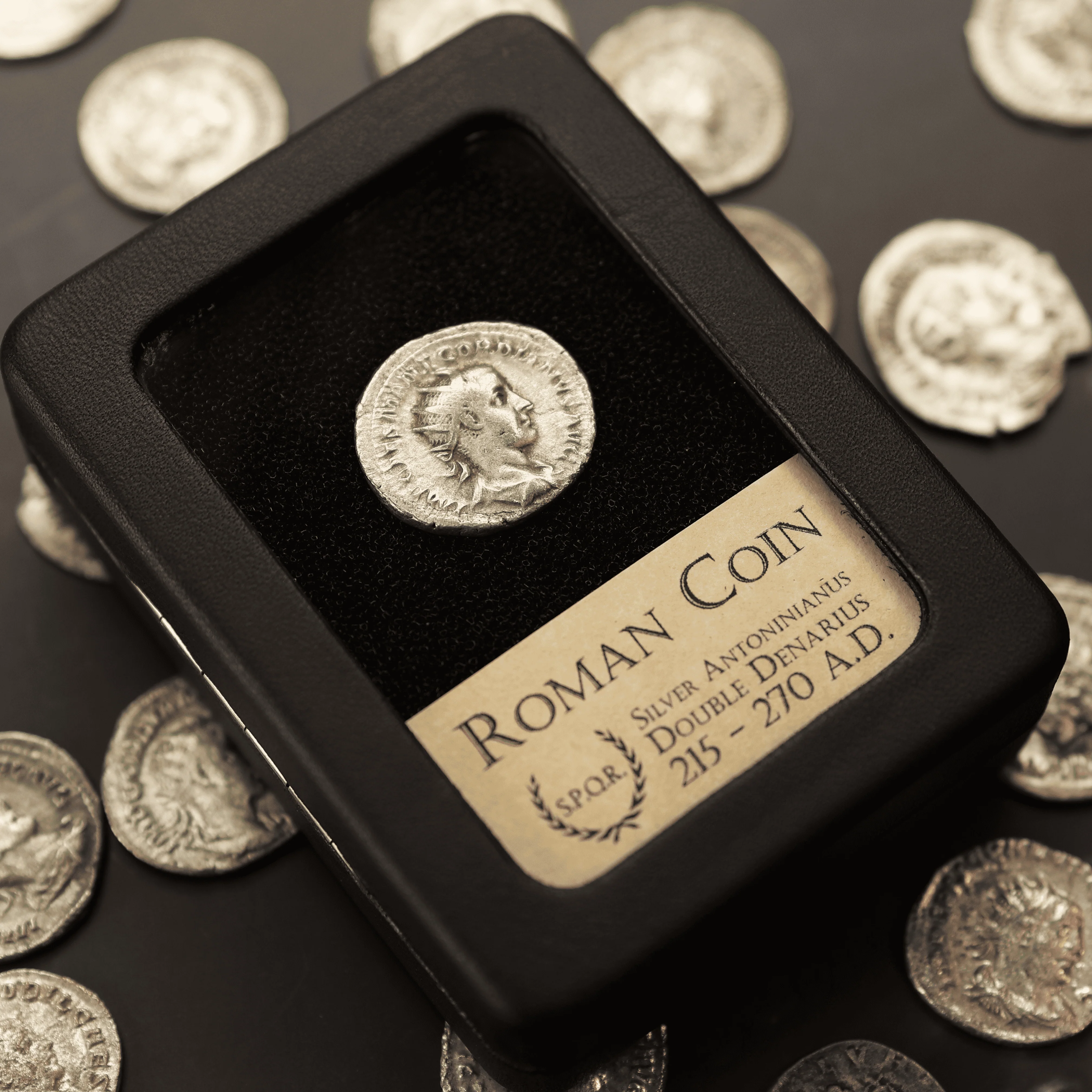
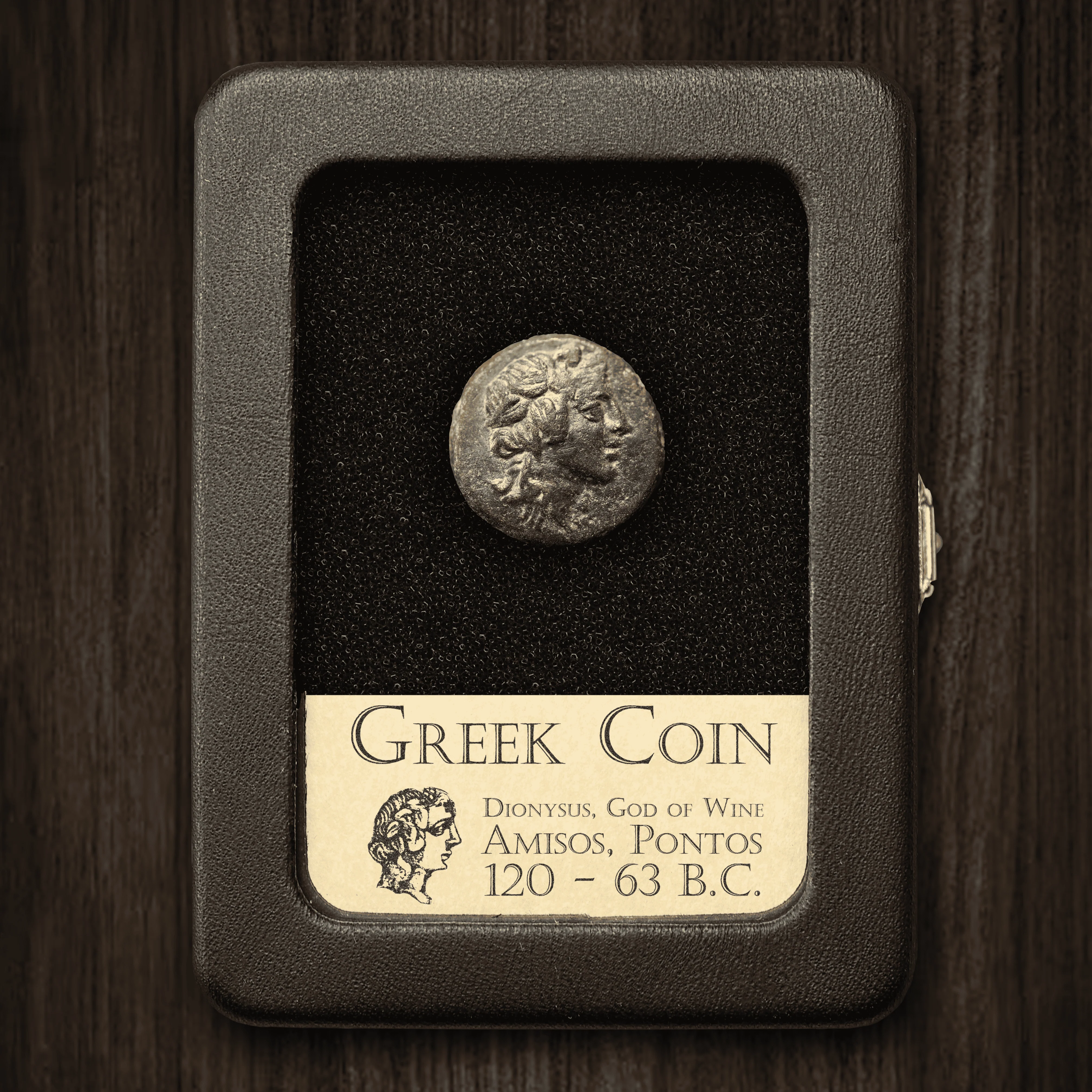
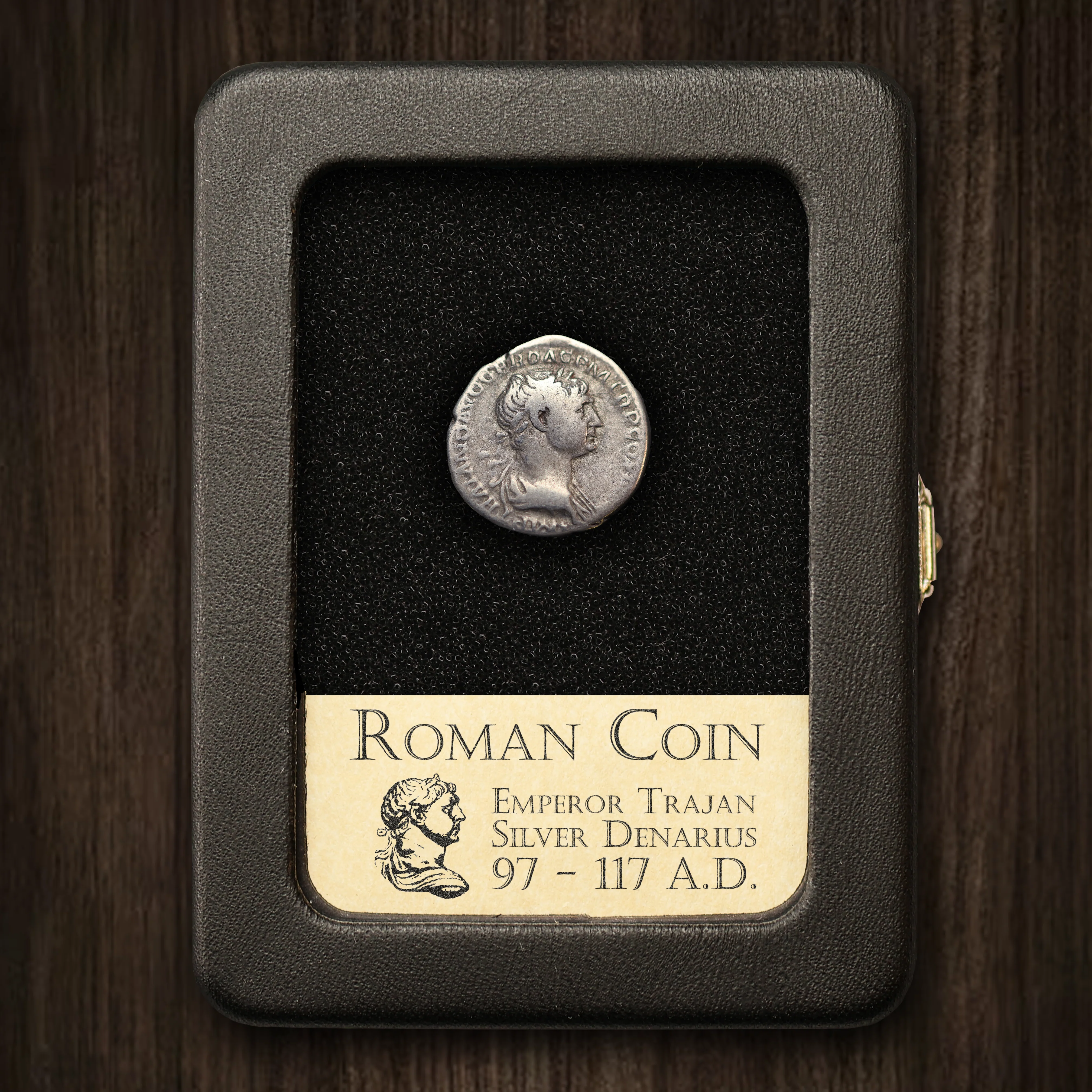
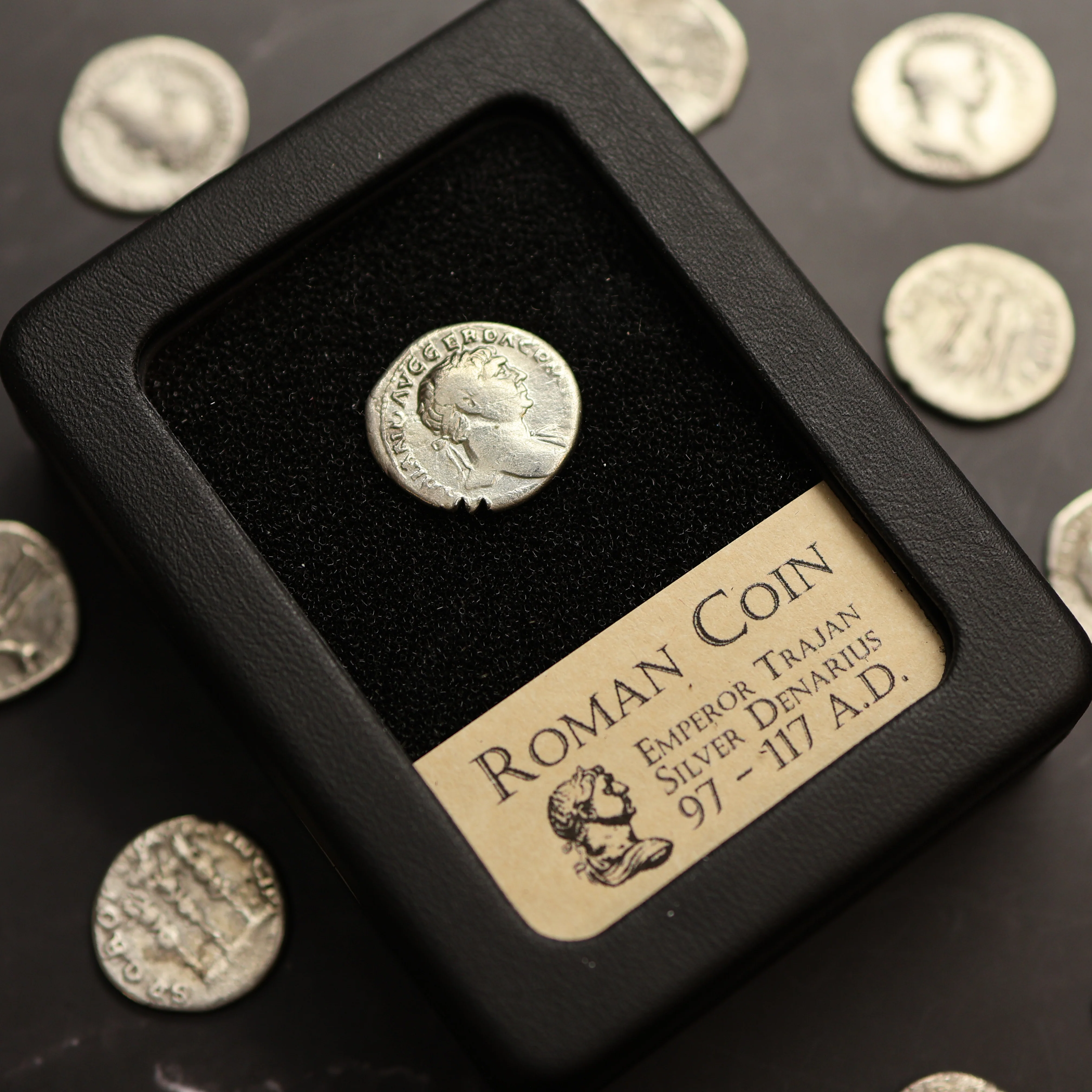
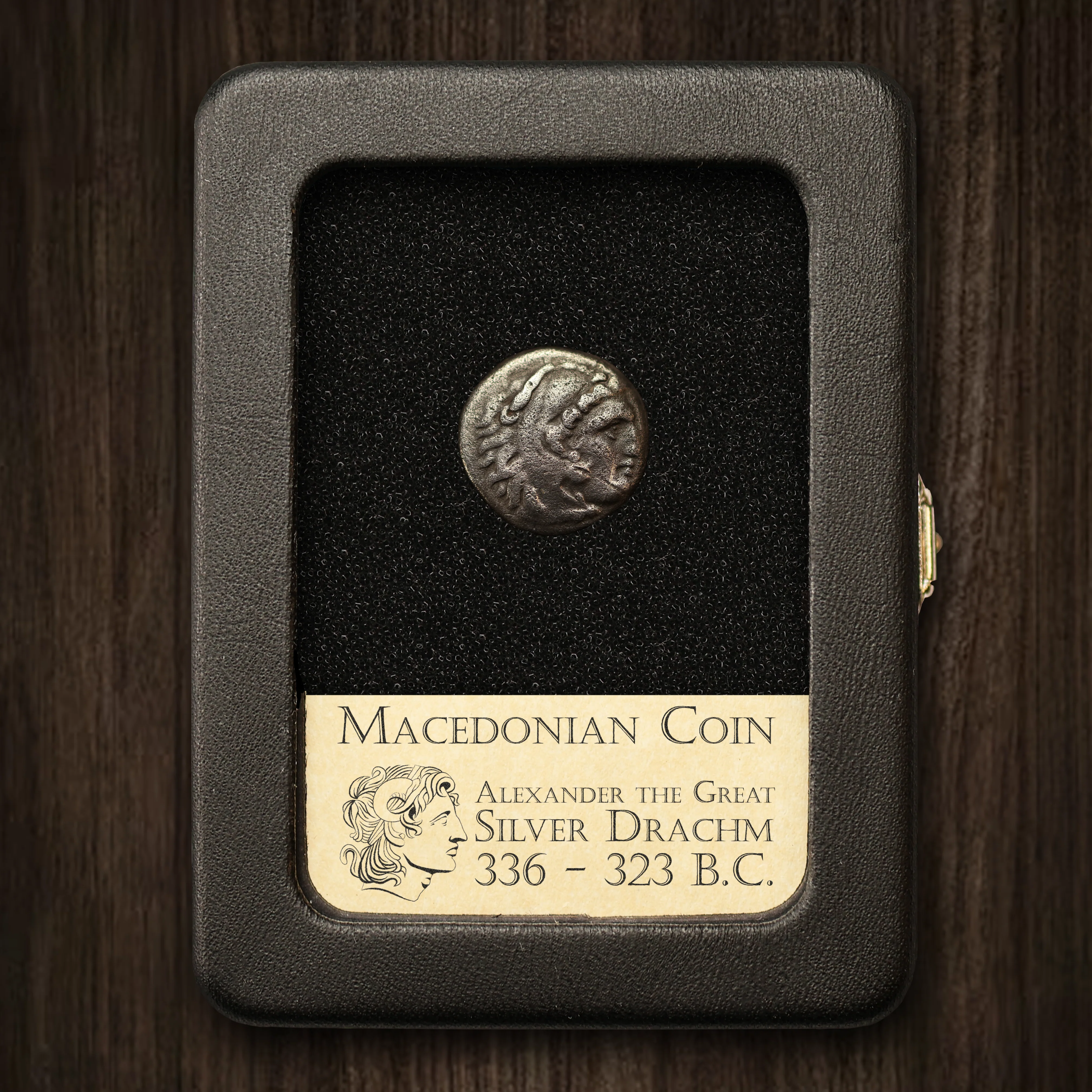
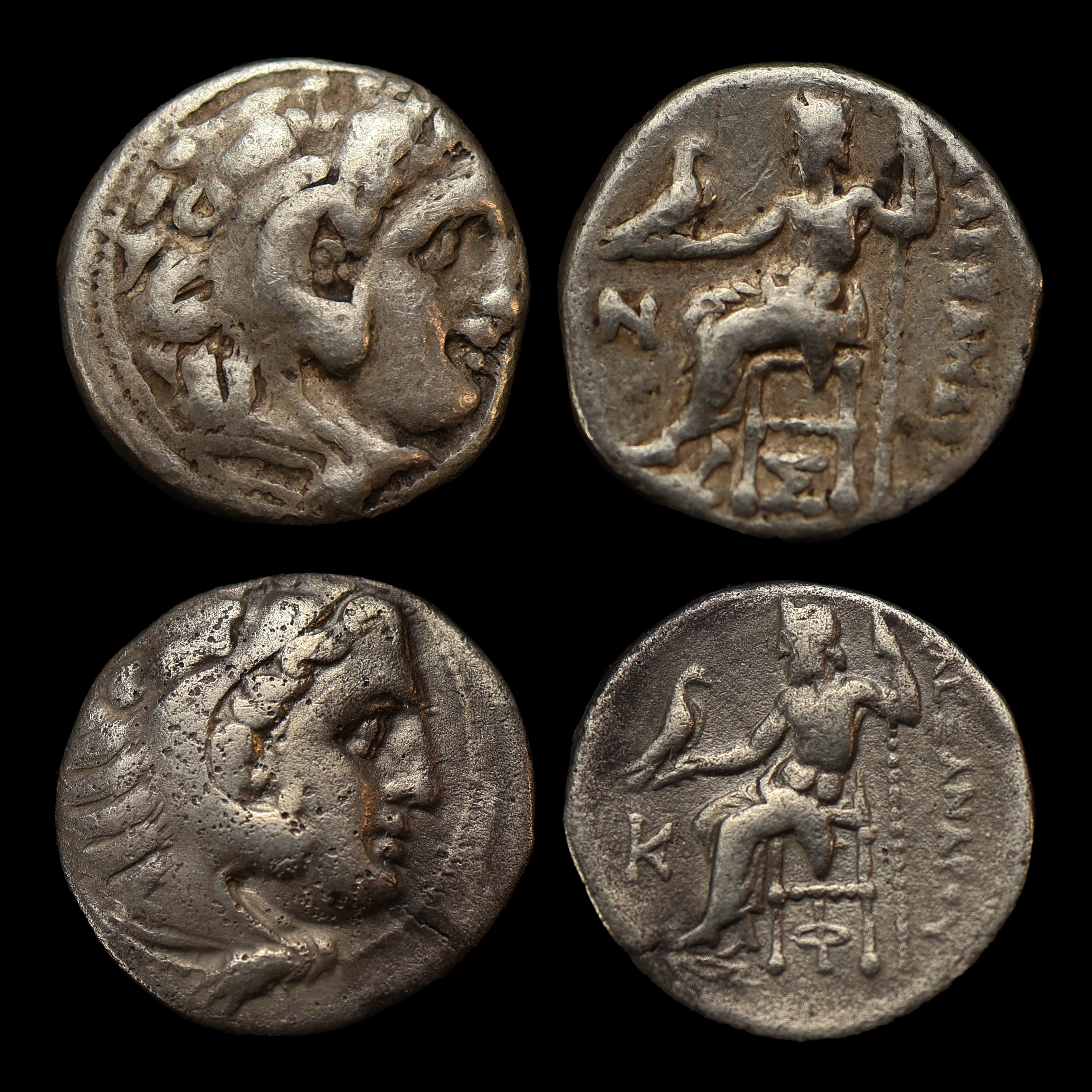
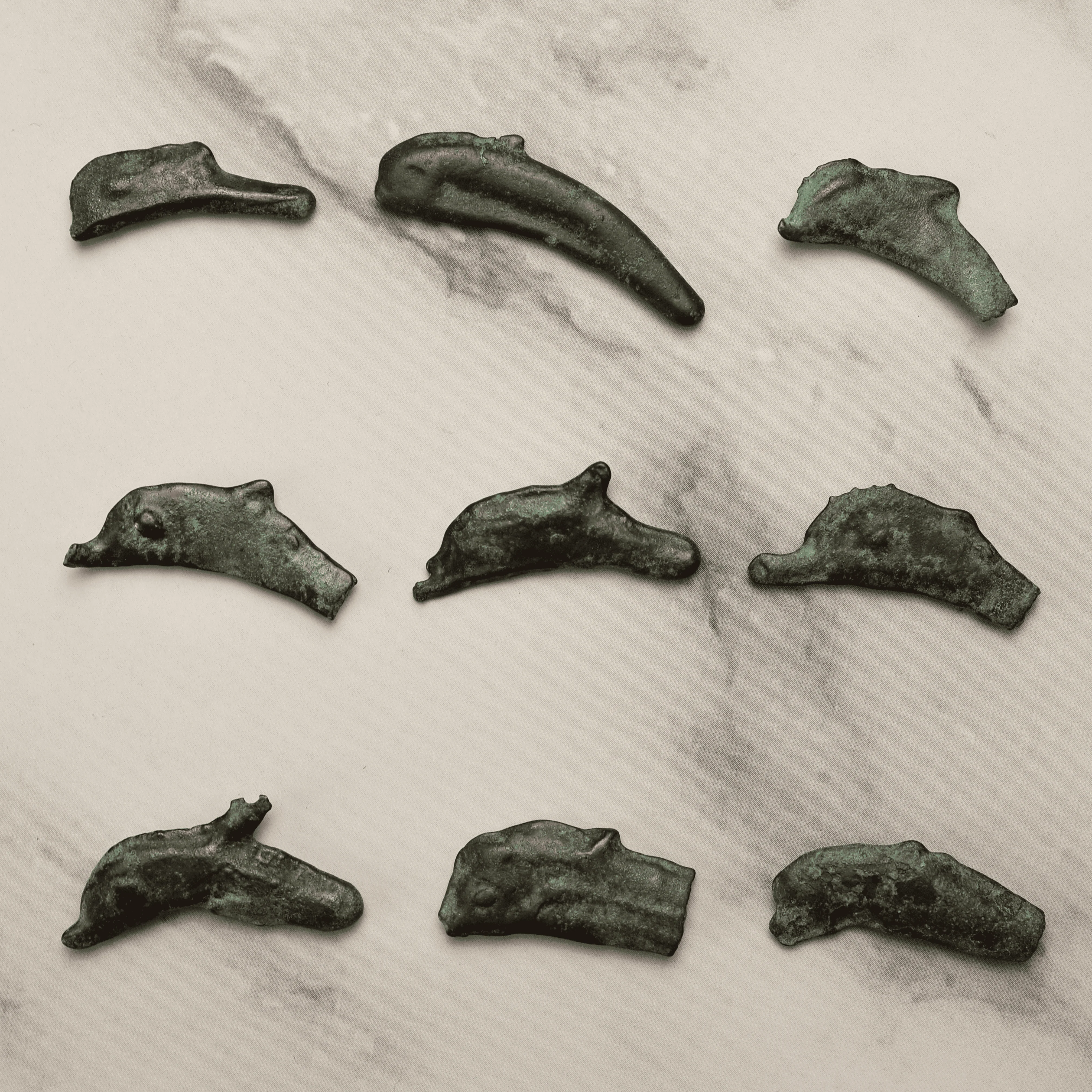
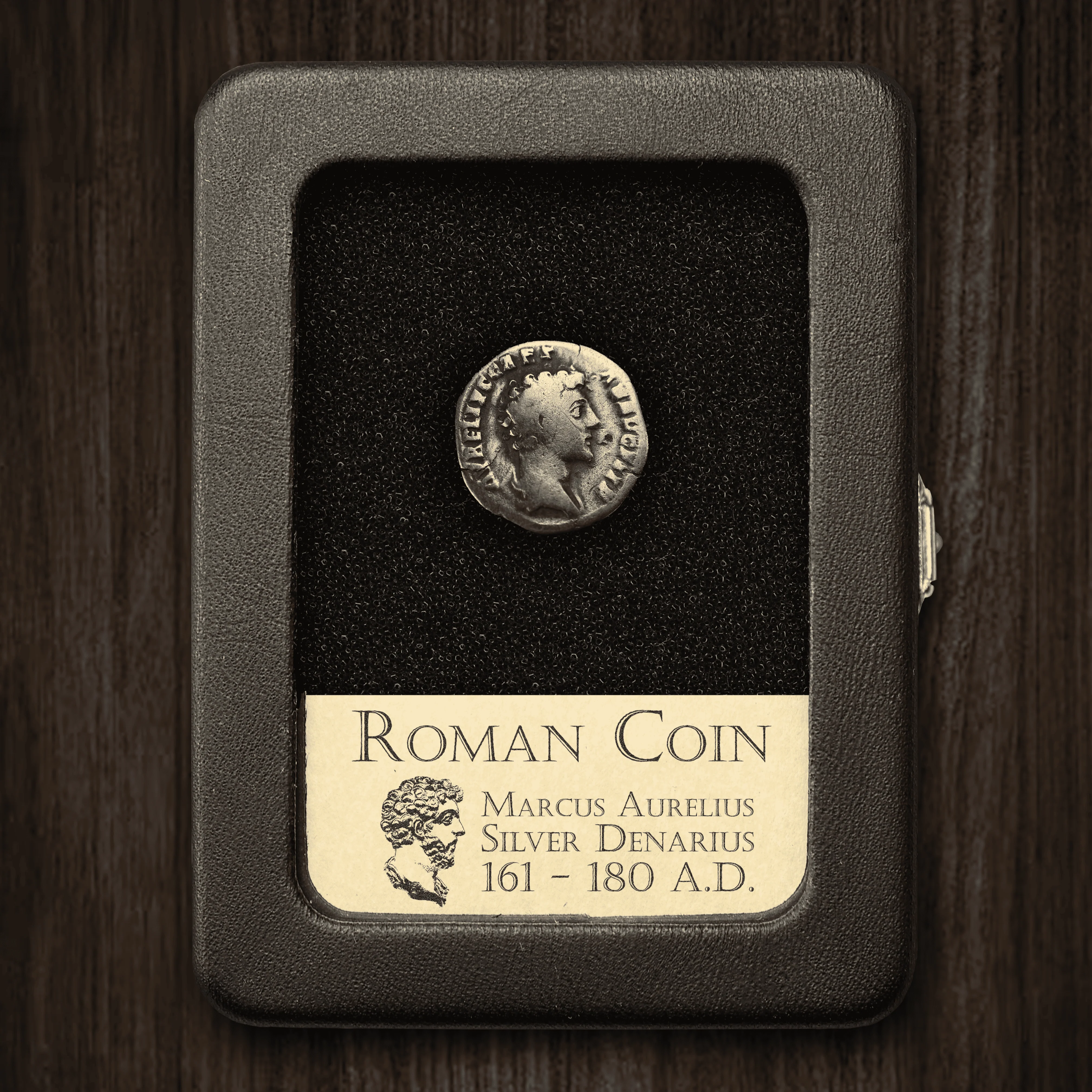
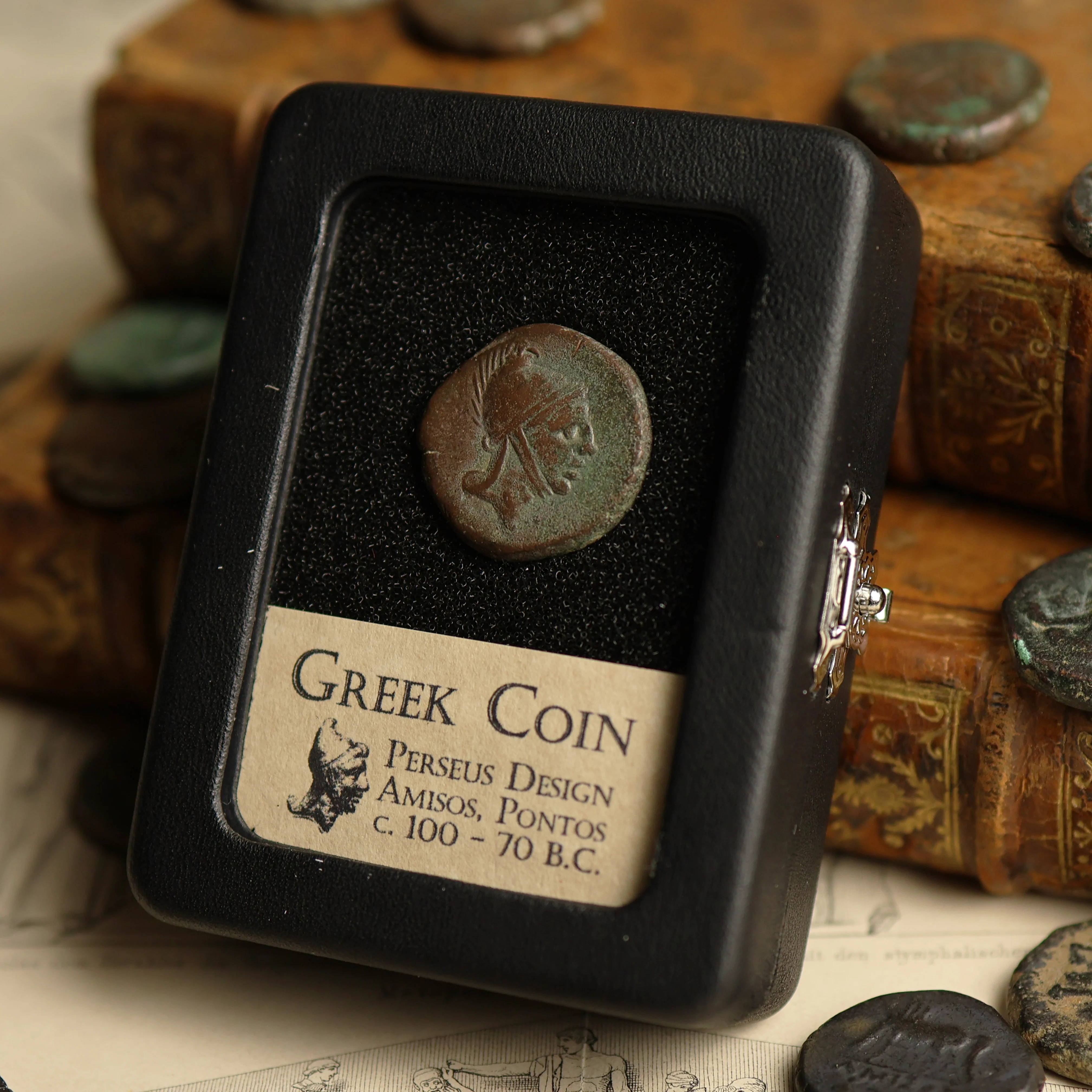
Your coin will look very similar to the ones shown in the photos. There will always be some variety, given our items are unique historical pieces. The display case included is openable so that you may easily handle and closely observe the artifact. If for whatever reason you get anything that does not fit this description you are entitled to your money back!
Your order will include:
- One authentic Ancient Greek coin minted between c. 100 - 70 BC
- Elegant protective case for preservation and display of your artifact
- Certificate of Authenticity
Ancient Artifacts relics are guaranteed authentic and have a 100% money back policy. Read more about our Mission and Promise for authenticity.
Original: $84.98
-70%$84.98
$25.49More Images
Greek Coin | Perseus Design
History of the Artifact
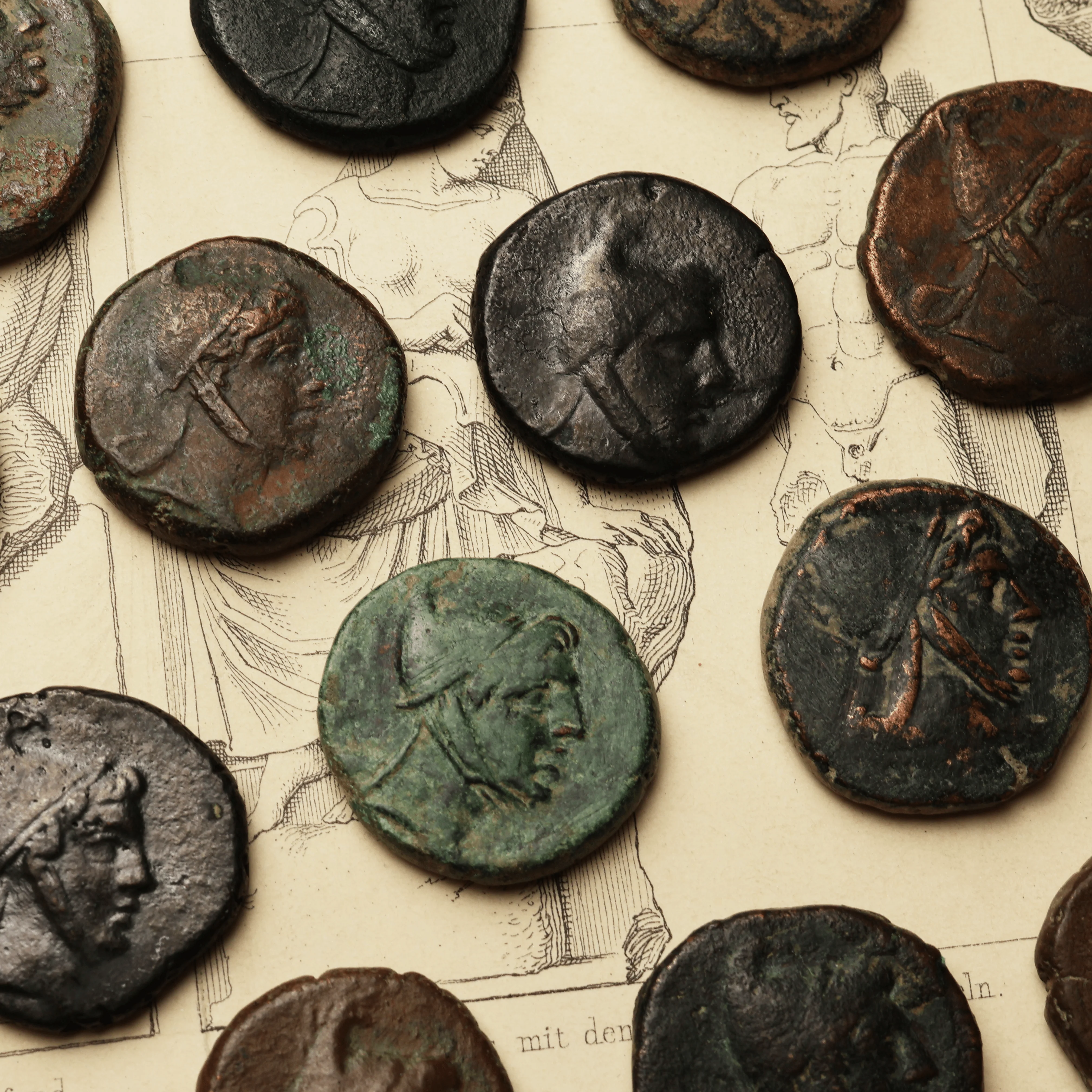
In the first century B.C., the city of Amisos in Pontos issued bronze coins featuring Perseus, the mythological hero best known for slaying the Gorgon Medusa. His profile appears prominently on the obverse, wearing a helmet adorned with a griffin crest. The reverse shows Pegasus, the winged horse with which Perseus escaped after decapitating Medusa, grazing above the inscription “AMIΣOY” — the ancient Greek name for Amisos.
The choice of Perseus was deliberate. The royal house of Pontos, especially under Mithridates VI Eupator, claimed descent from the hero, making his image a powerful emblem of dynastic legitimacy and pride. By circulating these coins, local authorities not only facilitated commerce but also reinforced the region’s cultural identity, linking daily transactions to a broader narrative of heroic ancestry and divine sanction.
These bronzes were not large denominations; rather, they functioned as the small change of daily commerce, handled by merchants, farmers, and travellers across the Black Sea region. Yet even in their modest form, they carried a layered message. The imagery connected ordinary people to the heroic myth of Perseus, while also serving as subtle propaganda for Mithridatic rule during a period of tension with Rome. In this way, these coins stand as artifacts of both economic life and political symbolism, encapsulating how local mints in Pontos used myth to assert Hellenic cultural independence in a world increasingly dominated by Roman power.
How do I know these are original Greek coins?
Ancient Artifacts guarantees the Authenticity of items sold through a three layer system of protection:
- Ancient Artifacts exclusively sources artifacts from trusted and reputable antique distributors, many of whom have been selling Artifacts for decades.
- Next, the Artifact is inspected by an expert team member, who is professionally trained in counterfeit detection After the artifact passes inspection, the Certificate of Authenticity is signed and the Artifact is packaged.
- Finally, Ancient Artifacts gives an additional layer of protection by promising a full refund with no questions asked, in the extremely unlikely event that a counterfeit slips through our vetting process.
What will my artifact look like?
Your coin will look very similar to the ones shown in the photos. There will always be some variety, given our items are unique historical pieces. The display case included is openable so that you may easily handle and closely observe the artifact. If for whatever reason you get anything that does not fit this description you are entitled to your money back!
Your order will include:
- One authentic Ancient Greek coin minted between c. 100 - 70 BC
- Elegant protective case for preservation and display of your artifact
- Certificate of Authenticity
Ancient Artifacts relics are guaranteed authentic and have a 100% money back policy. Read more about our Mission and Promise for authenticity.
Product Information
Product Information
Shipping & Returns
Shipping & Returns
Description
History of the Artifact
In the first century B.C., the city of Amisos in Pontos issued bronze coins featuring Perseus, the mythological hero best known for slaying the Gorgon Medusa. His profile appears prominently on the obverse, wearing a helmet adorned with a griffin crest. The reverse shows Pegasus, the winged horse with which Perseus escaped after decapitating Medusa, grazing above the inscription “AMIΣOY” — the ancient Greek name for Amisos.
The choice of Perseus was deliberate. The royal house of Pontos, especially under Mithridates VI Eupator, claimed descent from the hero, making his image a powerful emblem of dynastic legitimacy and pride. By circulating these coins, local authorities not only facilitated commerce but also reinforced the region’s cultural identity, linking daily transactions to a broader narrative of heroic ancestry and divine sanction.
These bronzes were not large denominations; rather, they functioned as the small change of daily commerce, handled by merchants, farmers, and travellers across the Black Sea region. Yet even in their modest form, they carried a layered message. The imagery connected ordinary people to the heroic myth of Perseus, while also serving as subtle propaganda for Mithridatic rule during a period of tension with Rome. In this way, these coins stand as artifacts of both economic life and political symbolism, encapsulating how local mints in Pontos used myth to assert Hellenic cultural independence in a world increasingly dominated by Roman power.
How do I know these are original Greek coins?
Ancient Artifacts guarantees the Authenticity of items sold through a three layer system of protection:
- Ancient Artifacts exclusively sources artifacts from trusted and reputable antique distributors, many of whom have been selling Artifacts for decades.
- Next, the Artifact is inspected by an expert team member, who is professionally trained in counterfeit detection After the artifact passes inspection, the Certificate of Authenticity is signed and the Artifact is packaged.
- Finally, Ancient Artifacts gives an additional layer of protection by promising a full refund with no questions asked, in the extremely unlikely event that a counterfeit slips through our vetting process.
What will my artifact look like?
Your coin will look very similar to the ones shown in the photos. There will always be some variety, given our items are unique historical pieces. The display case included is openable so that you may easily handle and closely observe the artifact. If for whatever reason you get anything that does not fit this description you are entitled to your money back!
Your order will include:
- One authentic Ancient Greek coin minted between c. 100 - 70 BC
- Elegant protective case for preservation and display of your artifact
- Certificate of Authenticity
Ancient Artifacts relics are guaranteed authentic and have a 100% money back policy. Read more about our Mission and Promise for authenticity.