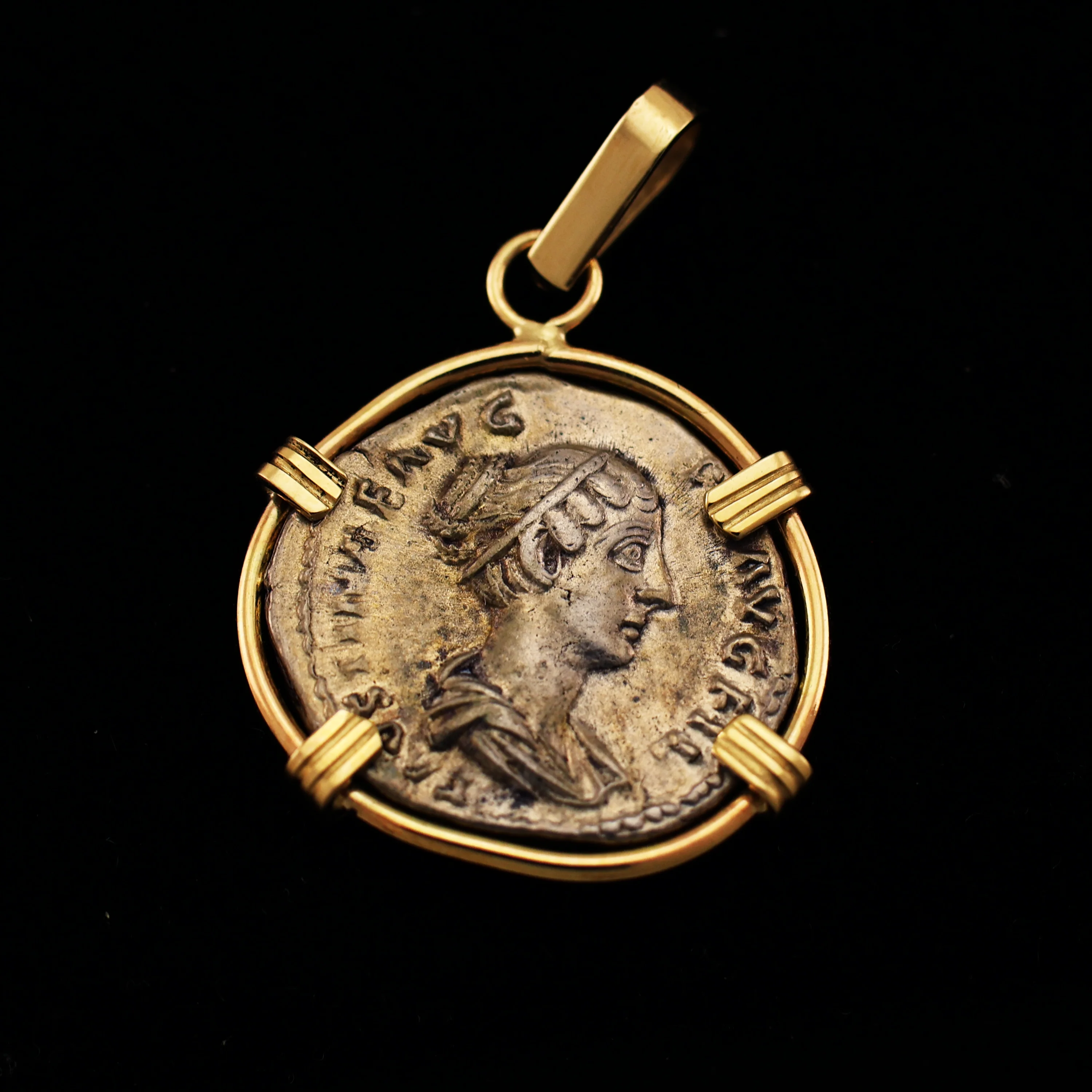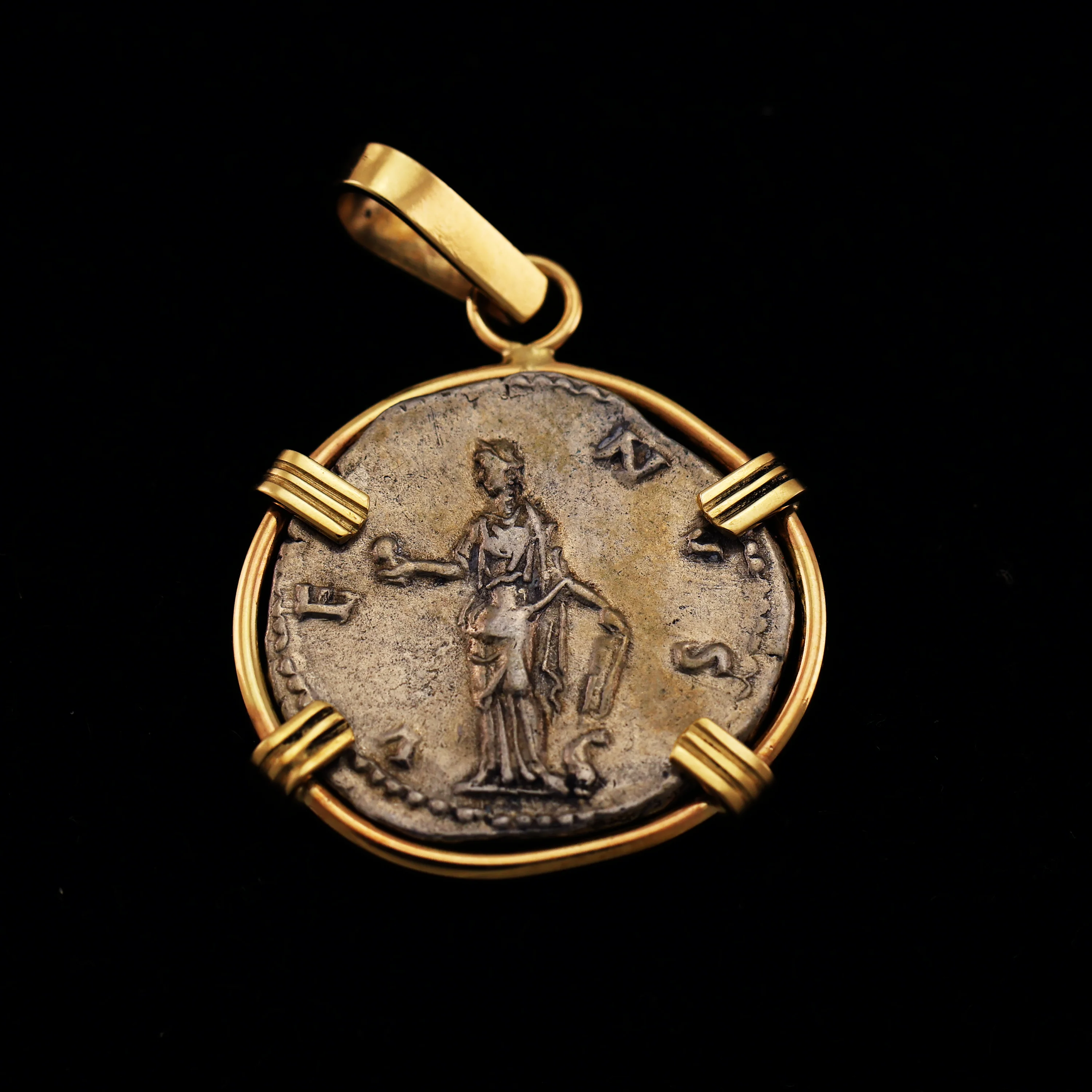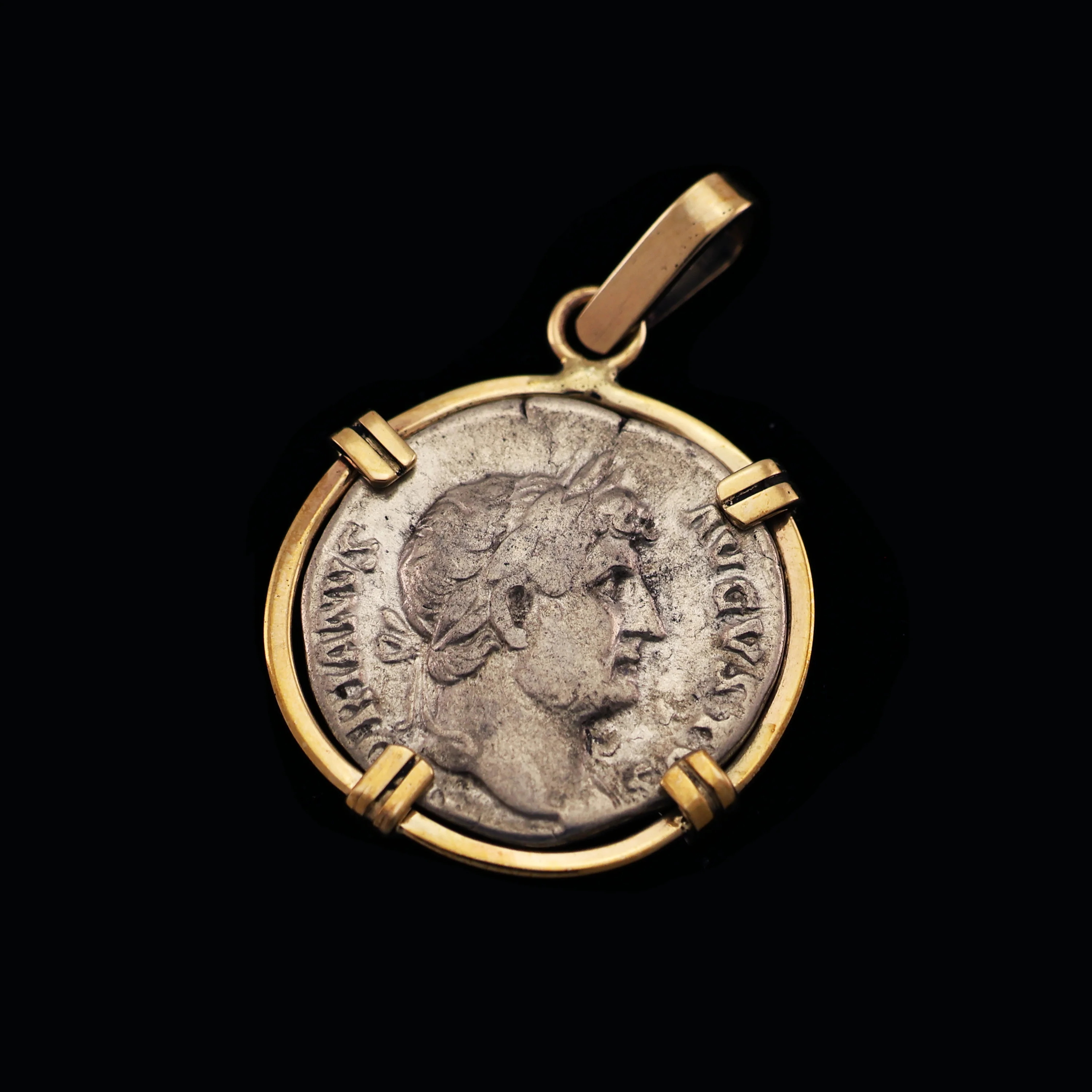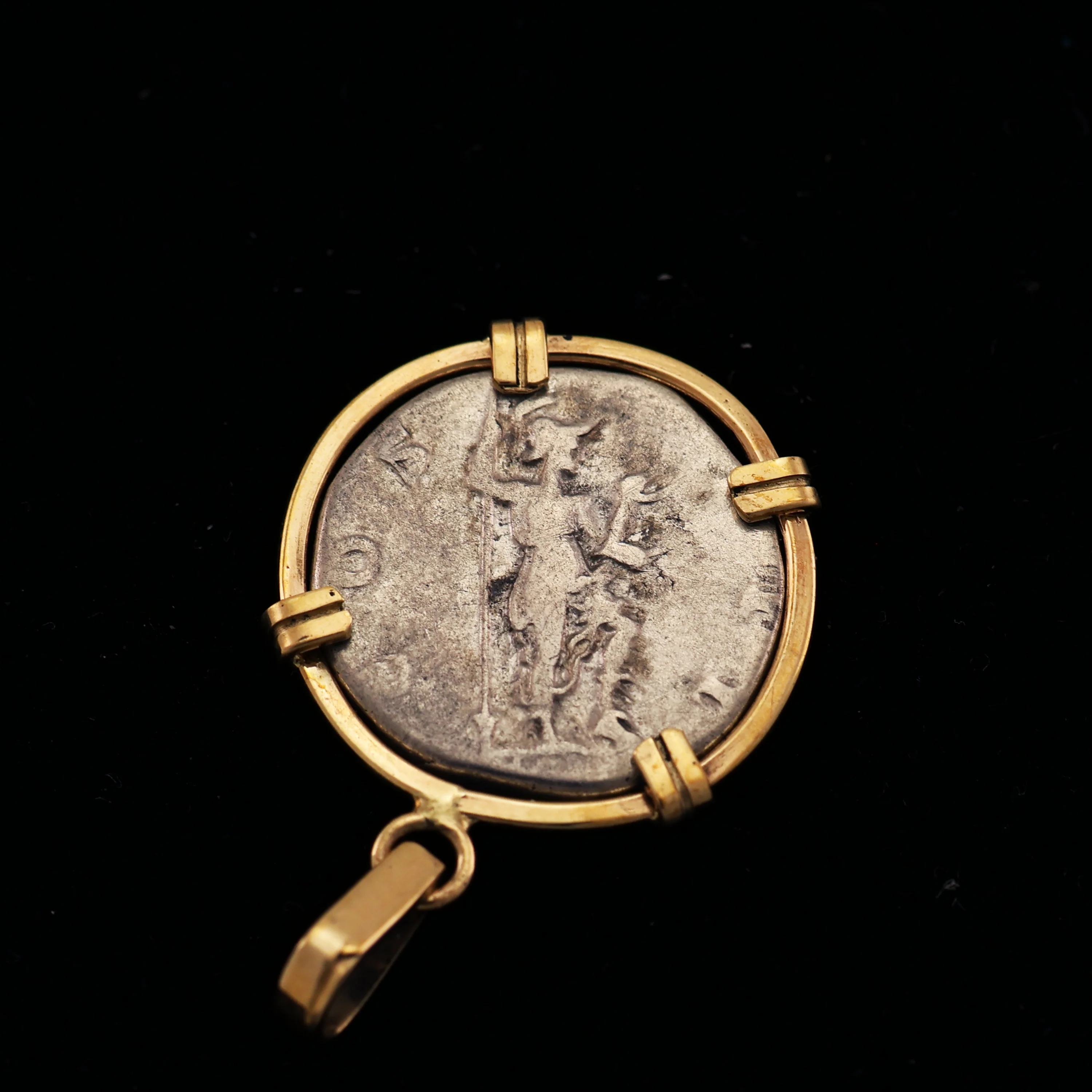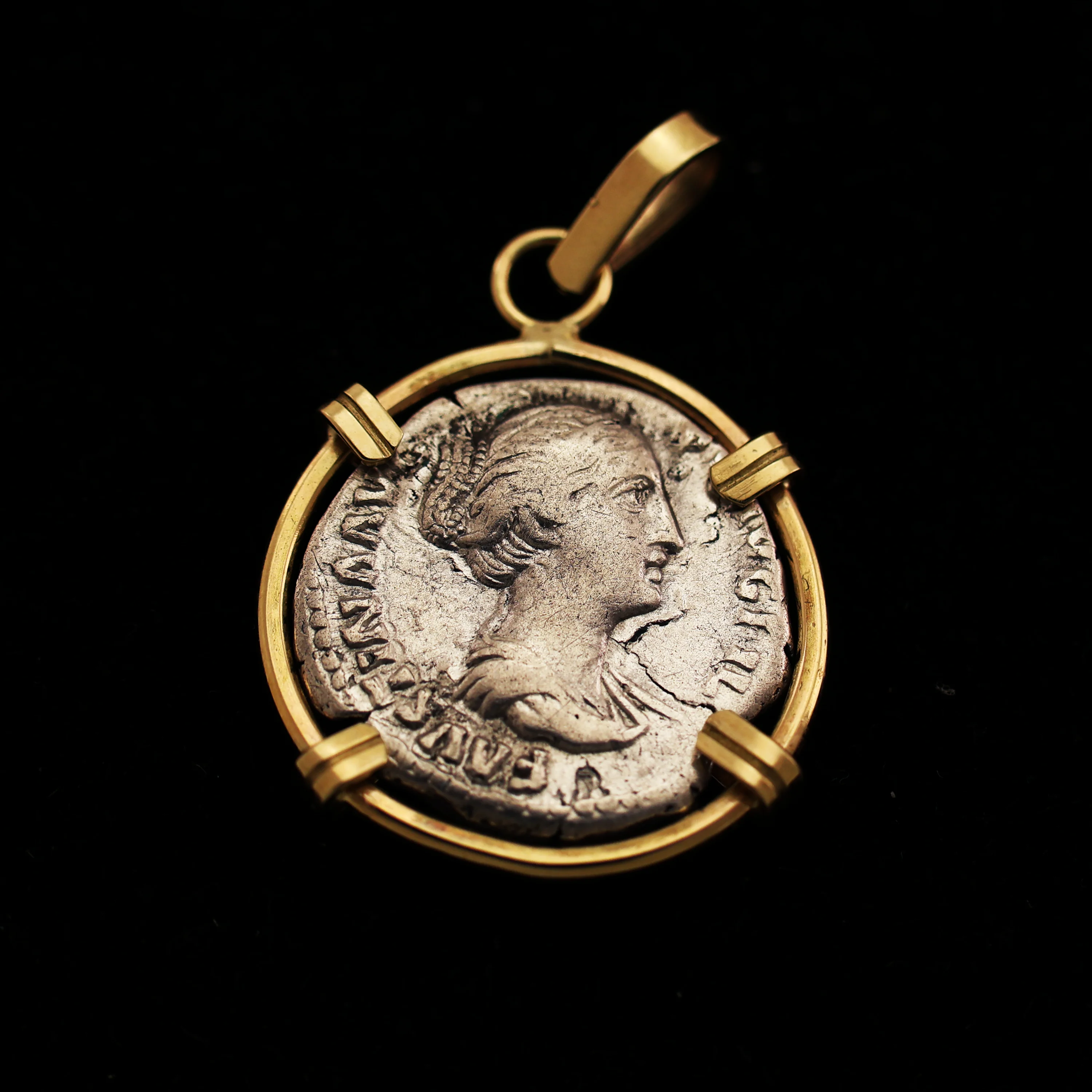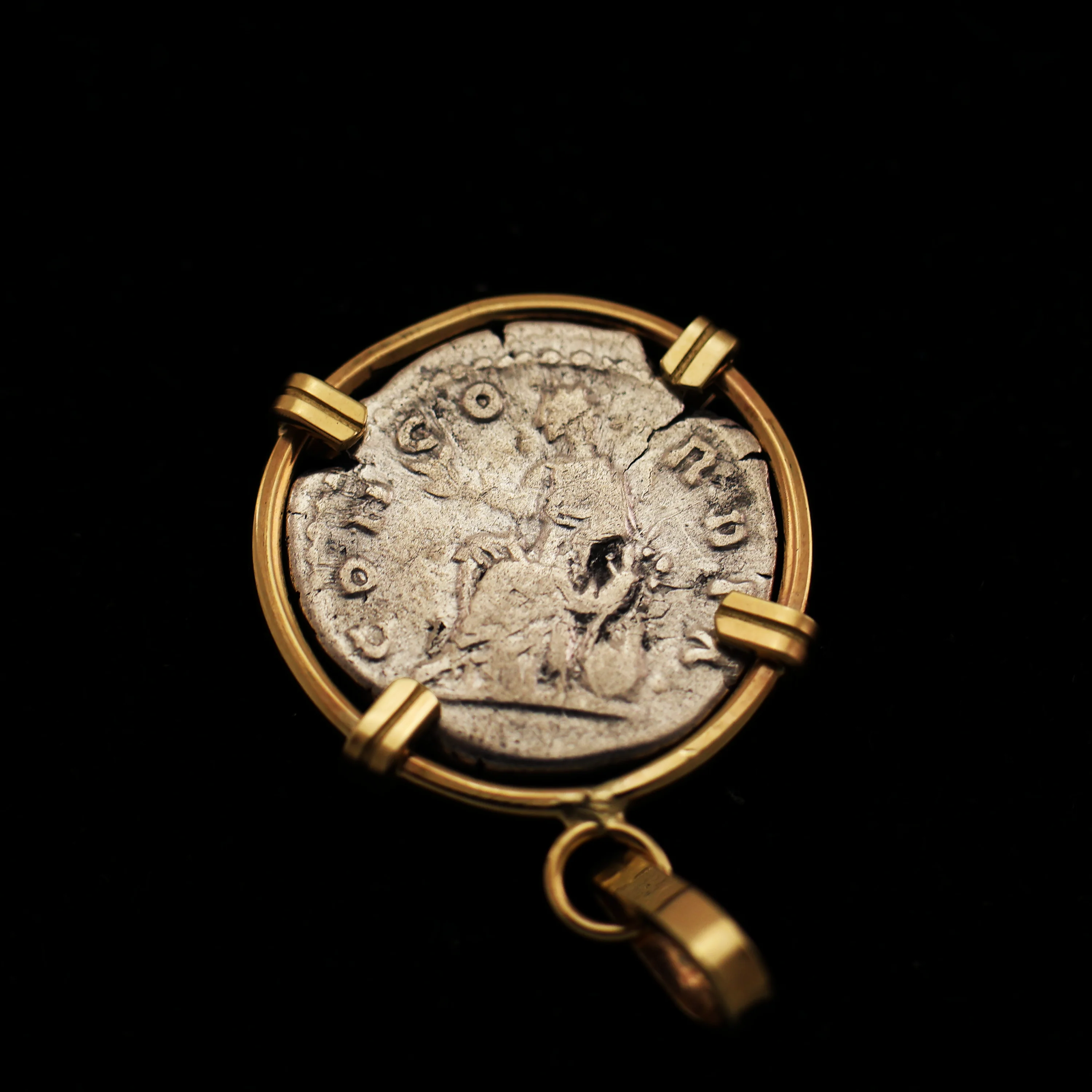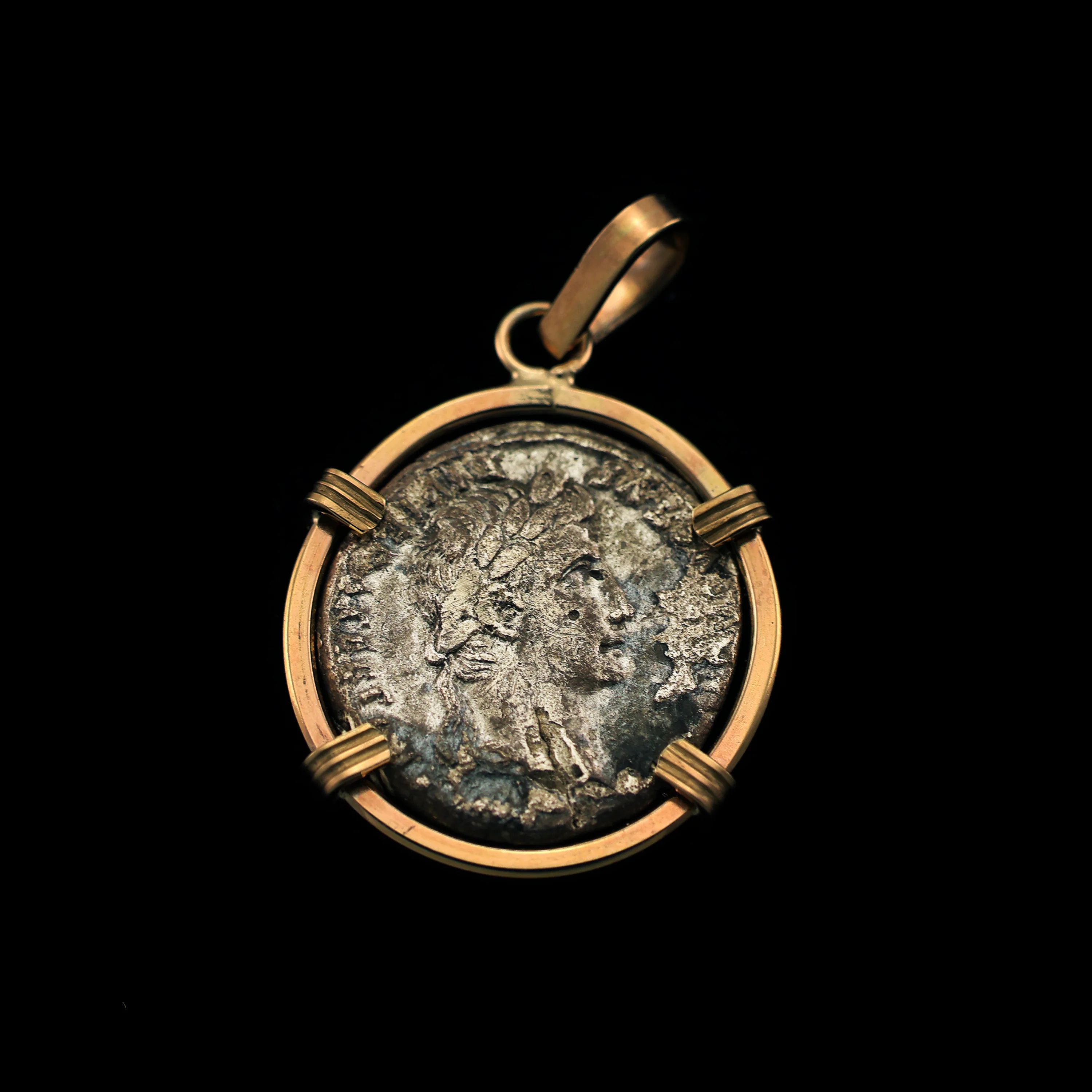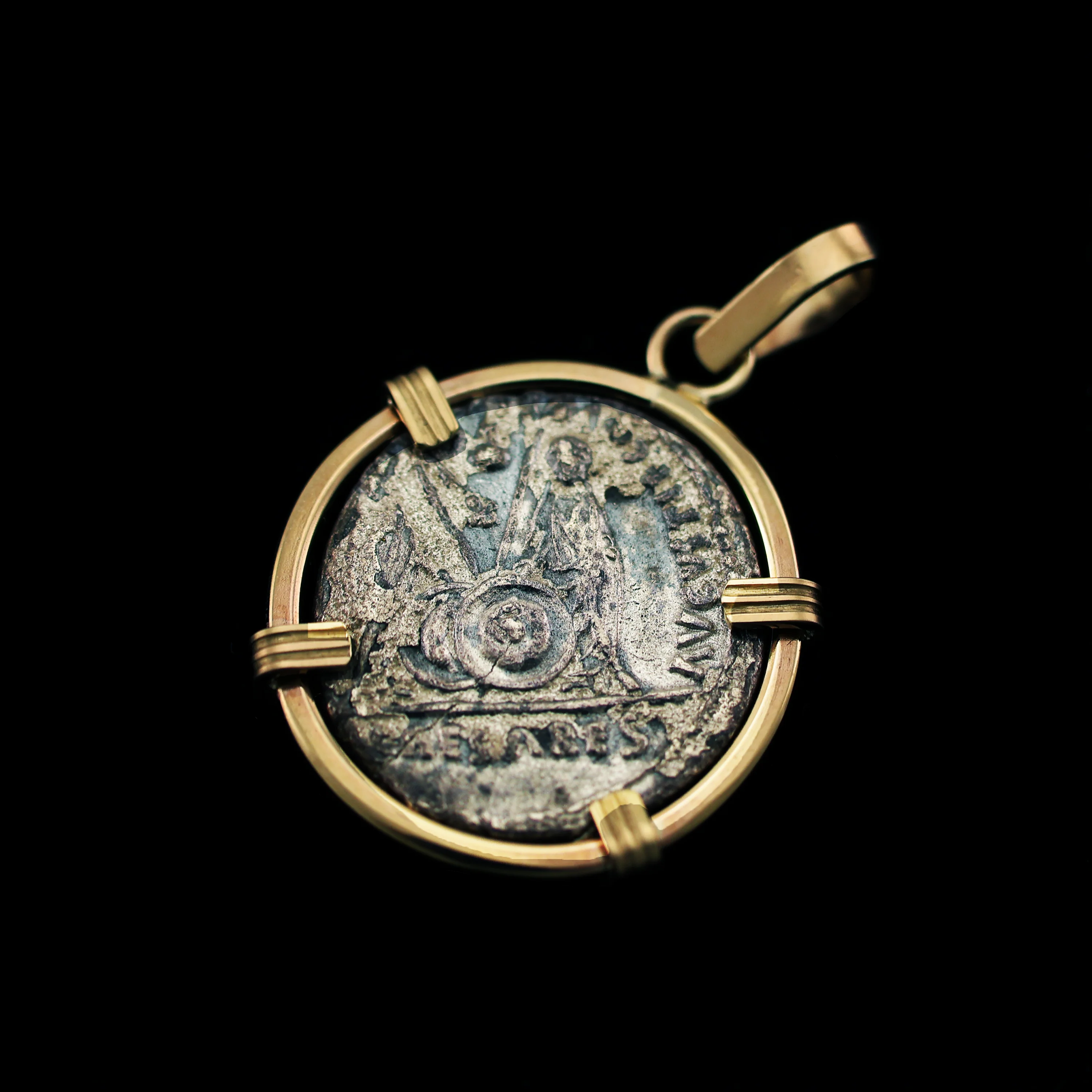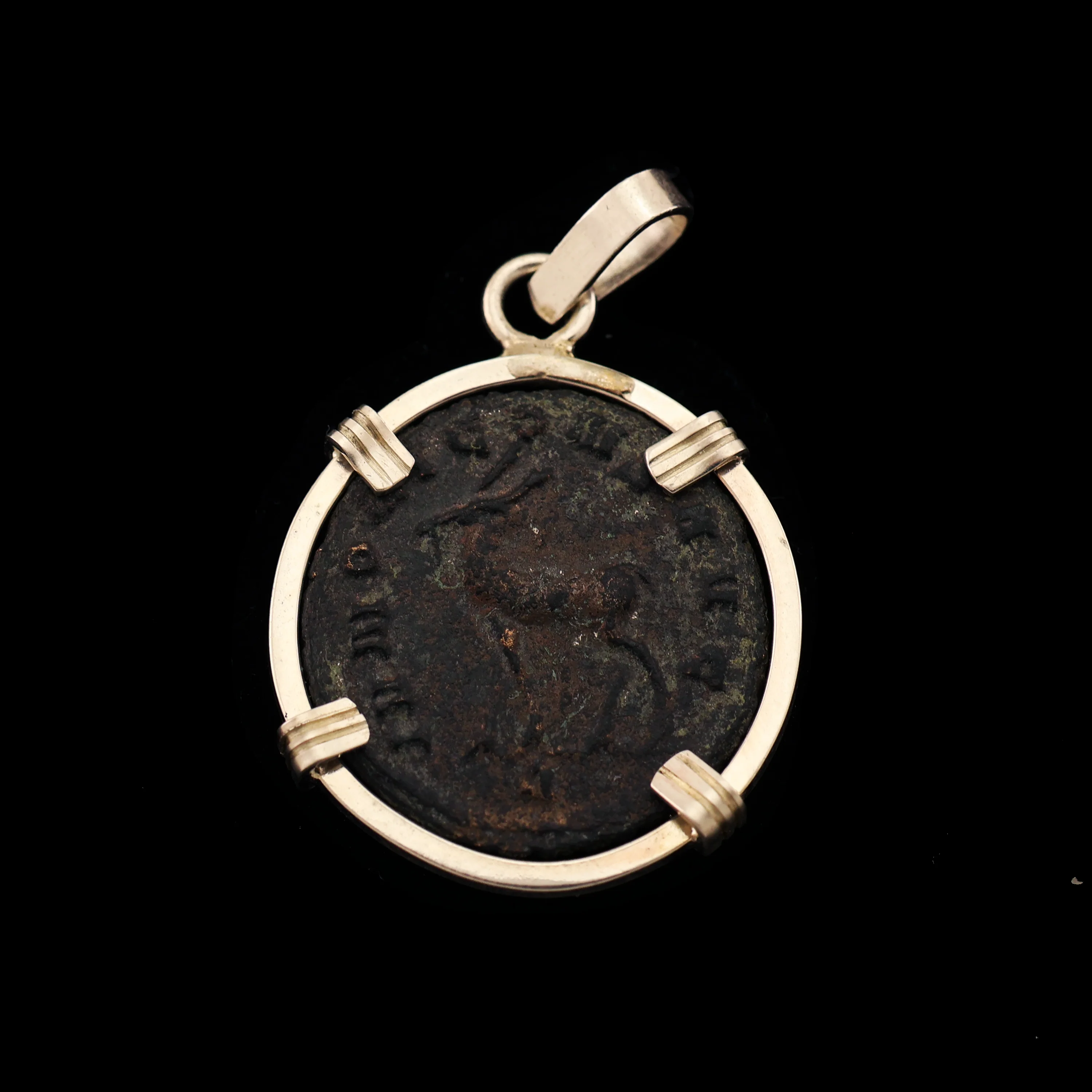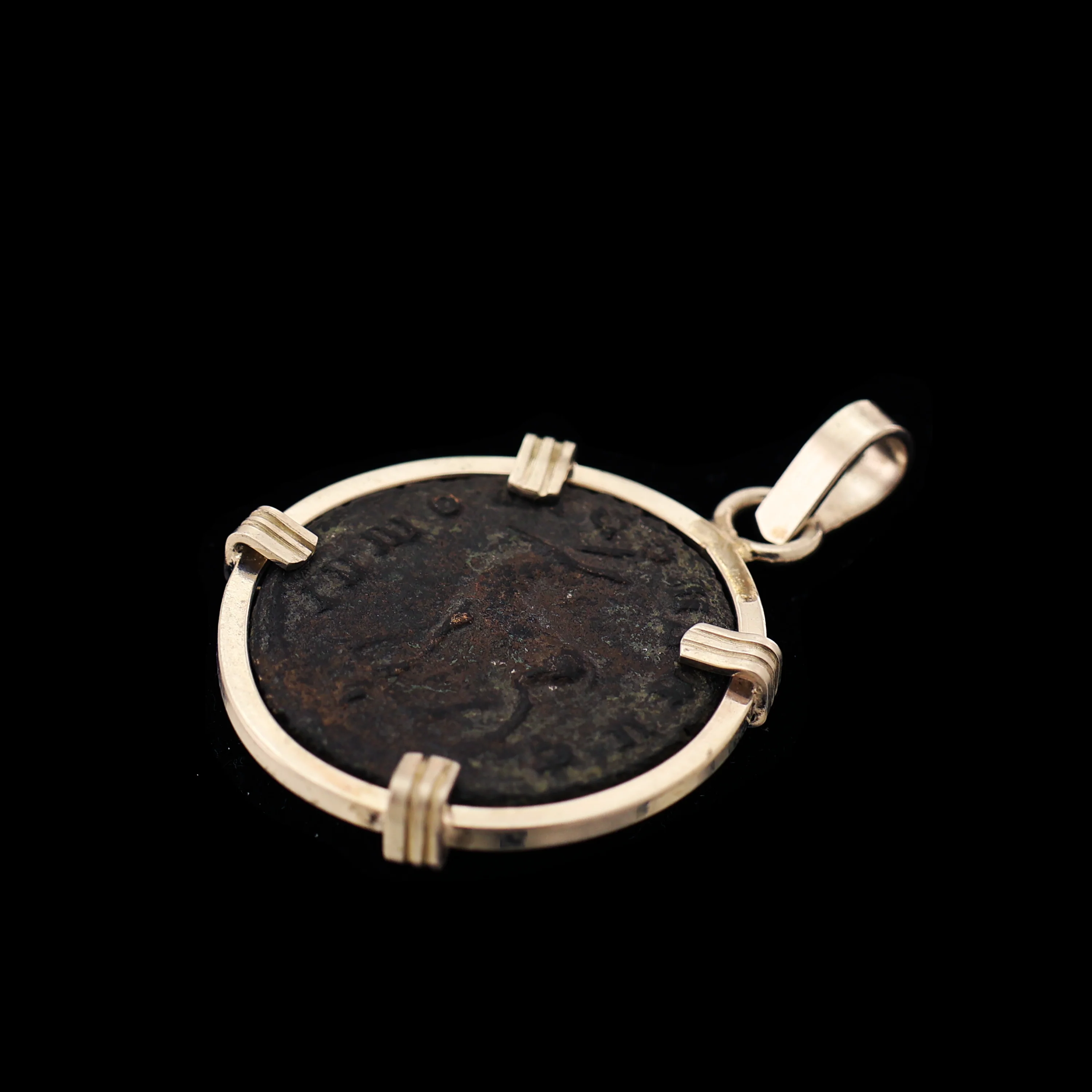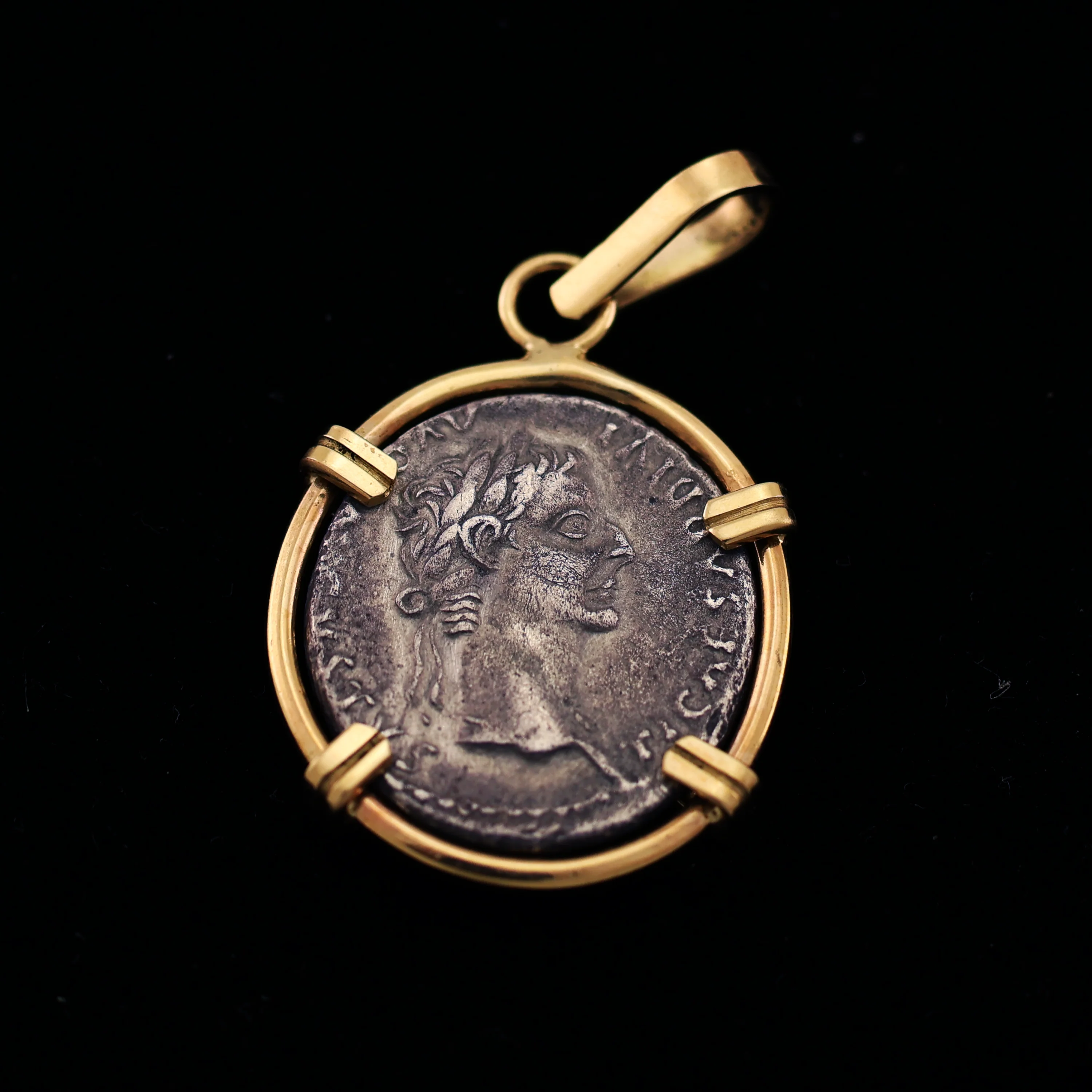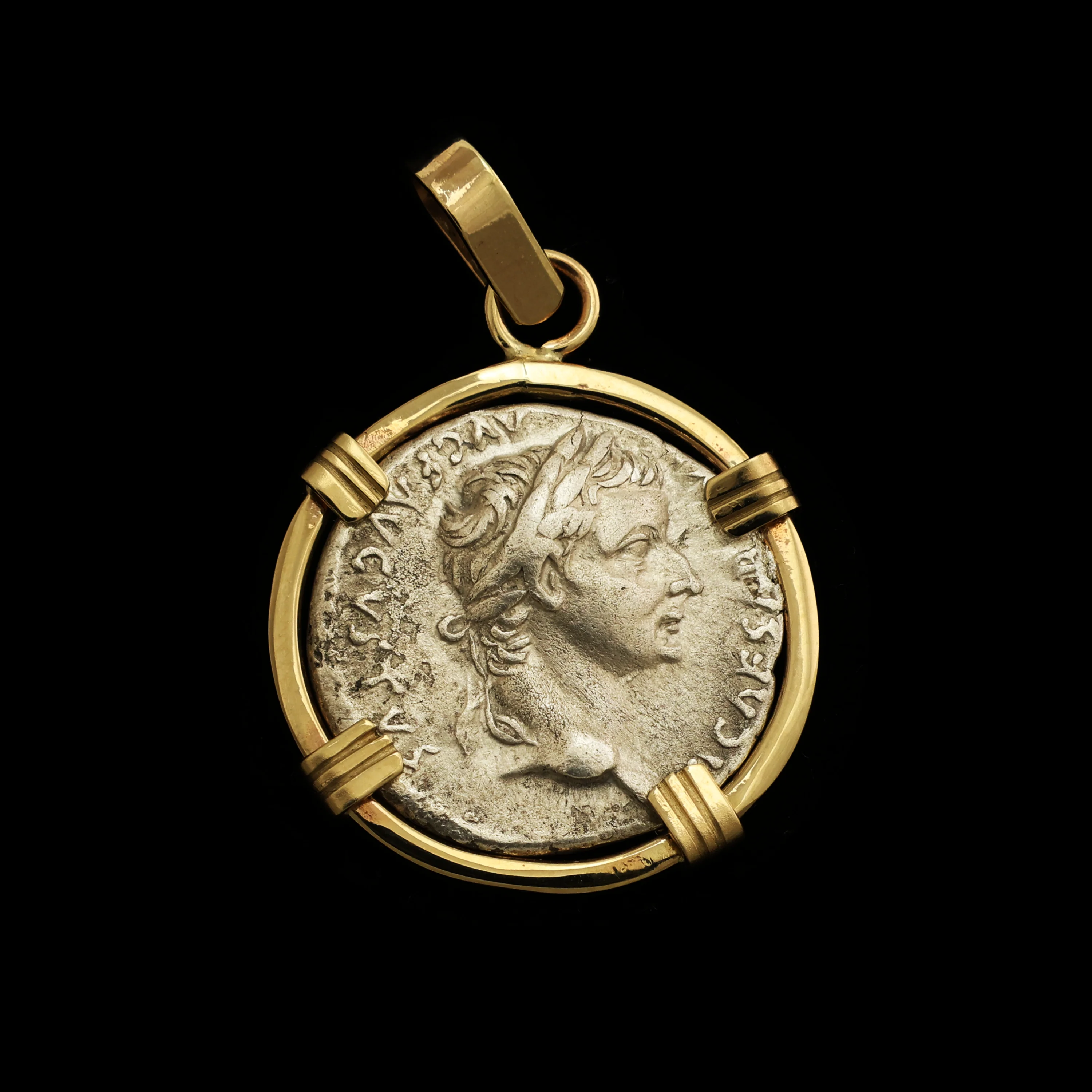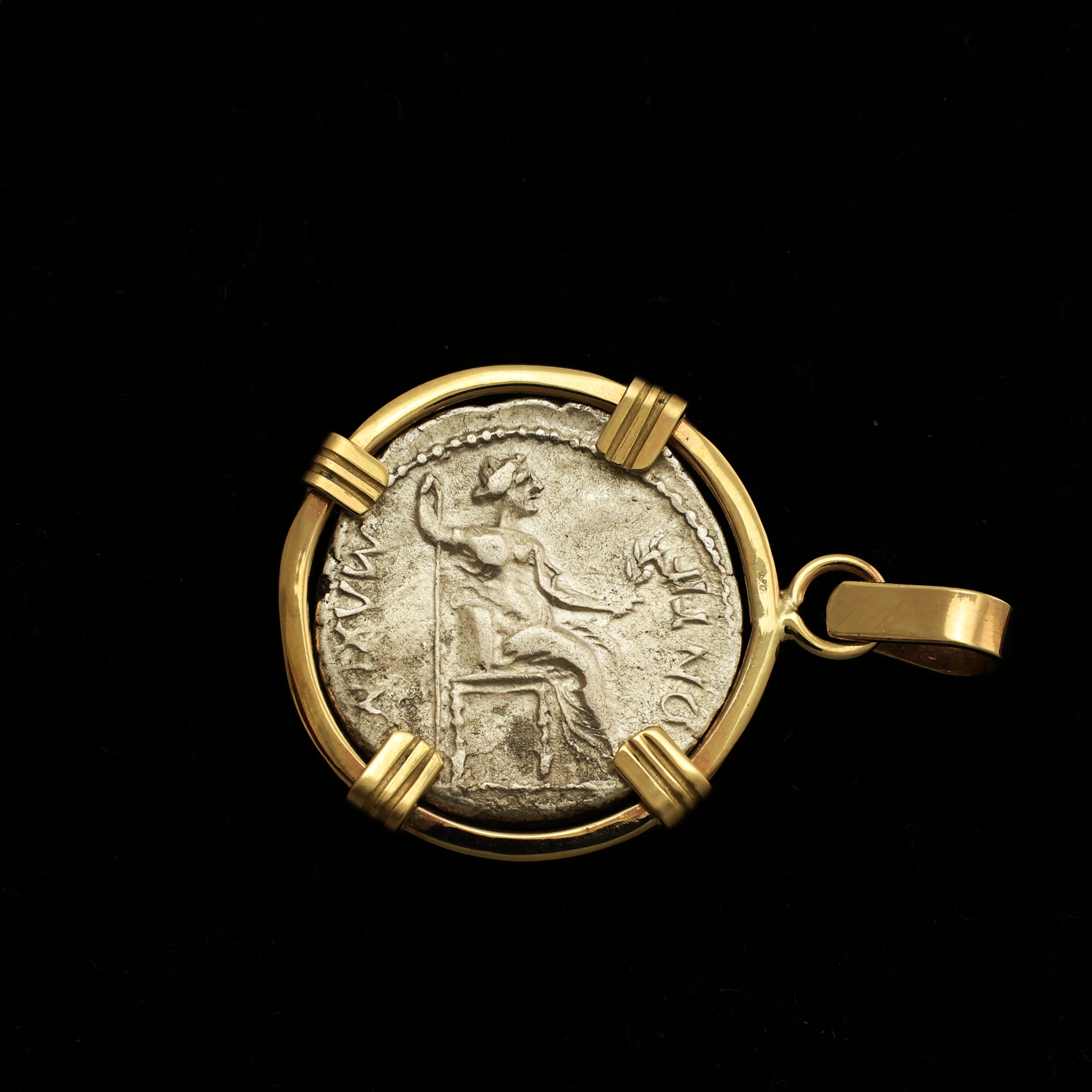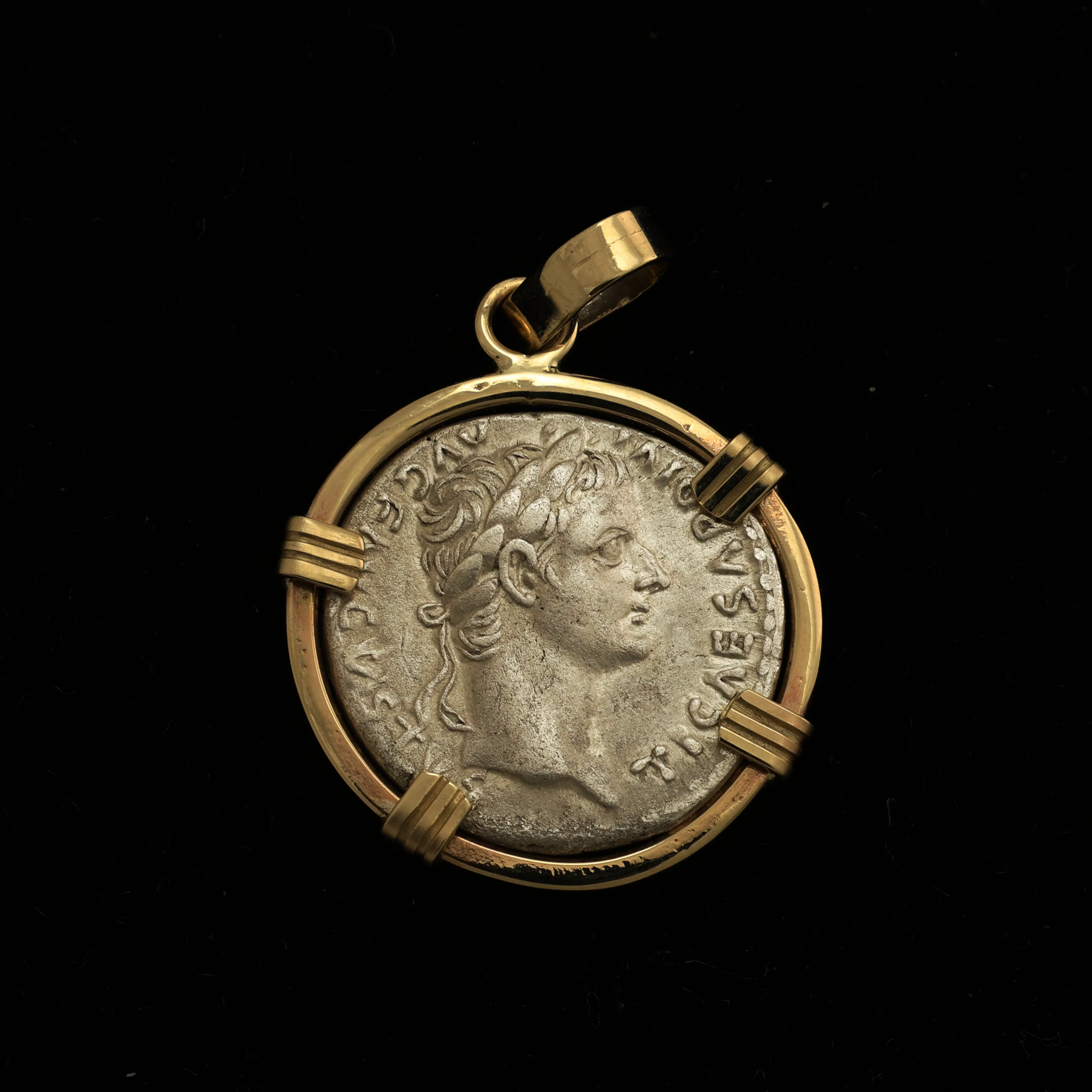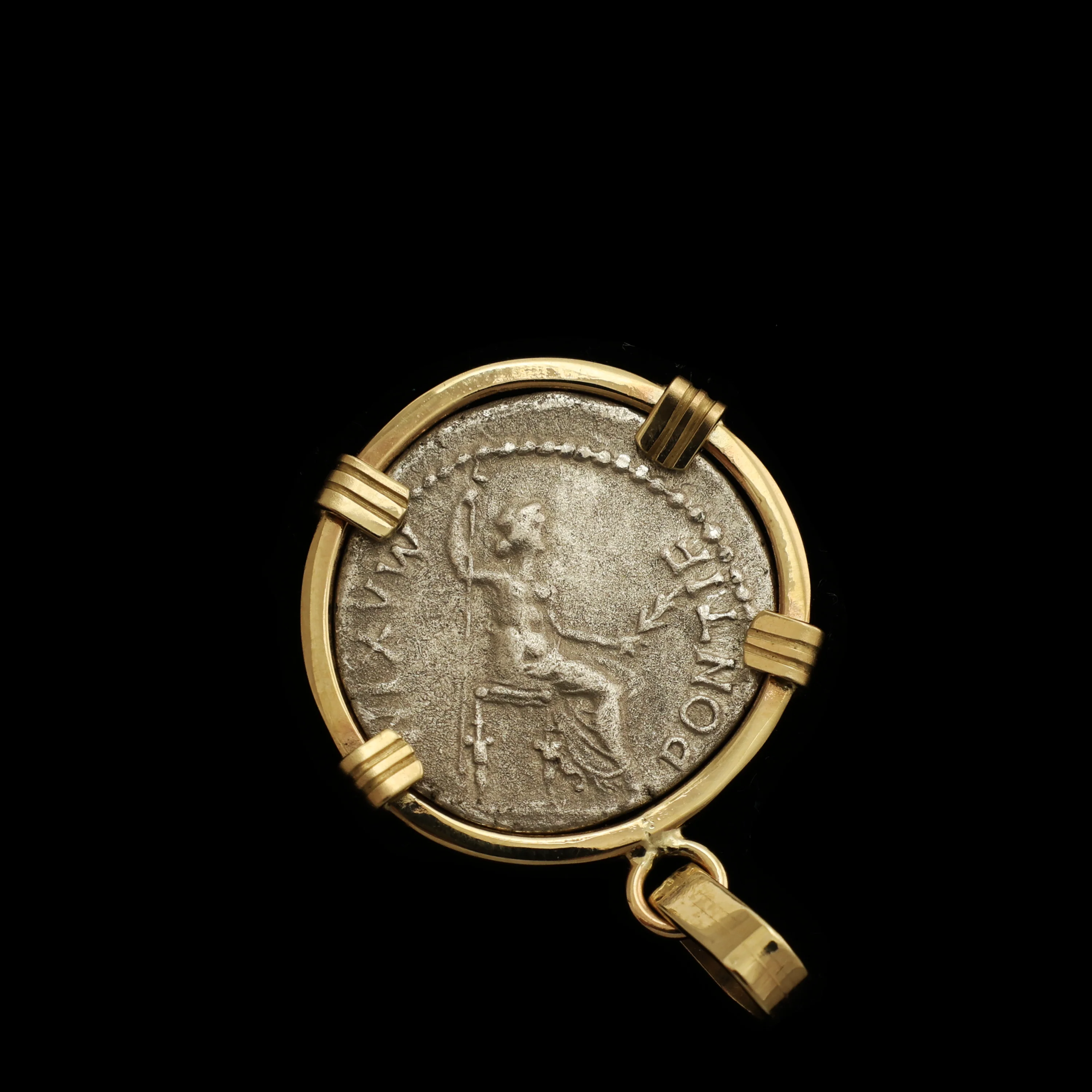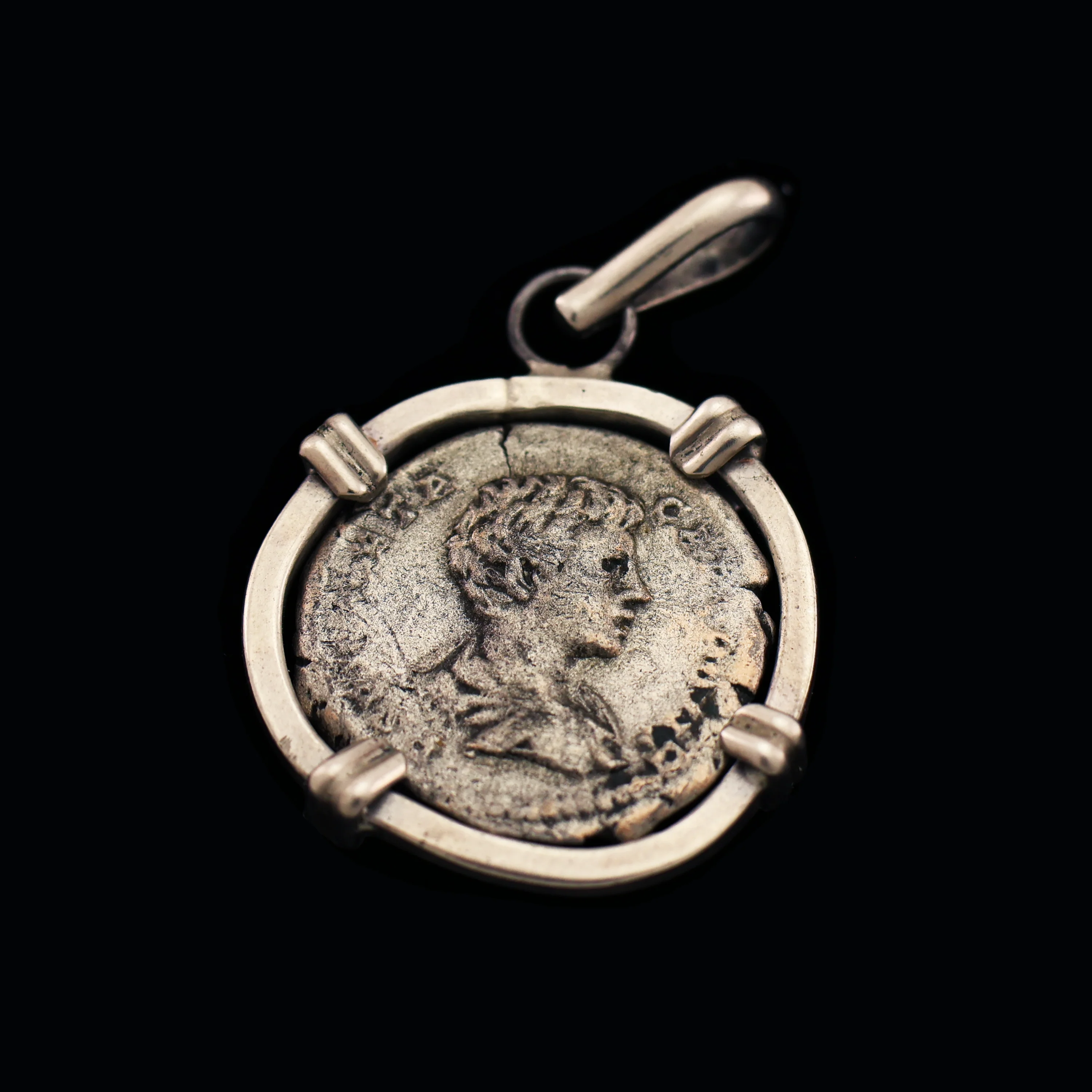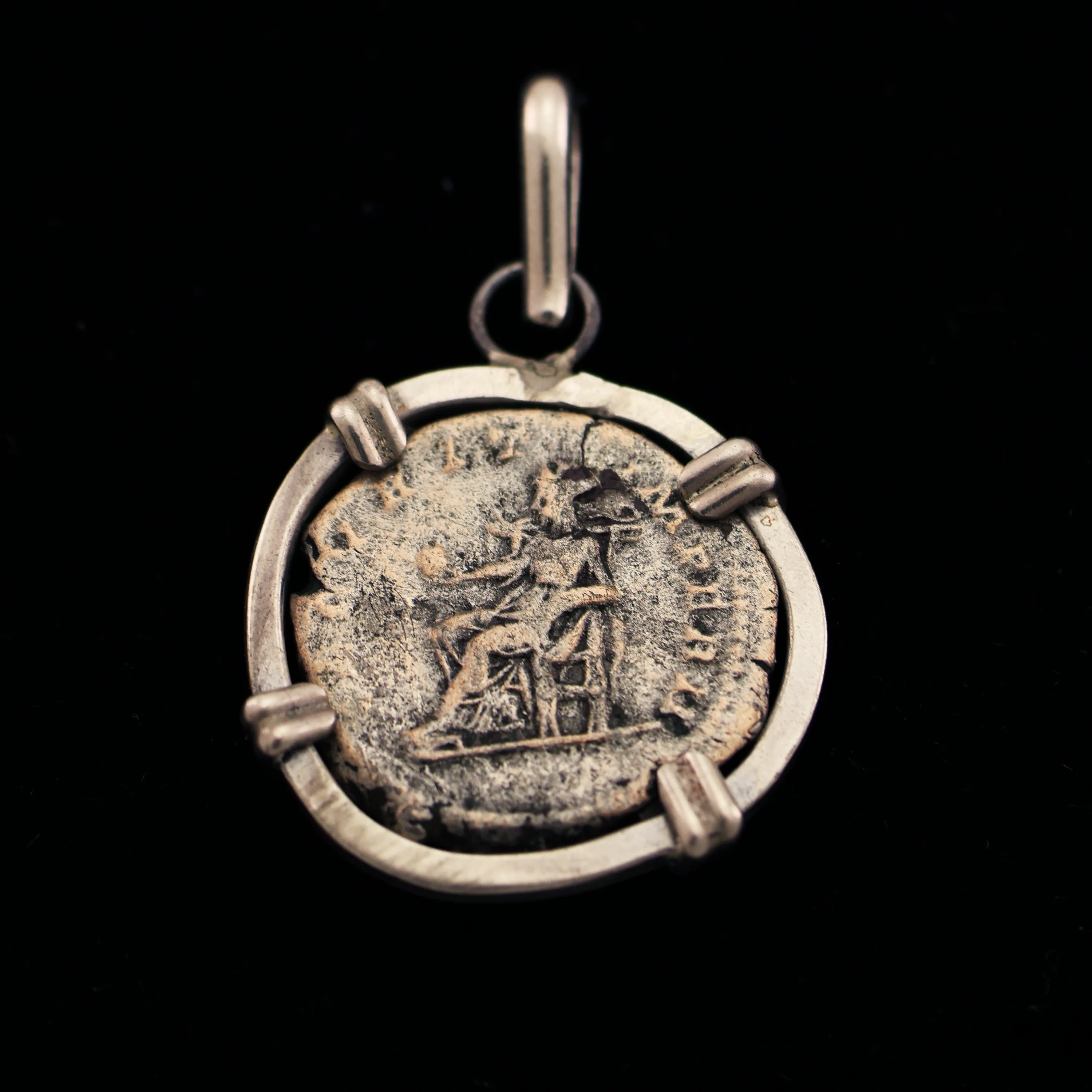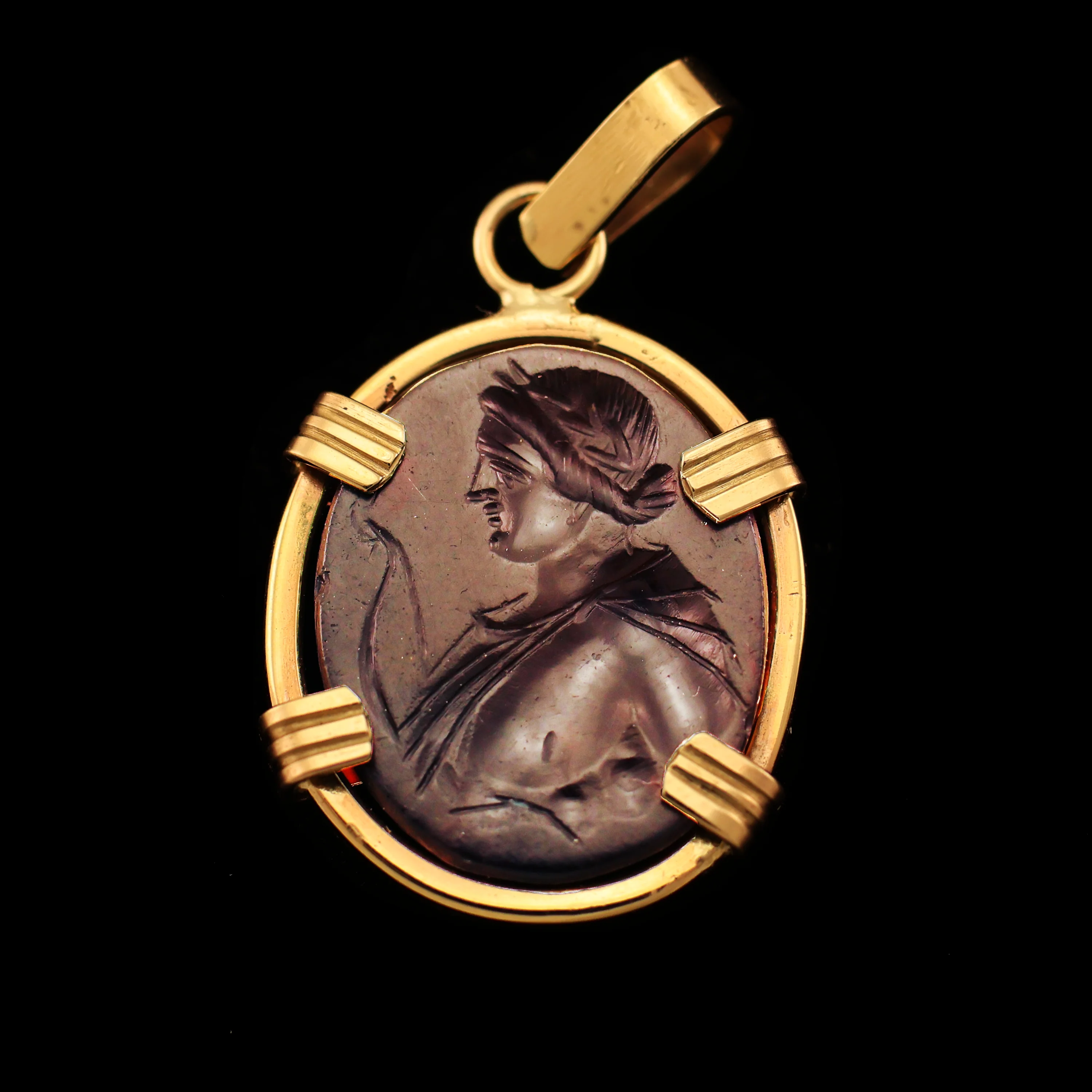
Roman Intaglio Pendant | Artemis, goddess of the hunt
Date: c. 1st - 2nd Century A.D.
Bezel: 14k Gold
Weight: 3.09 grams
Diameter: 20 mm / .78 inches
Description
This item is an authentic Roman intaglio, placed in a handmade bezel of 14 karat gold. There is only 1 of this item; you will receive the exact pendant shown in the photos.
Chain necklaces can be purchased separately through this link.
History of the Artifact
Carnelian intaglios were among the most personal forms of adornment and identity in the Roman world. Carved from a warm, translucent orange-red chalcedony, these gemstones were engraved in intaglio - a technique in which the design is carved into the surface of the stone, creating a recessed image. This method allowed the gem to function as a seal, producing a raised impression when pressed into wax or clay, much like a personal signature.
(The choice of carnelian was both practical and symbolic. Its hardness made it suitable for fine engraving, while its vibrant colour was associated with vitality, good fortune, and protection. The Romans attributed to stones a range of inherent virtues, and carnelian was believed to encourage confidence, eloquence, and resolve.)
The figure engraved here is Artemis, known to the Romans as Diana. She is shown in profile, identifiable by her bow, the emblem of her role as goddess of the hunt. In glyptic art, Artemis is often depicted only from the bust up, with her bow or quiver serving as enough of an attribute to make her presence unmistakable.
Artemis was revered as a protector of wilderness, animals, and young people, embodying independence, swiftness, and clarity of purpose. Her imagery held strong personal meaning for those who wore her seal:
- For hunters and soldiers, she signified discipline, precision, and calm under pressure.
-
For women, she could symbolize autonomy, dignity, and bodily integrity.
- For travelers, she served as guide and guardian in uncertain terrain.
Authenticity
Ancient Artifacts guarantees the Authenticity of items sold through a three layer system of protection:
- Ancient Artifacts exclusively sources artifacts from trusted and reputable antique distributors, many of whom have been selling Artifacts for decades.
- Next, the Artifact is inspected by an expert team member, who is professionally trained in counterfeit detection After the artifact passes inspection, the Certificate of Authenticity is signed and the Artifact is packaged.
- Finally, Ancient Artifacts gives an additional layer of protection by promising a full refund with no questions asked, in the extremely unlikely event that a counterfeit slips through our vetting process.
Your order will include:
- Intaglio Pendant shown in photos
- Certificate of Authenticity
Ancient Artifacts relics are guaranteed authentic and have a 100% money back policy. Read more about our Mission and Promise for authenticity.
Original: $1,950.00
-70%$1,950.00
$585.00More Images
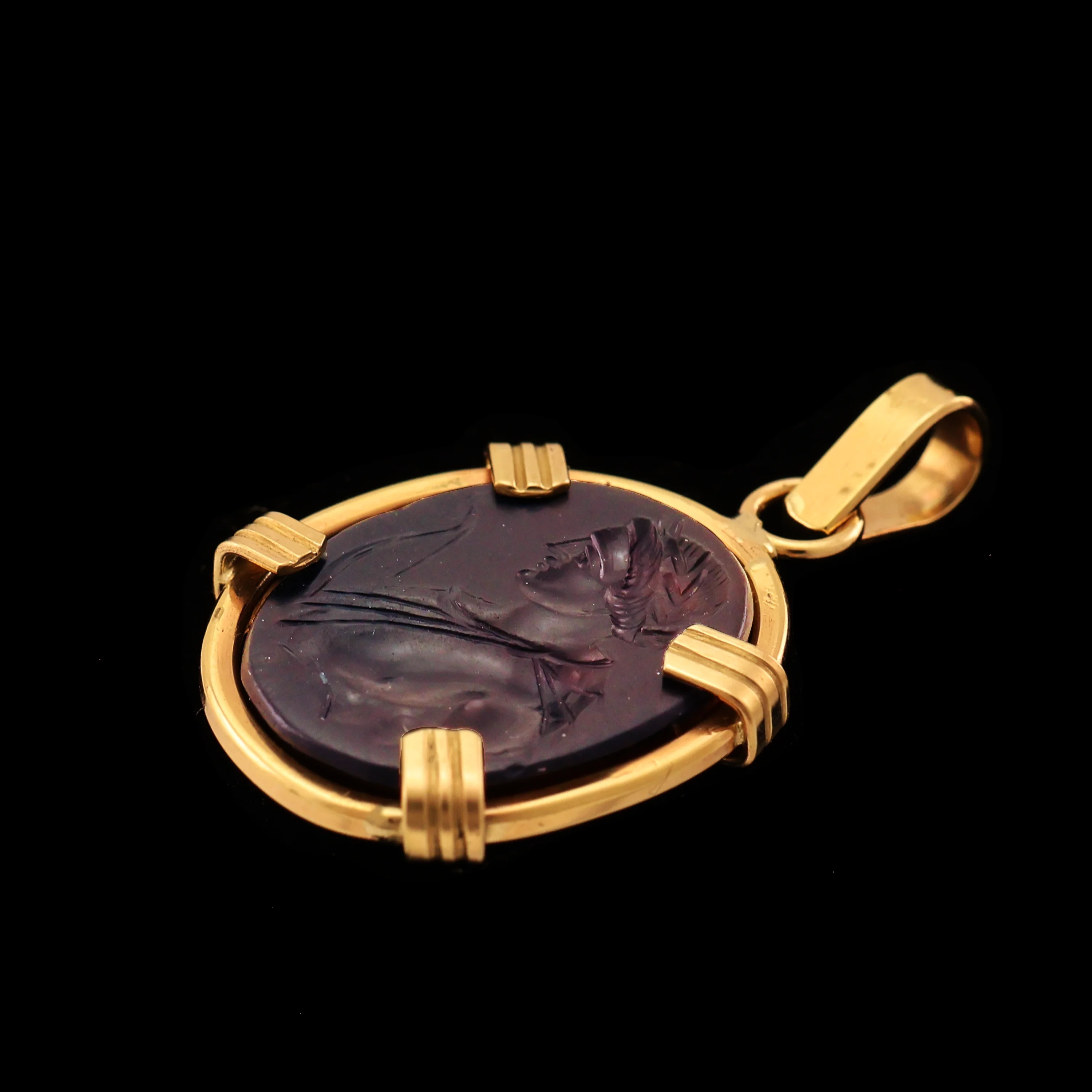
Roman Intaglio Pendant | Artemis, goddess of the hunt
Date: c. 1st - 2nd Century A.D.
Bezel: 14k Gold
Weight: 3.09 grams
Diameter: 20 mm / .78 inches
Description
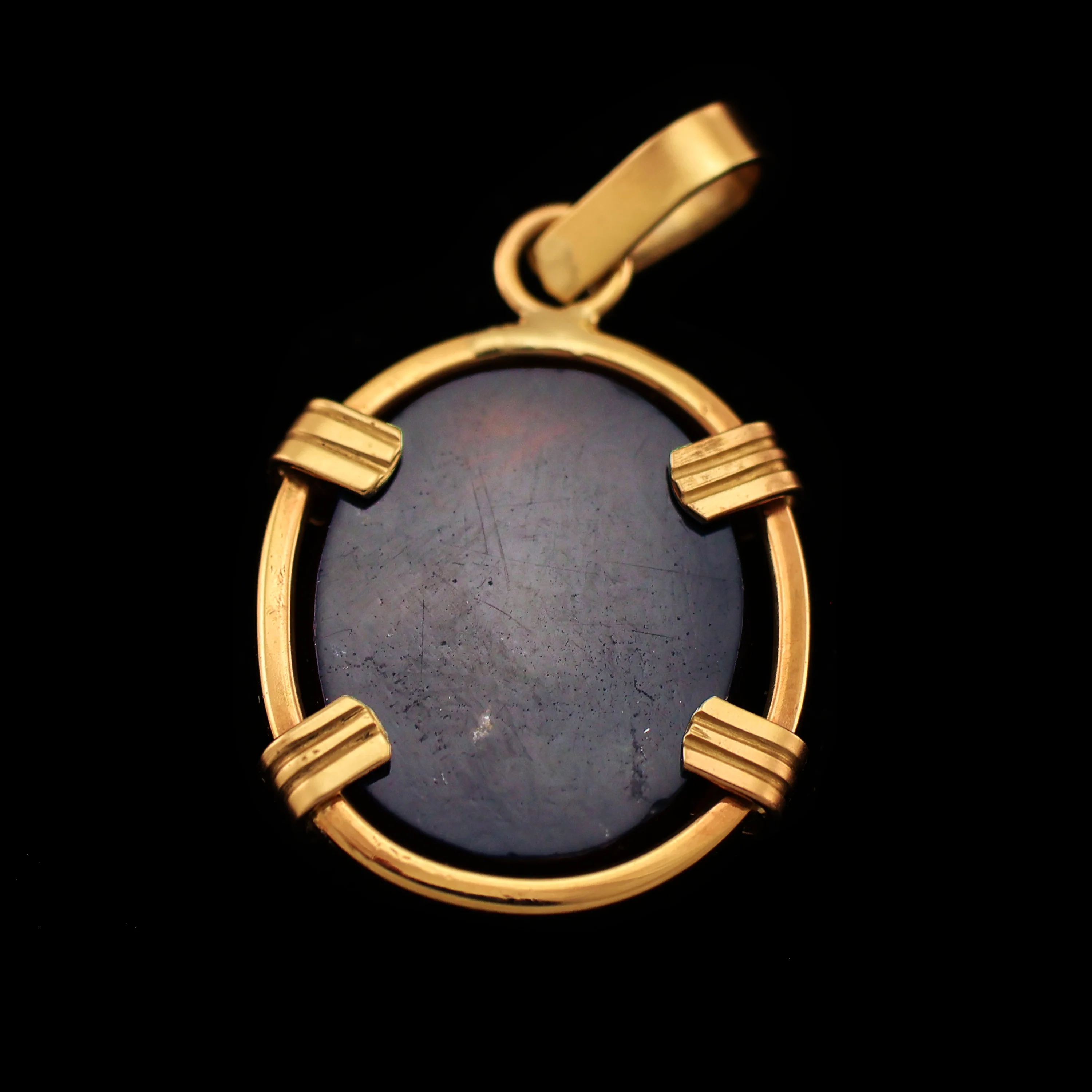
This item is an authentic Roman intaglio, placed in a handmade bezel of 14 karat gold. There is only 1 of this item; you will receive the exact pendant shown in the photos.
Chain necklaces can be purchased separately through this link.
History of the Artifact
Carnelian intaglios were among the most personal forms of adornment and identity in the Roman world. Carved from a warm, translucent orange-red chalcedony, these gemstones were engraved in intaglio - a technique in which the design is carved into the surface of the stone, creating a recessed image. This method allowed the gem to function as a seal, producing a raised impression when pressed into wax or clay, much like a personal signature.
(The choice of carnelian was both practical and symbolic. Its hardness made it suitable for fine engraving, while its vibrant colour was associated with vitality, good fortune, and protection. The Romans attributed to stones a range of inherent virtues, and carnelian was believed to encourage confidence, eloquence, and resolve.)
The figure engraved here is Artemis, known to the Romans as Diana. She is shown in profile, identifiable by her bow, the emblem of her role as goddess of the hunt. In glyptic art, Artemis is often depicted only from the bust up, with her bow or quiver serving as enough of an attribute to make her presence unmistakable.
Artemis was revered as a protector of wilderness, animals, and young people, embodying independence, swiftness, and clarity of purpose. Her imagery held strong personal meaning for those who wore her seal:
- For hunters and soldiers, she signified discipline, precision, and calm under pressure.
-
For women, she could symbolize autonomy, dignity, and bodily integrity.
- For travelers, she served as guide and guardian in uncertain terrain.
Authenticity
Ancient Artifacts guarantees the Authenticity of items sold through a three layer system of protection:
- Ancient Artifacts exclusively sources artifacts from trusted and reputable antique distributors, many of whom have been selling Artifacts for decades.
- Next, the Artifact is inspected by an expert team member, who is professionally trained in counterfeit detection After the artifact passes inspection, the Certificate of Authenticity is signed and the Artifact is packaged.
- Finally, Ancient Artifacts gives an additional layer of protection by promising a full refund with no questions asked, in the extremely unlikely event that a counterfeit slips through our vetting process.
Your order will include:
- Intaglio Pendant shown in photos
- Certificate of Authenticity
Ancient Artifacts relics are guaranteed authentic and have a 100% money back policy. Read more about our Mission and Promise for authenticity.
Product Information
Product Information
Shipping & Returns
Shipping & Returns
Description
Date: c. 1st - 2nd Century A.D.
Bezel: 14k Gold
Weight: 3.09 grams
Diameter: 20 mm / .78 inches
Description
This item is an authentic Roman intaglio, placed in a handmade bezel of 14 karat gold. There is only 1 of this item; you will receive the exact pendant shown in the photos.
Chain necklaces can be purchased separately through this link.
History of the Artifact
Carnelian intaglios were among the most personal forms of adornment and identity in the Roman world. Carved from a warm, translucent orange-red chalcedony, these gemstones were engraved in intaglio - a technique in which the design is carved into the surface of the stone, creating a recessed image. This method allowed the gem to function as a seal, producing a raised impression when pressed into wax or clay, much like a personal signature.
(The choice of carnelian was both practical and symbolic. Its hardness made it suitable for fine engraving, while its vibrant colour was associated with vitality, good fortune, and protection. The Romans attributed to stones a range of inherent virtues, and carnelian was believed to encourage confidence, eloquence, and resolve.)
The figure engraved here is Artemis, known to the Romans as Diana. She is shown in profile, identifiable by her bow, the emblem of her role as goddess of the hunt. In glyptic art, Artemis is often depicted only from the bust up, with her bow or quiver serving as enough of an attribute to make her presence unmistakable.
Artemis was revered as a protector of wilderness, animals, and young people, embodying independence, swiftness, and clarity of purpose. Her imagery held strong personal meaning for those who wore her seal:
- For hunters and soldiers, she signified discipline, precision, and calm under pressure.
-
For women, she could symbolize autonomy, dignity, and bodily integrity.
- For travelers, she served as guide and guardian in uncertain terrain.
Authenticity
Ancient Artifacts guarantees the Authenticity of items sold through a three layer system of protection:
- Ancient Artifacts exclusively sources artifacts from trusted and reputable antique distributors, many of whom have been selling Artifacts for decades.
- Next, the Artifact is inspected by an expert team member, who is professionally trained in counterfeit detection After the artifact passes inspection, the Certificate of Authenticity is signed and the Artifact is packaged.
- Finally, Ancient Artifacts gives an additional layer of protection by promising a full refund with no questions asked, in the extremely unlikely event that a counterfeit slips through our vetting process.
Your order will include:
- Intaglio Pendant shown in photos
- Certificate of Authenticity
Ancient Artifacts relics are guaranteed authentic and have a 100% money back policy. Read more about our Mission and Promise for authenticity.